
A long saddle is easy to misread on a specification. Dealers asked for an electric bike with passenger seat need a test that does not treat seat length as proof. This article sets out that test, using the listed Z3, V1 and TANK configurations as examples.
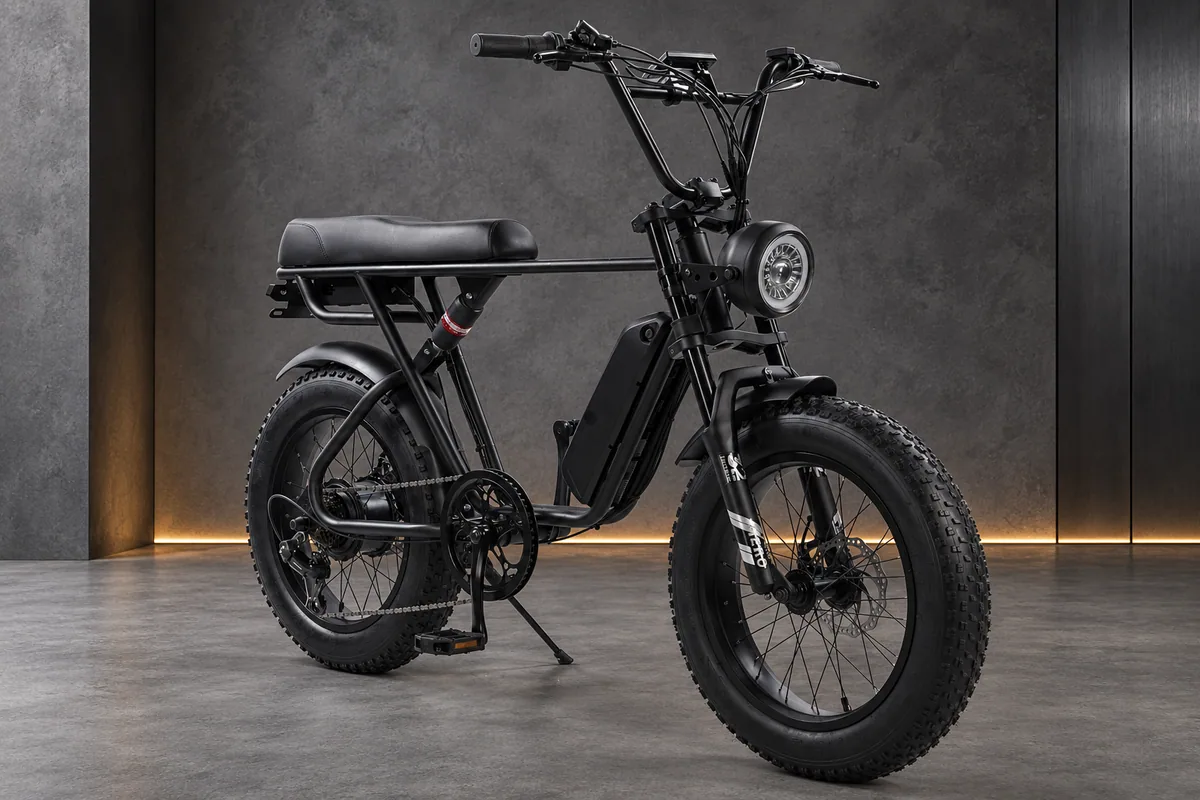
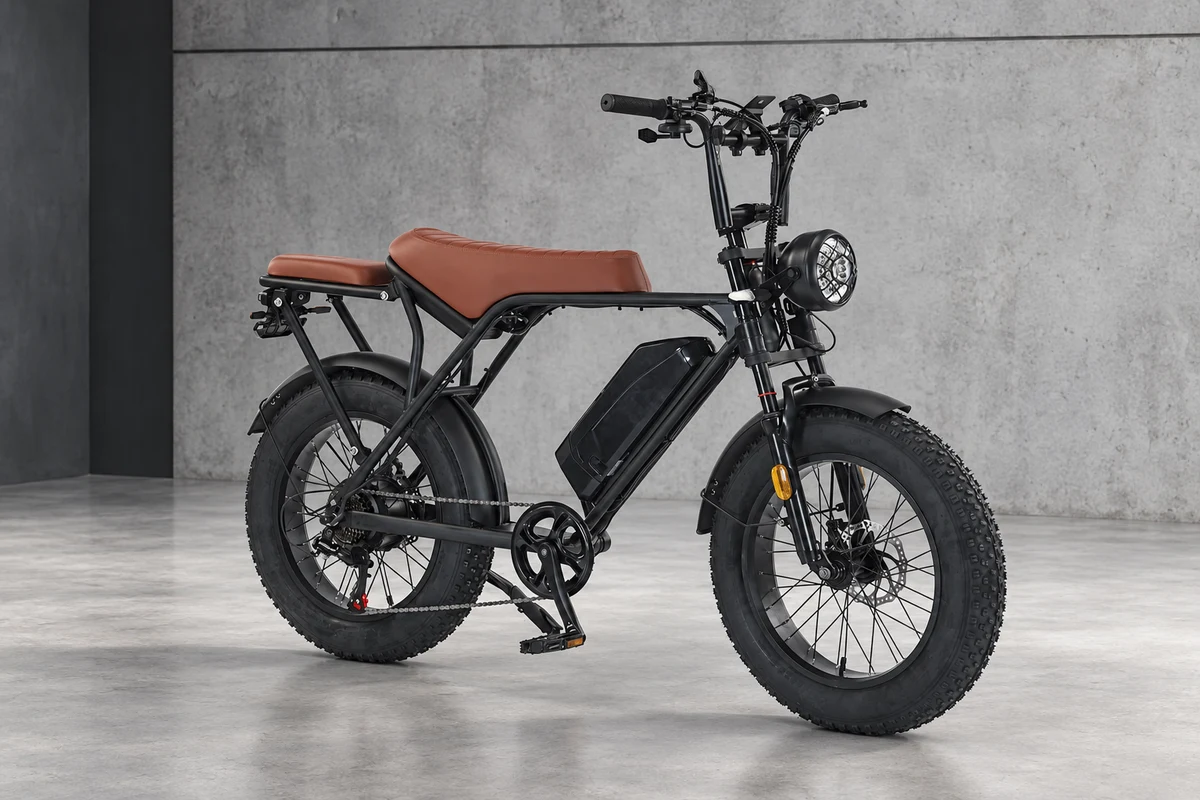
Short answer: An electric bike with passenger seat is a bicycle the manufacturer has specified for a second person, with the seat equipment and any load limit written into the order, not every e-bike that has a long seat. On BG EBIKE’s listed range, Z3 is a two-seater with a split seat and V1 is a long-seat model; both use 20 × 4.0 tyres and a 1000 W, 48 V 10–25 Ah system (480–1,200 Wh). Neither product page lists a payload, and Z3’s page states that a rear cushion does not establish a permissible passenger load. BG EBIKE confirms passenger use, seat equipment and any agreed load limits in the quotation.
What counts as an electric bike with a passenger seat?
An electric bike with passenger seat is an e-bike the manufacturer has designed and equipped for a second person, and has agreed to describe that way on the quotation. The usual equipment is a dedicated rear seat or a clearly identified two-person saddle, plus any foot support that belongs to that version. A rack, a luggage pad or an extended cushion is not the same thing unless the order names it as a passenger position and records any load limit that goes with it.
Many destinations look at whether the vehicle was designed and equipped for a passenger, not at how long the saddle is in a photograph. The dealer’s job is to put that description on the purchase order so sales staff and after-sales records refer to the same vehicle.
Buyers also search for an ebike with passenger seat, an e bike with passenger seat, or an electric bike passenger seat; the test is the same. The dealer guide to specifying a 2 seater electric bike covers stock, packing and the Z3 against V1 comparison. The question here is narrower: when does a seat count as a passenger seat?
Does a long seat electric bike automatically have a passenger seat?
No. A long seat electric bike has one continuous saddle; that shape can be there for one rider’s comfort, for luggage, or for a passenger, and the shape alone does not tell you which. V1 is listed as a 20-inch long-seat fat-tyre electric bike with a continuous black saddle. The page does not list a passenger load, foot supports, or a statement that the long seat is a passenger position.
That is why “e bike with long seat” and “electric bike with passenger seat” should not be treated as the same search or the same order line. If you need a passenger model, ask for the equipment and any load limit in writing. If you only need a long saddle for one rider, say so on the quotation.
How do long-seat, two-seater and passenger-deck bikes differ?
Three e-bike layouts are commonly offered as a passenger seat, and a fourth vehicle type appears in the same conversations because it also has a long saddle.
| What you are looking at | Seat you can see | What is not proved by the photo | BG EBIKE listed example |
|---|---|---|---|
| Two-seater e-bike | Main saddle plus a separate rear cushion | A permitted passenger load | Z3: two-seater description; load not listed |
| Long-seat e-bike | One continuous saddle | That the bike is a passenger model | V1: long-seat description; passenger use not listed |
| Longtail or rear-deck e-bike | An extended deck, pad or child-seat kit | An adult passenger rating, unless the deck rating and kit say so | Not listed in this range |
| Seated electric scooter | A long or split scooter seat on a foot platform | That the vehicle is an e-bike | TANK: long seat, 10-inch wheels, no bicycle pedals |
Z3’s product page is explicit: a rear cushion does not establish a permissible passenger load, and the order should identify intended use, agreed seat equipment and applicable load limits. Apply the same standard to V1, even though its seat is a single piece. How to read payload figures when a supplier does publish them is covered in our weight limit guide.
How should a dealer judge a passenger model on a quotation?
Use four checks, in this order, and write the answers on the quote rather than in a later email.
- Manufacturer description. Does the model name or specification call it a two-seater, a passenger model, or only a long-seat bike?
- Seat equipment. Is the rear position a separate cushion, a continuous saddle, or a deck kit? Are foot supports included, and are they listed? Z3 says foot supports are confirmed in the quotation; V1 does not list them.
- Load limit. Is a total payload or rear-seat limit listed, with units and what it includes? If it is not listed, say so on the quotation. Do not copy a number from another brand or a similar-looking bike.
- Vehicle type. Is this an e-bike with pedals, or a seated scooter? The wrong type on the order creates the wrong spare parts, customs description and sales claim.
If those four answers are complete, you can decide whether to sell the bike as a passenger model, as a long-seat solo bike, or as a scooter from the other range. If any answer is missing, ask the factory to confirm it before you print a price list or a hang-tag.
Where does a seated scooter with a long seat fit?
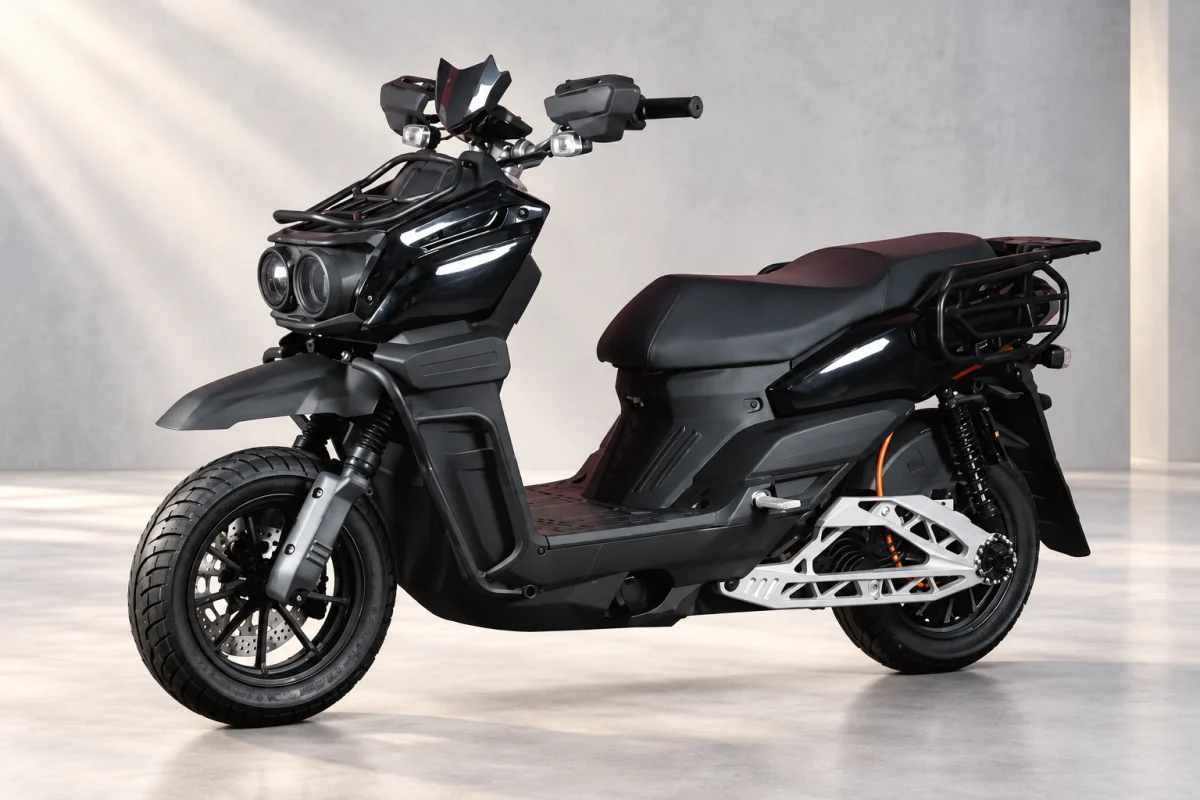
It belongs in the scooter range, not on an e-bike passenger-seat quotation. TANK is listed as a 1000 W seated electric scooter with a continuous long seat, a 127 cm wheelbase, a 76 cm seat height, 10-inch hubs and 3.0-10 tyres. Catalogue top speed is 45–56 km/h; net weight is 60 kg; batteries are 48 V, 60 V or 72 V in lead-acid or lithium.
Those figures describe a different vehicle from Z3 or V1: no bicycle pedals, a foot platform and a much smaller wheel. A passenger question on a scooter is answered on a scooter quotation, against scooter equipment. See the seated electric scooter range.
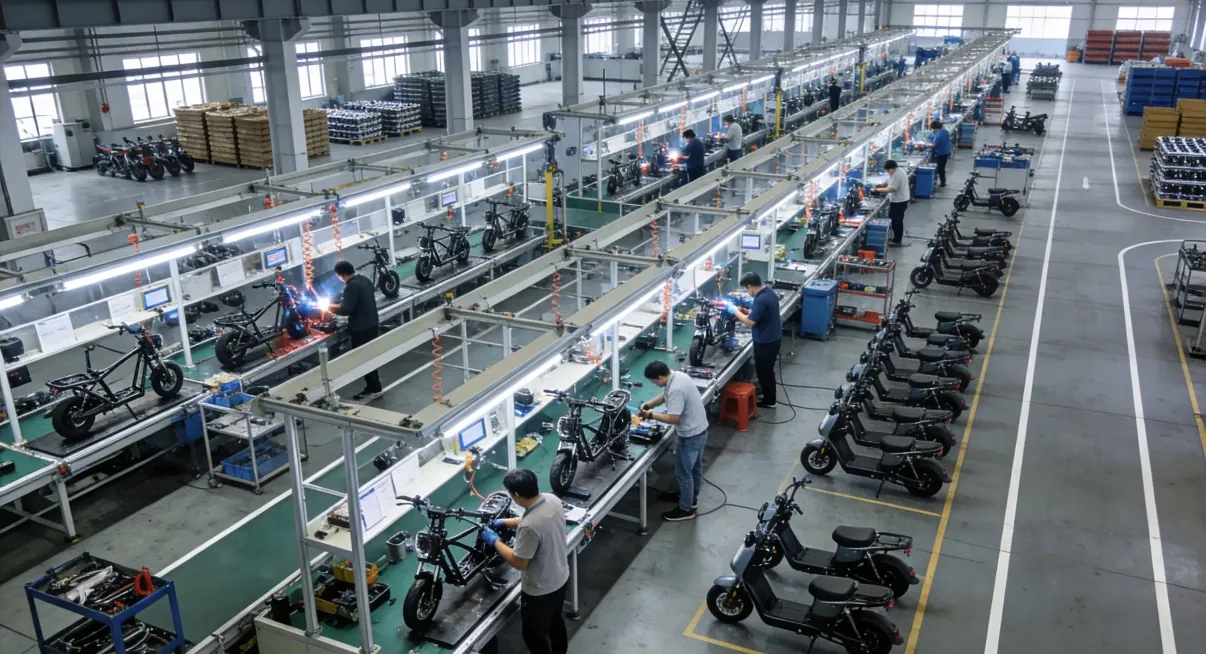
At BG EBIKE, passenger use and seat equipment are confirmed in the quotation for the destination. We produce and assemble the vehicles in our own factory, with flexible MOQ by model and mixed containers. A full container usually takes 30–35 days once the configuration is agreed.
Models to compare
- Z3 20 Inch Two-Seater Electric Bike: split seat; passenger use and foot supports confirmed in the quotation; payload not listed.
- V1 20 Inch Long Seat Electric Bike: continuous long seat; passenger use and foot supports not listed.
- TANK 1000W Seated Electric Scooter: long seat on a scooter platform, 10-inch hubs, 76 cm listed seat height.
- E-bike models in the wholesale electric bike range; scooters in the seated scooter range.
Frequently asked questions
Questions dealers ask about passenger-seat models.
What counts as an electric bike with a passenger seat?
A bicycle the manufacturer specifies for a second person, with the seat equipment and any load limit on the quotation. A long saddle, a rear cushion or a luggage rack is only a starting point. On BG EBIKE’s listed pages, Z3 is described as a two-seater and V1 as a long-seat bike; neither page lists a payload, so passenger use has to be confirmed in the order for that market.
Does an e-bike with a long seat have a passenger seat?
Not necessarily. A long seat is a saddle shape. V1 is listed as a long-seat electric bike and does not list a passenger load or foot supports. If you need a passenger model, ask for that use, the equipment and any limit in writing. If you only need the long saddle for one rider, say so on the quotation so the bike is not later sold as a passenger model.
How is a seated electric scooter with a long seat different?
It is a different vehicle type. TANK has a long seat, but it is a seated scooter with a foot platform, 10-inch hubs, 3.0-10 tyres and a 76 cm listed seat height, not an e-bike with pedals. Quote it from the scooter range. Do not transfer e-bike passenger language, spare parts or customs descriptions onto it without a scooter-specific specification.
What should a dealer ask the factory before quoting a passenger model?
Ask four things: whether the model is to be described as a passenger or two-seater version; which seat and foot-support parts are included; whether a load limit is listed or will be agreed, and in what units; and whether the vehicle is an e-bike or a seated scooter. Put the answers on the quotation. BG EBIKE confirms those points for the destination market before production.
Related guides
- Two-seater electric bikes: how dealers should specify and quote them
- Electric bike weight limits: rider, payload and rear rack capacity
- Moped-style e-bikes: what dealers should stock and specify
To get a comparable quotation, send the model, seat layout, intended use (passenger, luggage or solo), any load limit you need confirmed, quantity, colour, destination and whether you need complete bikes or kits. See wholesale order terms for the buying process. BG EBIKE replies within 24 hours on working days and can send a PDF catalogue on request.
How this guide was prepared: model figures and seat descriptions are from the Z3, V1 and TANK product pages listed on 12 November 2026; watt-hours are calculated from the listed 48 V 10–25 Ah range.