
CKD and SKD Kits for Electric Scooters and E-Bikes
Assemble electric two-wheelers in your own market.
We produce the vehicles in our own factory in Taizhou, China and supply them as complete vehicles (CBU), partly assembled units (SKD) or full component kits (CKD) for importers equipped to assemble locally.
Flexible MOQ by model, with models mixed in one container; about one month per container. We reply within 24 hours on working days.
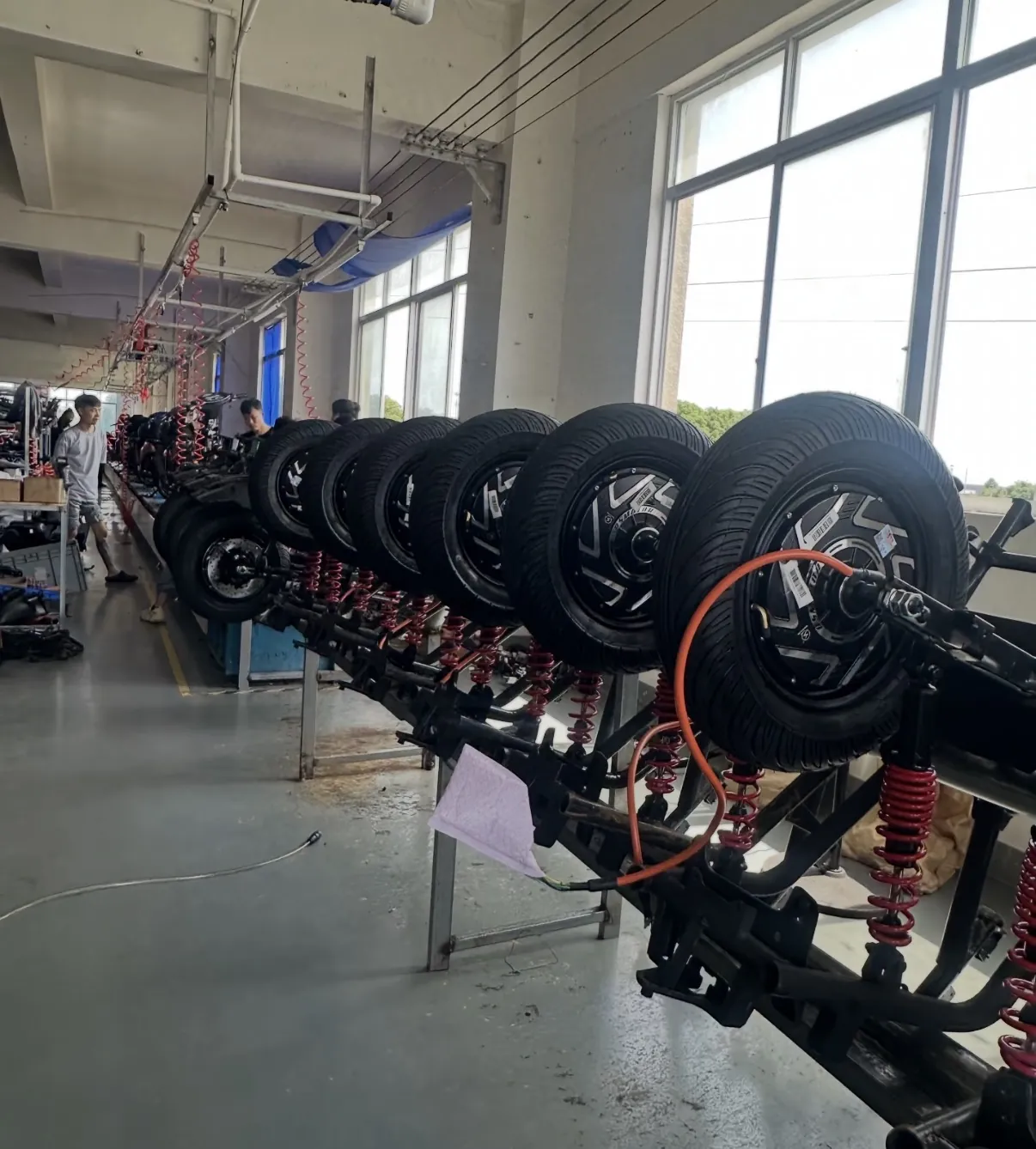
In brief: CKD (completely knocked down) kits are full sets of components for assembly in the buyer’s market; SKD (semi knocked down) units arrive partly assembled and are completed locally; CBU (completely built up) means a finished vehicle. BG EBIKE produces and assembles about 10,000 electric vehicles a year in its own factory in Taizhou, China. Most orders are CBU; SKD and CKD supply is agreed per model for importers with their own assembly workshop. The kit scope, parts list, packing and assembly responsibilities are recorded in the quotation before production.
CBU vs SKD vs CKD at a glance
| CBU | SKD | CKD | |
|---|---|---|---|
| What arrives | Finished vehicle, packed for export | Main assemblies pre-built, some parts packed separately | Components and sub-assemblies to the agreed parts list |
| Work in your market | Unpack, prepare and hand over | Complete the remaining assembly, adjust and test | Full assembly, adjustment and testing |
| Your team needs | Basic workshop for preparation | Assembly bench, tools and trained staff | Assembly line, tools, trained staff and quality checks |
| Often chosen when | Local assembly work is to be minimised | Only agreed final assembly tasks will be done locally | The buyer has capacity for the agreed assembly and inspection scope |
How a kit order works
- Choose the model. Start from a model in our range and tell us your market and planned volume.
- Agree the kit scope. Decide which assemblies arrive pre-built (SKD) or as components (CKD).
- Confirm the parts list. Each component is identified by part number, as in our spare-parts catalogue.
- Production and packing. We prepare the agreed components and sub-assemblies for the selected model and pack them against the parts list.
- Assembly in your market. Your team assembles, adjusts and checks the vehicles before sale.
What to prepare before ordering kits
- Workshop and tools. Space, assembly benches and the tools needed for frames, wheels, brakes and wiring.
- Trained staff. People who can assemble, adjust brakes and steering and check electrical functions.
- Checks before sale. A final inspection routine for each assembled vehicle.
- Local requirements. The registration, labelling or local-content rules that apply in your market.
- Spare parts. A starter stock for the models you assemble — parts are sold on their own.
Read the full CBU vs SKD vs CKD buying guide for a cost comparison method.
What should the kit scope record contain?
A kit order needs an assembly boundary for each model, not just the letters SKD or CKD. Use one line per assembly to prevent missing work or parts at arrival.
- Arrival condition: identify which assemblies are complete and which parts travel separately.
- Part identification: record model, part reference, quantity per vehicle and total quantity for the order.
- Local work: list the assembly, adjustment and checks your workshop must complete using the model-specific instructions.
- Battery and charger: record the selected electrical version and whether each item is included in the shipment.
- Acceptance: agree how shortages, wrong parts and assembly questions will be recorded and resolved.
For example, two offers described as SKD are not equivalent if one includes preassembled wheels and another requires wheel assembly. Compare the actual scope before comparing unit price or freight volume. This is a comparison example, not a standard kit specification for every BG EBIKE model.
Related guides
Buying from BG EBIKE
- WholesaleFlexible MOQ, mixed containers
- Private labelYour logo from one full container
- SamplesUnit price, credited against your order
- Quality controlInspection to your requirements, one-year warranty
- Packaging & shipping40HQ loading and lithium battery documents
- Wholesale pricesWhat drives a quote
- CustomizationColours, accessories, handlebars and seats
CKD and SKD kit FAQs
What is the difference between CKD and SKD?
SKD units arrive partly assembled, so your team completes the remaining work. CKD kits arrive as components and sub-assemblies, so your team carries out the full assembly. CKD needs more workshop capacity and trained staff, while SKD needs less local work. Both are agreed per model in the quotation.
Which models can be supplied as kits?
SKD and CKD are agreed per model. Tell us the models you plan to assemble, your market and expected volume, and we confirm which supply formats are available and what each kit includes before you order.
Do you supply complete vehicles as well?
Yes. Complete vehicles (CBU) are our main supply format, and a kit project can be evaluated separately when your local assembly team is ready. Your quotation records the supply format for each model.
How are kit parts identified?
Components are identified by part number, in the same way as our spare-parts catalogue. The agreed parts list goes with the order, so your team can check the kit on arrival and reorder the right parts later.
Can I order spare parts for kit-assembled vehicles?
Yes. Parts are sold on their own, so you can order a starter stock with the first kits and replenish later. Include the model and part references so compatibility can be checked.
How long does a kit order take?
A full container of complete vehicles takes 30–35 days once the configuration is agreed. For SKD and CKD orders, the production time and packing are confirmed in the quotation for the agreed kit scope.
Plan a local assembly project
Send the models, your market, expected volume and the assembly work your team can do. We reply within 24 hours on working days.