
An electric tricycle with dump bed is worth considering when the customer needs to discharge suitable material by tipping, rather than remove every item separately. For dealers and fleet buyers, the first question is therefore about unloading: what leaves the bed, where does it go, and what must remain intact?
Short answer: Choose a dump-bed tricycle when the material can be tipped into a suitable receiving area and the supplied mechanism is rated for that task. Choose a non-tipping arrangement when goods need controlled, individual handling or the site cannot support safe tipping. Decide the body function before comparing motor power; carrying capacity and lifting capacity are different specifications.
For the broader box-size and electrical decision, start with our electric cargo tricycle selection guide. This article focuses on the extra purchase decision introduced by a tipping body.
When does an electric tricycle with dump bed solve the unloading problem?
Tipping is a useful candidate when the intended load can be discharged together and the receiving point accepts that method. It is not automatically useful just because a vehicle carries goods.
| Working requirement | Procurement decision |
|---|---|
| Packaged goods delivered one item at a time | Start with access and manual or mechanical handling; tipping may add no useful function. |
| Suitable loose material unloaded at one point | Assess a tipping version, including the material, mechanism and receiving area. |
| Fragile goods or loads that must remain upright | Specify controlled unloading rather than assuming the load can be tipped. |
| Mixed duties across different customers | Separate the applications before choosing one body for the entire dealer range. |
For example, a customer’s sealed cartons and another customer’s loose material create different acceptance criteria. The first brief may require a useful opening and easy access to each package. The second must establish whether the intended material releases as required under the approved tipping procedure. Neither decision can be made from a photograph of an empty raised bed alone.
Some materials can stick or release unpredictably. Include their condition in the brief: wet or dry, loose or bagged, and whether contamination or damage is acceptable. Do not promise a faster unloading cycle until the proposed configuration has been assessed for that actual duty.
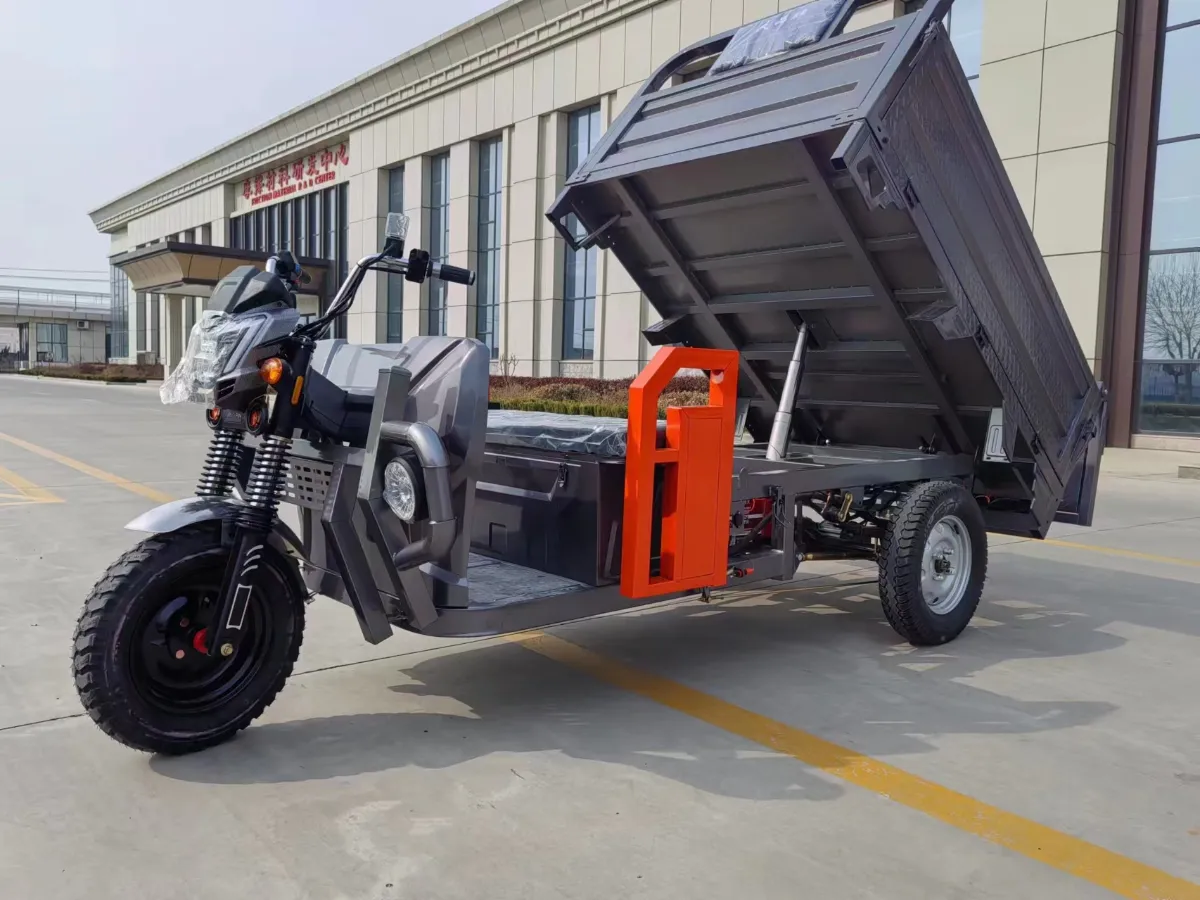
What changes between the 1.6m and 1.8m dump-bed models?
The larger listing changes box size, vehicle width, electrical configuration and tyre specification. It is not simply the same vehicle with a longer box.
| Listed item | 1.6m model | 1.8m model |
|---|---|---|
| Bed length | 1,600mm | 1,800mm |
| Bed width | 1,100mm | 1,300mm |
| Bed height | 430mm | 450mm |
| Vehicle width | 1,180mm | 1,380mm |
| Drive entry | 60V 1500W | 60V 1800W |
| Battery entry | 60V 32Ah | 60V 58Ah |
| Front/rear tyres | 4.00-12 | 5.00-12 |
Sources: BG EBIKE 1.6m 1500W dump tricycle and 1.8m electric tricycle with dump bed. The table describes their listed versions, not every tricycle carrying a similar model-size label.
The 200mm difference in overall width is a useful early filter for a restricted route. The 1.8m dump bed also has a listed side height of 450mm, while our 1.8m standard cargo-body listing gives 430mm. Keep the complete model reference on the quotation rather than ordering only “the 1.8m tricycle.”
Both dump models list drum brakes, a hand-operated parking brake and leaf-spring rear suspension. Those common labels do not prove that brake parts, tyres or other components can be exchanged between the two. Maintain the approved references for the ordered version.
Which lifting details must be fixed before a bulk order?
Specify how the body operates and the conditions under which it can lift the intended load. A vehicle’s traction battery or motor rating does not identify the lifting arrangement.
- Operating method: the actual supplied mechanism, control position and operator actions.
- Lifting duty: permitted material, load, distribution and site conditions for raising and lowering the bed.
- Body and closure: the opening arrangement, latches and transport locking requirements for that version.
- Working space: the raised-body envelope, discharge area and clearance needed around the vehicle.
- Service provisions: the relevant instructions, component references and any approved support arrangement required for maintenance.
Keep carrying and lifting specifications in different fields. The current 1.6m and 1.8m product pages list rated-load entries of 800kg and 1,500kg respectively, subject to the defined configuration and conditions. Those entries are not a lifting-duty chart. They must not be copied into a dealer brochure as maximum tipping loads without the corresponding approval.
For the supplied BG EBIKE version, the quotation should identify the lifting operation and limits alongside the battery and drive specification. This makes the purchase agreement testable: the buyer knows which body, operation and intended duty the sample is supposed to demonstrate.
Can the customer’s receiving area support tipping?
A suitable vehicle still needs a suitable unloading location. Check the receiving area before treating the dump-bed feature as a solution for that customer.
The UK Health and Safety Executive’s tipping guidance identifies level, firm and stable ground, overhead clearance and control of people around the discharge area as important conditions. It also warns against driving the vehicle to shake loose a stuck load. Use these general workplace principles when assessing the site, together with the instructions for the actual tricycle; they are not a substitute for its operating procedure.
In the inquiry, identify any sloped unloading position, overhead structure, soft ground or need for people to stand close to the discharge. A representative site photograph and dimensions can make a mismatch visible before a sample is ordered. If the location cannot meet the required conditions, choose another unloading arrangement instead of expecting a larger motor to solve it.
What should the sample evaluation record?
Record the configuration, representative material and observed result under the approved procedure. An unloaded demonstration establishes movement; it does not establish that the vehicle can perform the customer’s working duty.
| Evaluation record | What the buyer needs to capture |
|---|---|
| Vehicle identity | Exact body, drive, battery and lifting version |
| Representative material | Type, condition, measured load and approved distribution |
| Location | Ground, access, overhead clearance and controlled discharge area |
| Observed operation | Raising/lowering, discharge and closure under the approved procedure |
| Acceptance and follow-up | Agreed criteria, observations, unresolved items and responsible person |
If unloading time matters commercially, measure a complete cycle using the same defined start and finish points, material and working conditions. Keep preparation and cleanup in the comparison when the customer actually needs them. Treat the measured result as specific to that assessment, not a guaranteed saving for every customer.
Do not exceed the supplied limits to see where the mechanism fails. Maintenance access beneath a raised body requires the manufacturer’s approved support and procedure; a raised-bed photograph is not maintenance instruction.
How should a distributor specify supply and after-sales parts?
Keep the tipping body version separate from the traction and chassis specification, then identify the parts and instructions needed to support that complete version locally.
Use the existing dealer spare-parts planning guide for inventory and replenishment decisions. For a dump-bed order, add the approved body-mechanism and closure references to the vehicle’s tyre, brake and electrical records. Do not merge parts stock solely because two models have the same voltage.
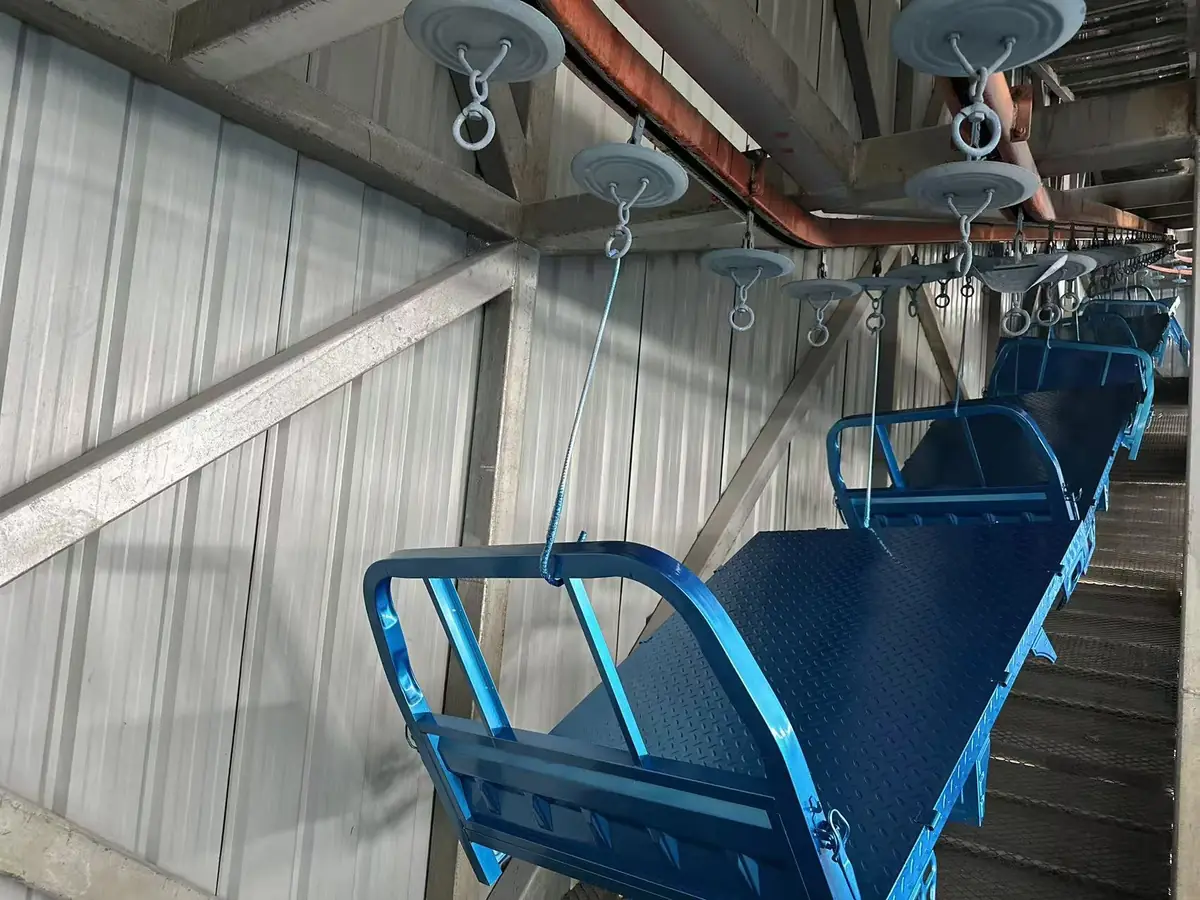
The listed CKD references are 60 units per 40HQ for the 1.6m dump model and 40 for the 1.8m dump model. They refer to the respective disassembled configurations. BG EBIKE mainly supplies complete vehicles; SKD or CKD scope is agreed for the order, and the packing and loading plan determines the shipment.
At BG EBIKE, we produce and assemble vehicles in our own factory. MOQ is flexible by model, and different models can share a container. Build that mix around the applications your customers need, with separate configuration records for standard cargo and dump-bed versions.
Frequently asked questions
Does “electric dump tricycle” mean the bed is electrically raised?
No. The name may describe the vehicle’s electric drive rather than the lifting method. Specify the operating mechanism, controls and approved lifting conditions in the order. Do not infer automatic or hydraulic lifting from the traction motor rating.
Can the cargo bed be used to carry passengers?
A cargo bed and its load rating do not establish approved passenger accommodation. Treat passenger transport as a separate vehicle requirement. For a cargo order, retain the intended-use description and operating information for the exact model and destination.
Should the dump model replace every standard cargo model in a dealer range?
No. Retain a non-tipping option where customers unload individual goods or cannot provide suitable tipping conditions. A dump version earns its place when the unloading task needs it and the supported configuration can perform that task. It is a functional choice, not an automatic upgrade.
Basis: BG EBIKE’s linked 1.6m and 1.8m model specifications and HSE workplace tipping guidance, reviewed on 17 November 2026. The evaluation record is a purchasing template, not a vehicle operating manual.
For a distributor comparing tipping bodies, request a comparison of the 1.6 m and 1.8 m dump-bed models. Include the material, normal load and unloading conditions that both versions must handle.
Specify a dump-bed order
Send the intended material, normal load, receiving-area details, preferred body size, quantity per model and colour, destination and supply format. Include the unloading requirement so the quotation can address the complete vehicle and tipping arrangement.
Related reading: choose the cargo box and electrical configuration or browse the electric tricycle range.