
A step-through vs step-over e-bike comparison helps dealers organise a shortlist, but it should not decide the whole order. Start with the frame opening, then compare the dimensions, equipment and documented limits of the complete vehicles you may stock.
Short answer: A step-through frame has a low opening that is easy to mount; a step-over frame has a higher top tube and suits riders who swing a leg over. Start with your customers’ needs, then compare the frame opening, size, weight and load limits of the complete bikes rather than the frame label alone.
A step-through layout has a lower, more open entry area; a step-over layout has a higher top tube to clear. For importers and dealers, the useful outcome is a model-specific selection sheet: which customer requirement each vehicle addresses, which configuration is quoted, and which measurements are needed before selecting a sample.
Step-through vs step-over: what the frame label tells you
The main distinction is the route a rider takes when getting on and off. A low or absent top tube opens the centre of a step-through frame. A step-over frame retains a higher tube between the front of the frame and the saddle area, often forming a diamond-shaped layout.
Some designs fall between these descriptions. Record the actual opening and frame dimensions rather than forcing every folding or compact vehicle into a simple two-category comparison. Frame layout is also separate from the complete bike’s fit, weight and load requirements, so check those against the rider as well.
Use these labels to describe structure. They do not identify the motor-control system, establish a legal vehicle category, or show that a particular frame size suits every customer in a demographic group.
Start with the customer brief, then select the frame
Instead of choosing “the better frame”, write down the job each model should do in your range. For example, a dealer might want one model for customers prioritising an open entry area and another for customers seeking a conventional bicycle layout. Those are separate selection briefs, not evidence that either model will sell better.
| Selection priority | What to compare on the sample |
|---|---|
| Access when getting on and off | Actual frame opening and the mounting movement with the intended equipment fitted |
| Riding position and fit | Frame dimensions, saddle adjustment and handlebar reach for the intended users |
| Carrying or moving the vehicle | Complete vehicle weight, its stated measurement basis and practical handling |
| Basket or rear equipment | Included equipment, mounting arrangement and documented limits for that version |
| Product range consistency | Selected motor, battery, brakes and service references, recorded separately from frame style |
Describe requirements directly: “an open entry area with a front basket” is more useful in a quotation request than “a bike for all older riders”. Likewise, “a traditional frame with specified dimensions” gives the supplier more to work with than a request for a “sporty” model.
Two BG EBIKE catalogue layouts to compare
The H9 and the 26 Inch Electric Mountain Bike illustrate different layouts in the BG EBIKE catalogue. They are different complete vehicles, not two frame options on an otherwise identical platform. Use them to understand the visible structure and then compare their separate configuration records.
The specification pages also list different tyre formats: H9 uses a 20 × 2.15 catalogue entry, while the 26-inch model lists 26 × 2.125. Keep these complete-vehicle differences separate from the step-through/step-over frame label.
H9: a low frame opening and front basket
The red round-headlamp H9 reference shows a low central opening, a foot platform, pedals and a front basket. Its saddle and rear seating section are separate. These visible features give a buyer a starting point for discussing access and equipment.
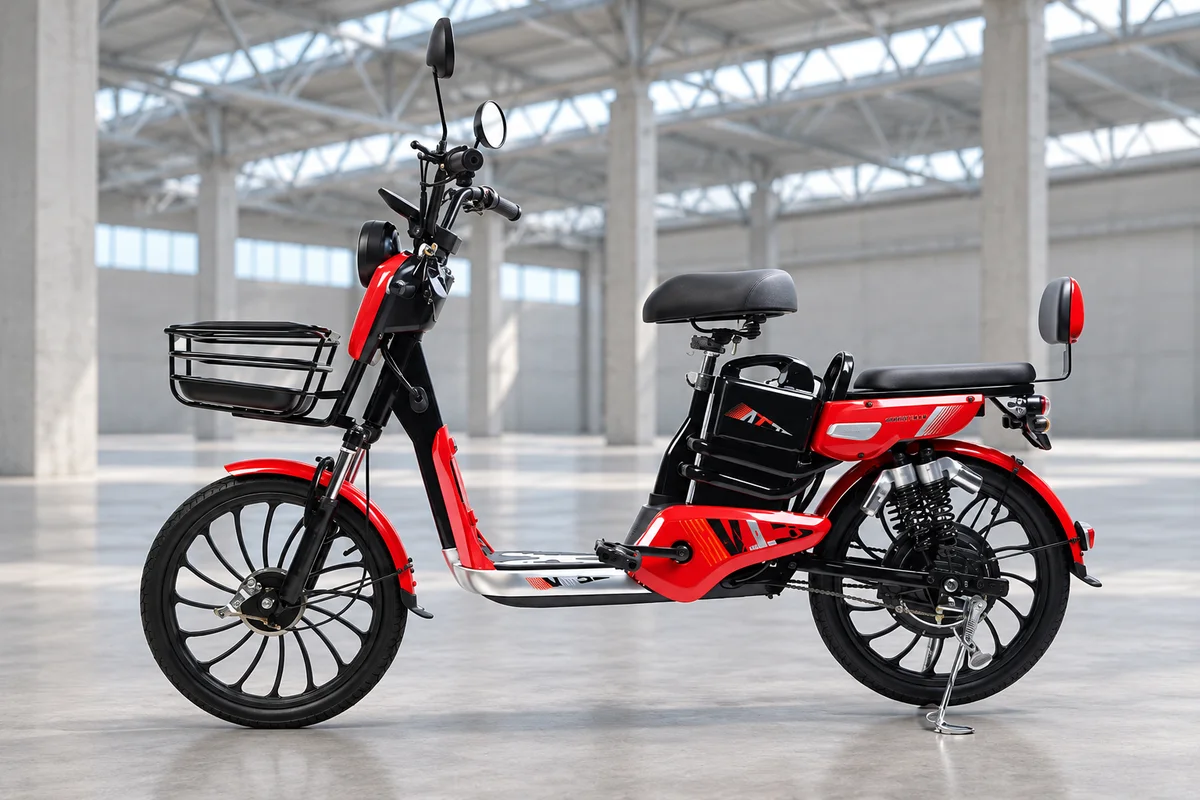
The H9 catalogue includes configuration references with different lamps and other details. Identify the reference image and requested equipment in the inquiry instead of assuming that a colour choice leaves every component unchanged. A pictured seat or backrest is not a documented passenger-capacity rating.
26-inch model: a higher top tube and down-tube battery
The black-and-green 26-inch catalogue model shows a diamond-shaped frame, a higher top tube, an adjustable seatpost and a battery enclosure along the down tube. The listed configuration also includes a 350W motor, a 36V 11Ah battery and Shimano 7-speed transmission.
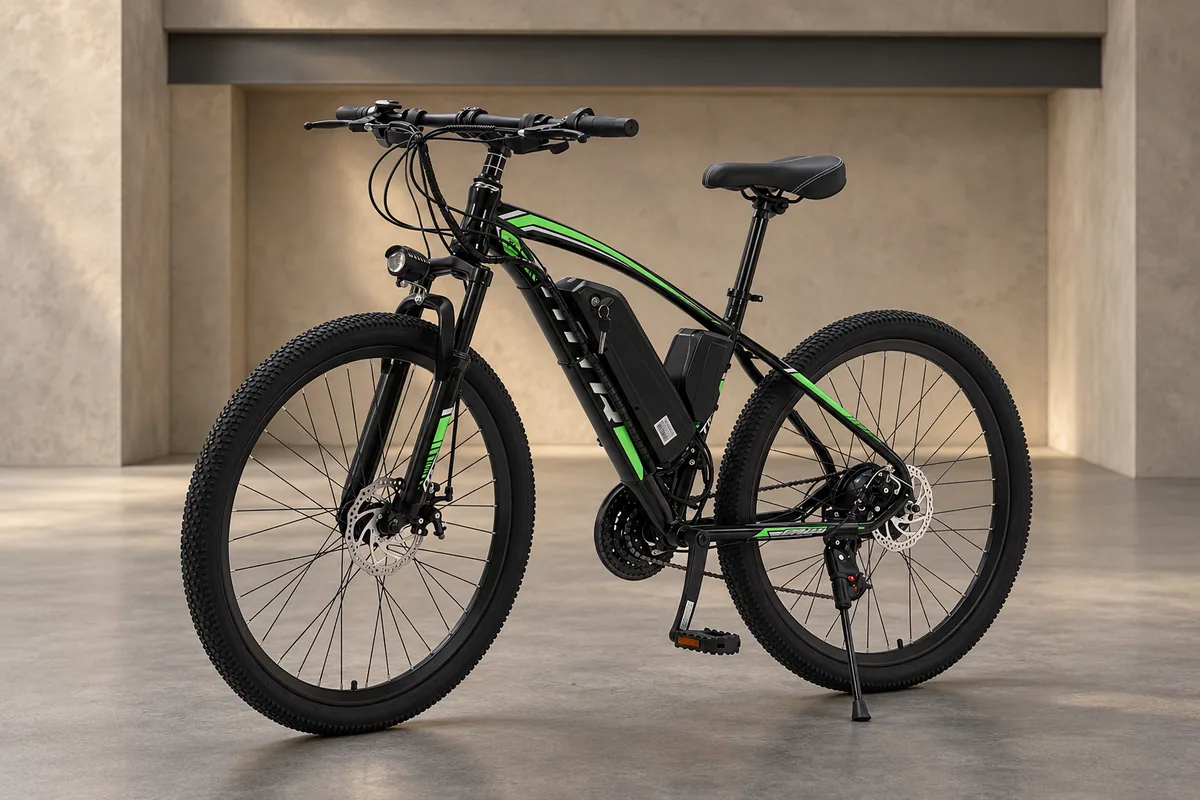
These entries describe this catalogue model; they are not benefits caused by having a higher top tube. “26-inch” identifies the nominal wheel size, not the frame size or a guaranteed rider-height range. The catalogue’s mountain-bike name also does not establish a tested downhill or jumping category.
Separate frame layout from the rest of the specification
A useful dealer comparison has two layers. The first describes the layout and required dimensions. The second records the electrical and mechanical configuration being quoted. This keeps a preferred frame shape from hiding a different battery, brake specification or supply version.
For each shortlisted model, record the motor description and whether its power figure is rated or peak, the selected battery specification, the brake type, the drivetrain and included equipment. Where the catalogue gives a range, request the single proposed configuration and its price. Do not treat the largest number in a range as standard equipment.
Keep vehicle weight and load capacity in separate fields. Ask what each quoted figure includes, and obtain any separate limits for baskets or carriers. Neither a low opening nor a high top tube is sufficient evidence of the complete vehicle’s capacity.
A frame-selection record your buying team can use
Prepare one record per model and version. The following information connects the initial shortlist to a sample review and a usable quotation:
- Customer requirement: describe the intended use and equipment needs without assuming a frame is universally suitable for an age or gender.
- Exact reference: give the model name, selected catalogue image and any requested differences.
- Dimensions: request a labelled drawing showing frame opening or stand-over measurement, saddle adjustment and other relevant fit dimensions.
- Complete configuration: record the proposed motor, battery, brakes, drivetrain and accessories together.
- Weight and limits: retain the supplier’s definitions for vehicle weight, permitted loading and accessory limits.
- Sample outcome: note which requirements the reviewed sample met, what needs changing and which version the quotation now covers.
Keep a missing measurement visible in the record. A clear request for that measurement is more useful than estimating it from an image or substituting wheel diameter for frame size. If the sample or specification changes, update the record before treating it as the basis of an order.
To check these details before a bulk order, order a sample of the version you plan to sell; colours, accessories and, on most models, handlebars and seats can be chosen through customization.
Frequently asked questions
Should a dealer stock both step-through and step-over e-bikes?
Only if they address distinct requirements in that dealer’s range. Compare customer requests, sample feedback, configuration overlap and service needs before deciding. There is no universal stock ratio based on frame style.
Can an existing model be changed from step-over to step-through?
Do not treat that as a routine colour or accessory option. Ask whether an appropriate separate model or supported frame version exists. An inquiry is not confirmation that a structural modification is available.
Does a step-through appearance prove pedal assistance?
No. Frame shape and visible pedals do not establish the control system. Request the drive-mode specification for the quoted vehicle separately.
Discuss a shortlist with BG EBIKE
Send your destination market, estimated vehicle quantity, target use and shortlisted models. Include the catalogue image reference and the frame or equipment details you want compared. This lets the inquiry focus on the actual proposed vehicles rather than a general preference for “low-step” or “high-step”.
Open the H9 step-through model and 26-inch electric mountain bike to compare their listed equipment as well as their frame layouts. Use separate sample records for these different vehicles.
Submit your model shortlist and configuration requirements. If you are still choosing between layouts, describe the requirement that matters most so the relevant model information can be discussed.