
An electric bike customization checklist should help a supplier understand exactly what you want to change. For importers, dealers and brand buyers, a useful starting point is an existing vehicle model, followed by a short list of requested changes and the information needed to assess them.
Short answer: Start from an existing model, list exactly what should change (colour, finish, handlebar, seat, accessories) and what stays, and attach a marked photo or finish sample number. At BG EBIKE, frames and body moulds are fixed; colours and accessories are model-specific, handlebars and seats can be changed on most models, and MOQ is flexible by model, with models mixed in one container.
At BG EBIKE: We print customer logos by screen printing or water transfer printing from one full container, with no extra charge and no more than about one week added to the lead time; colours and accessories are chosen by model, and frames stay as designed. See private label and customization.
Specify the base model, the part or finish to change, the reference you want followed, and the quantity and destination market. Separate requested changes from the configuration already agreed for the order. This guide includes a supplier-brief template you can copy into your inquiry.
Start with an existing model and a defined scope
BG EBIKE’s current customization scope starts with existing electric bike, seated scooter and motorcycle models. Requests concern model-specific colours and compatible equipment. New frame or body-shape development is not included. A request for a different body shape therefore needs a different discussion from a request for a listed carrier or a finish on a selected part.
The H9 model page, for example, separates its listed equipment from optional anti-theft remote-control and NFC equipment. Name a requested option in the brief and ask for its inclusion and price to be stated separately; do not assume that an option shown for H9 applies to another model.
Choose the closest existing model before preparing the brief. Add its model reference and, where available, the quotation or catalogue version your team is using. If you are considering several models, give each one a separate change list rather than combining the requirements into one description.
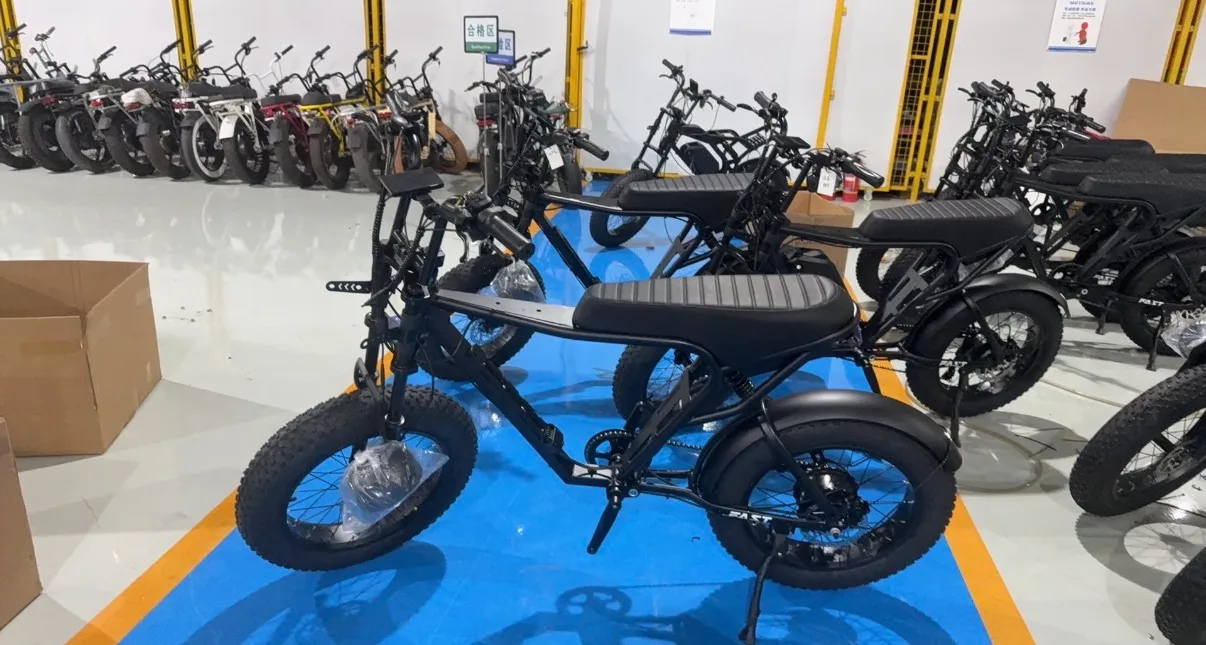
The workshop photograph below illustrates the starting point: existing vehicle layouts. It is not evidence that every visible component can be changed or that the vehicles shown are currently available from stock.
Separate what stays from what changes
A marked photograph is useful when it identifies the exact part. Pair it with a written instruction so that the supplier does not have to infer your meaning from an arrow or colour circle.
For example, “make it blue” leaves several questions open. A clearer request is: “For the selected model, please review a blue finish for the front fender only. Keep the other quoted body panels unchanged. The attached numbered sample is the appearance reference; please advise whether it is available for this part.” This is an example of how to write the request, not an offer of that finish on every model.
Label each item as a requirement or a preference. If a finish is preferred but an alternative is acceptable, say so. If a specific component is essential to the intended purchase, identify that separately. This gives the supplier a basis for responding to each request without treating every suggestion as an accepted order specification.
How to specify colour and finish for an electric scooter order
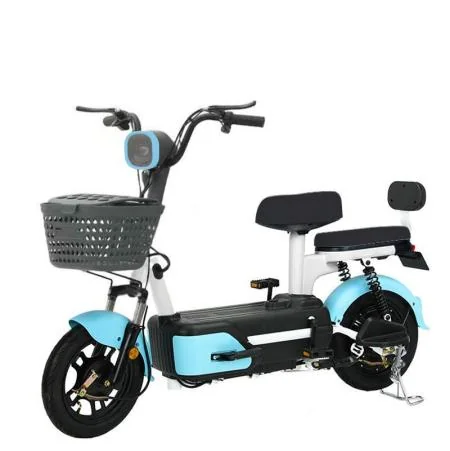
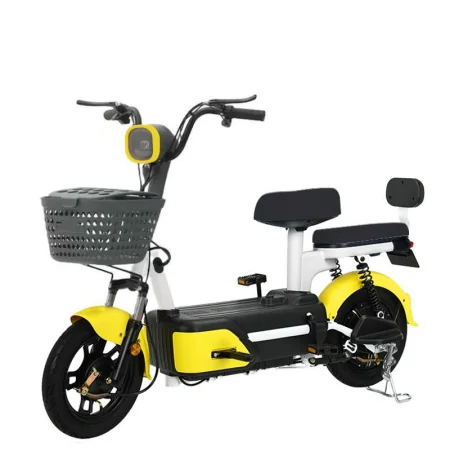
A colour photograph identifies an intended appearance; it is not a physical colour standard. For a seated electric scooter order, specify the affected part, the colour reference and the surface finish together. A blue front fender with the remaining panels unchanged is a different request from a blue finish across every exterior panel.
Use the photograph to identify parts, not to approve an exact shade
The two Coke catalogue images below help illustrate the scope of a colour request: the fenders, headlamp housing and side casing have coloured areas, while other visible parts retain a different appearance. Mark the parts you mean rather than describing the whole vehicle as “blue” or “yellow”. These images do not establish the finish process or which colours can be supplied for your order.
A camera photograph and a screen preview are useful for discussing placement and general appearance. For an exact colour target, agree an appropriate physical reference. Pantone explains why a recent physical colour standard matters when moving from digital colour to a physical product. Providing a Pantone or RAL reference does not by itself establish that a supplier can reproduce it on a particular part.
A colour code does not describe the whole finish
Colour and appearance are related, but they are not identical. Gloss and texture can alter how a surface looks, as X-Rite explains in its guide to appearance. A flat colour reference does not fully describe a textured or glossy vehicle part. If adjacent parts need a coordinated appearance, identify those parts together and state whether matching their overall appearance is important.
For a brand-colour request, send the reference system and identifier, the affected part names and the intended finish, such as gloss or matte. Ask whether a sample on the intended part or a representative material can be provided. A sample in a different material can help the discussion, but should not silently become the acceptance reference for the finished vehicle.
Turn the request into a usable order reference
A practical brief might read: “For the selected model, review the front fender and side casing in the colour of physical sample C-02, revision A, with a matte finish. Keep the frame and other panels as quoted. Please state feasibility and any alternative finish in your response.” This is a writing example, not a listed BG EBIKE colour option.
Before order acceptance, record the agreed reference, parts, finish and revision together with the sample approval and any agreed viewing or measurement conditions. A numbered catalogue image, an initial colour request and an approved physical sample serve different purposes. Record any change explicitly so a later message or image does not replace the agreed reference by accident.
For BG EBIKE, begin with the selected existing model and the changes you need reviewed through our model-specific customization service. If you are also splitting an order across colours, use the MOQ and configuration guide to separate the requested quantities; colour acceptance and order quantities are different decisions.
Identify optional equipment by model and part code
Model-specific electric bike accessories should be requested as named items, not as a general instruction to “add storage” or “include the rear kit”. Identify the vehicle version, the item and its part code where the supplied documentation provides one.
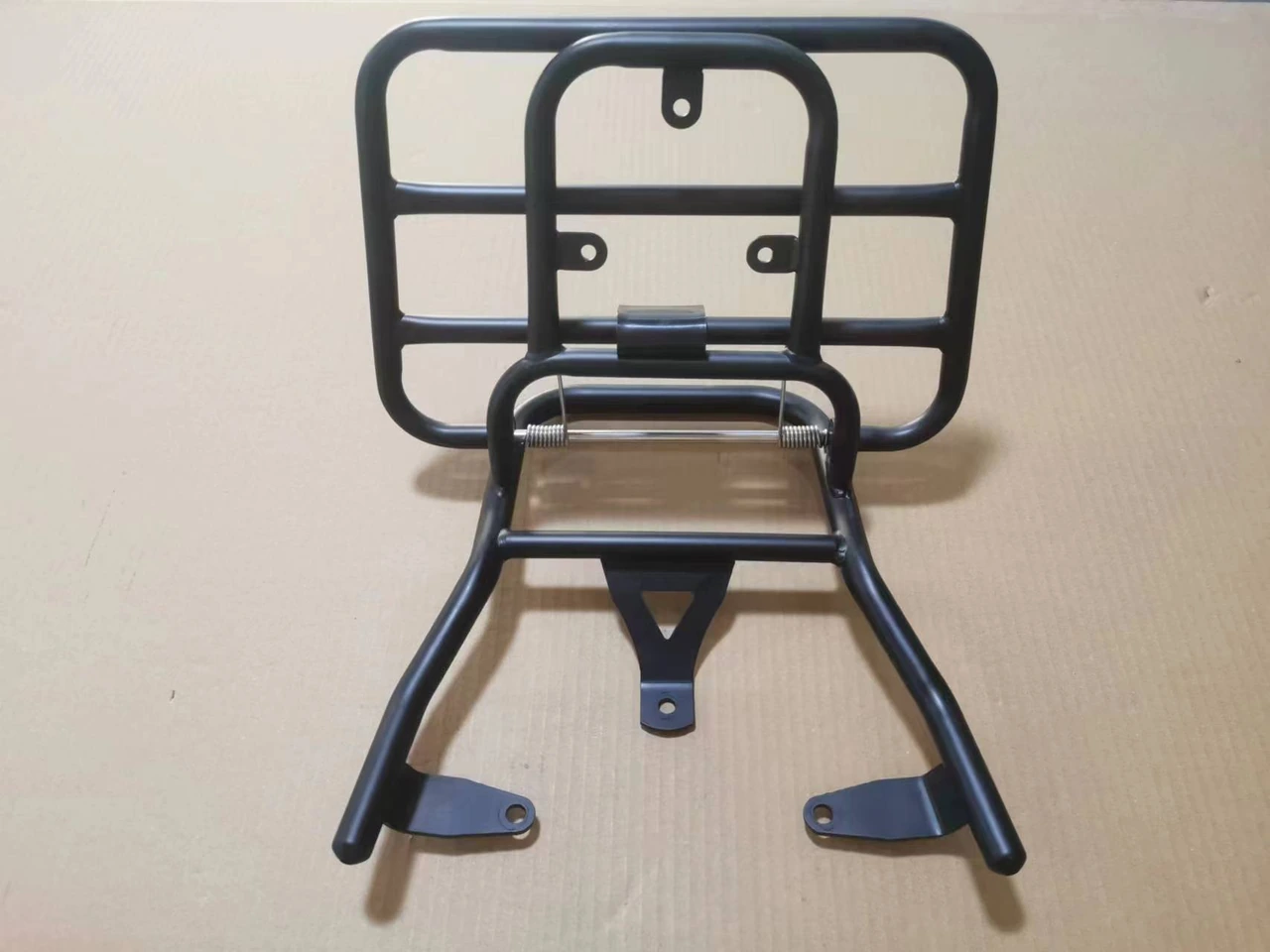
For example, BG EBIKE’s current customization reference lists the LHG-ECO Lithium black folding rear carrier, part 01.07.003.003, as optional equipment. A useful inquiry names that item and asks which mounting components are included for the selected vehicle version. The carrier reference does not establish that a cushion, box or every fastening part is included.
The carrier photograph below is an example of identifying a specific item. It is not a universal accessory for the vehicles in the workshop photograph. Keep an inquiry about equipment supplied with a vehicle separate from a request for replacement parts for an existing vehicle.
Copy this customization brief into your inquiry
Use one brief per base model. You can leave genuinely undecided fields open, but name the decision you need help with rather than substituting an assumed specification.
| Field | Information to provide |
|---|---|
| Base model and version | Model reference and the catalogue or quotation your team is using |
| Destination and quantity | Destination country or market and estimated vehicles per configuration |
| Items to retain | Existing quoted components or finishes that should remain unchanged |
| Requested change | Part name, requested colour or equipment, and requirement versus preference |
| Supporting reference | Marked image, sample identifier or model-specific part code |
| Included scope | Questions about mounting parts, associated items and what the price should cover |
| Open questions | Availability, compatibility, price impact and timing to be reviewed by the supplier |
| Contact and revision | Business email, brief date and revision; phone or WhatsApp is optional |
Where quantities differ by finish or equipment, break them out by configuration. “100 vehicles in two versions” is less useful than identifying the intended quantity of each version. These are planning figures for your inquiry, not a statement of BG EBIKE’s minimum order quantity.
Keep the request and the accepted quotation separate
A submitted brief describes what you want. The supplier response should show which items are available for review, which require further information and which are outside the proposed scope. Record any alternative offered against the original request.
Before agreeing an order, reconcile the accepted changes with the final quotation: model version, finish reference, equipment, included mounting scope, quantities and any agreed effect on price or timing. Compatibility and relevant model documents should be reviewed for the changed configuration. A marked image alone is not a complete order specification.
This approach also gives later sample and shipment checks a clear reference. The brief defines the request; the accepted configuration defines what is to be supplied. Keep the current version available to both purchasing and the team responsible for receiving the goods.
Before committing a container, you can order a sample of the customized version.
Frequently asked questions
Can I request a colour shown on another model?
You can use it as an appearance reference, but identify the model and part you want changed. Availability on one model does not establish availability on another. Ask for a model-specific response.
Does an optional part include its installation kit?
Not necessarily. Specify the item and ask which mounting components and associated parts the quoted supply includes. Do not use the photograph alone as the contents list.
Should I send a complete technical specification with the first inquiry?
Start with the model, market, quantity and clear change list. Add the references you already have and identify unresolved requirements. A short, specific brief is more useful than a long document that mixes different models or unapproved assumptions.
Send your model-specific request to BG EBIKE
Prepare your base model reference, requested changes and supporting images using the checklist above. Include your email address for follow-up and identify the questions you need answered before comparing quotations.
Review our customization scope and select a base model from the vehicle catalogue. For an existing vehicle needing a replacement rather than new-order equipment, use the model-specific parts information.
Discuss your customization requirements. The inquiry starts a review of the selected model and requested scope; it does not automatically approve every proposed change.