
Electric scooter cartons can arrive wet even when rainwater has not entered the container. Water vapour carried in the loading air, goods and packing materials can condense on cold surfaces during transport. A sound outer carton and a dry-looking loading photograph do not establish that moisture risk has been controlled.
Short answer: Because condensation forms inside the container. Moisture in the air, cartons and pallets condenses on the cold steel roof and walls as temperatures swing during the voyage, then drips onto the cargo—no leak required. Reduce it by loading dry goods, using desiccants or moisture-barrier film where needed, and agreeing the packing specification before shipment.
For importers, moisture protection belongs in the packaging discussion before the order is packed. It is a different task from calculating carton volume or checking that the correct vehicle configuration has been supplied.
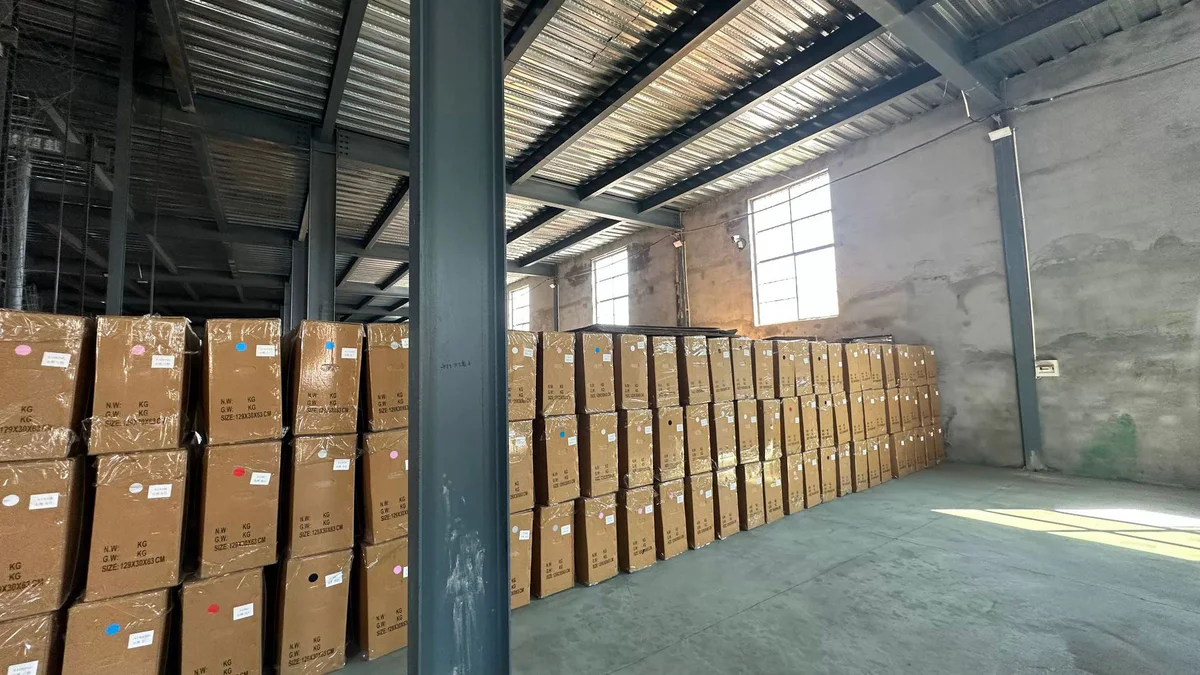
Container condensation is different from a roof leak
When an inner container surface becomes colder than the surrounding air’s dew point, water vapour can condense on it. Drops falling from those surfaces onto cargo are often called container rain. A leak instead admits water from outside.
BENZ Packaging’s explanation also distinguishes container-surface condensation from cargo sweat: condensation directly on colder goods exposed to warmer humid air. These mechanisms can require different investigation. Wet cartons alone do not identify the cause.
One possible moisture path
- Air, cargo or packing materials carry moisture into the shipment.
- A container surface cools below the air’s dew point.
- Water condenses on that surface.
- Drops may reach cartons or goods.
Conceptual sequence, not a record of a BG EBIKE shipment. It does not rule out leakage or other sources of wetting.
Why a dry-looking carton can still carry moisture
Paper-based packaging and timber can absorb moisture from their surroundings without visibly dripping. Hapag-Lloyd’s container packing guide, section 4.1, explains that cargo, stowage material and loading air affect container humidity. It advises dry storage of packing materials and assessment of climatic conditions along the route.
The guide is useful background on moisture control, not a current battery-transport rulebook. It also warns that absorbing materials do not eliminate every possibility of condensation damage. A packing plan needs to address the complete exposure, including storage and handling around the voyage.
What each packaging layer contributes
| Element | Question it addresses |
|---|---|
| Outer carton and physical protection | How is the vehicle protected and handled as a shipping unit? Carton appearance does not establish a vapour barrier. |
| Specified moisture barrier | What limits moisture exchange around the protected contents, and how is that enclosure closed? |
| Specified desiccant | What moisture is it intended to absorb, within which airspace and exposure period? |
A protective sheet, stretch wrap and a specified sealed barrier are not interchangeable descriptions. Ask for the material and closure details of the proposed pack instead of approving “plastic wrapping” as a complete moisture solution.
Likewise, desiccant quantity cannot be selected from vehicle count alone. Cargo and packing moisture, the protected enclosure, route and exposure period affect the design. The packaging specialist should specify the suitable material, working capacity and secure placement. This article does not prescribe a universal number of bags per scooter or container.
A purchasing example: two offers both say “carton packed”
This is a hypothetical document-comparison example, not a customer case. Offer A states “carton packed”. Offer B states “carton packed with desiccant”. B contains an additional statement, but neither description yet identifies the complete moisture-protection system.
The useful next step is to obtain the proposed packing description: the starting condition of materials, any protected enclosure and closure, the desiccant specification if used, and the route assumptions. If B’s desiccant is specified for a small sealed inner space, that is a different design from units exposed to the container air. Counting the bags does not make those designs comparable.
Record the accepted packaging version with the vehicle order. A later change to the packing materials, storage period or route may need a packaging review. Do not add protective chemicals or change the battery enclosure without the relevant manufacturer’s approval and compatibility assessment.
How to discuss wet cartons at arrival
Record where wetting is found, the condition of the container and seals, and which packages are affected before disposing of evidence. Keep photographs and available packing, loading and receiving records together. Follow the agreed reporting process and have the goods assessed before treating affected vehicles as saleable stock.
Neither “the container did not leak” nor “the cartons are wet” settles cause or liability on its own. A packaging or cargo survey can examine the evidence. This article does not diagnose an actual shipment from photographs.
For the separate volume calculation, use our packing and container-loading guide. For batch checks, see the pre-shipment inspection guide. Moisture protection supplements those tasks; it does not establish compliance with battery transport requirements.