
A TL marking identifies a tubeless tyre; it does not, on its own, establish that the assembled wheel runs without an inner tube. The rim and the tyre manufacturer’s permitted fitment also matter. For importers and dealers comparing seated electric mopeds or motorcycles, the useful distinction is between the tyre supplied and the complete wheel configuration supplied.
Short answer: A TL (tubeless) marking describes the tyre, not the wheel. The assembled wheel runs without an inner tube only if the rim is tubeless-compatible and the tyre is fitted that way; a TL tyre can still be used with a tube. TT means the tyre needs an inner tube. Confirm both the tyre marking and the rim for the version you order.
This guide explains that distinction. It does not cover bicycle tubeless-ready conversions or provide instructions for changing a vehicle’s approved wheel assembly.
TL vs TT tyres: what the markings describe
TL means tubeless; TT means tube type. A TT tyre needs an inner tube to retain pressure. A TL tyre has an airtight inner layer, but tubeless operation also depends on a suitable rim. Michelin’s motorcycle inner-tube guide explains why the tyre and rim must be considered together.
A size marking answers a different question. Two tyre descriptions can have the same dimensions while omitting information about their permitted assembly. Use our tyre-size guide for interpreting dimensions; keep the construction and fitment information alongside them.
Can a tubeless tyre be used on a tube-type rim?
For certain manufacturer-approved combinations, yes—with the specified inner tube. Continental’s motorcycle and scooter fitment guidance permits its TL tyres on tube-type rims with correctly sized inner tubes. This is a manufacturer-specific rule, not permission to combine any tyre, tube and rim.
That explains the apparent contradiction: an outer tyre can carry a TL marking while the approved assembly still contains a tube. The marking describes the tyre, not a complete inventory of everything inside the wheel.
For a proposed change, obtain the applicable tyre, rim and vehicle manufacturer’s fitment guidance. A tyre-size match alone does not approve a substitution.
Why a wheel photograph cannot settle the question
Neither a visible valve nor a familiar wheel shape is enough to identify the internal assembly. Michelin also describes spoked rims designed to maintain an airtight seal: spokes do not automatically mean that an inner tube is required.
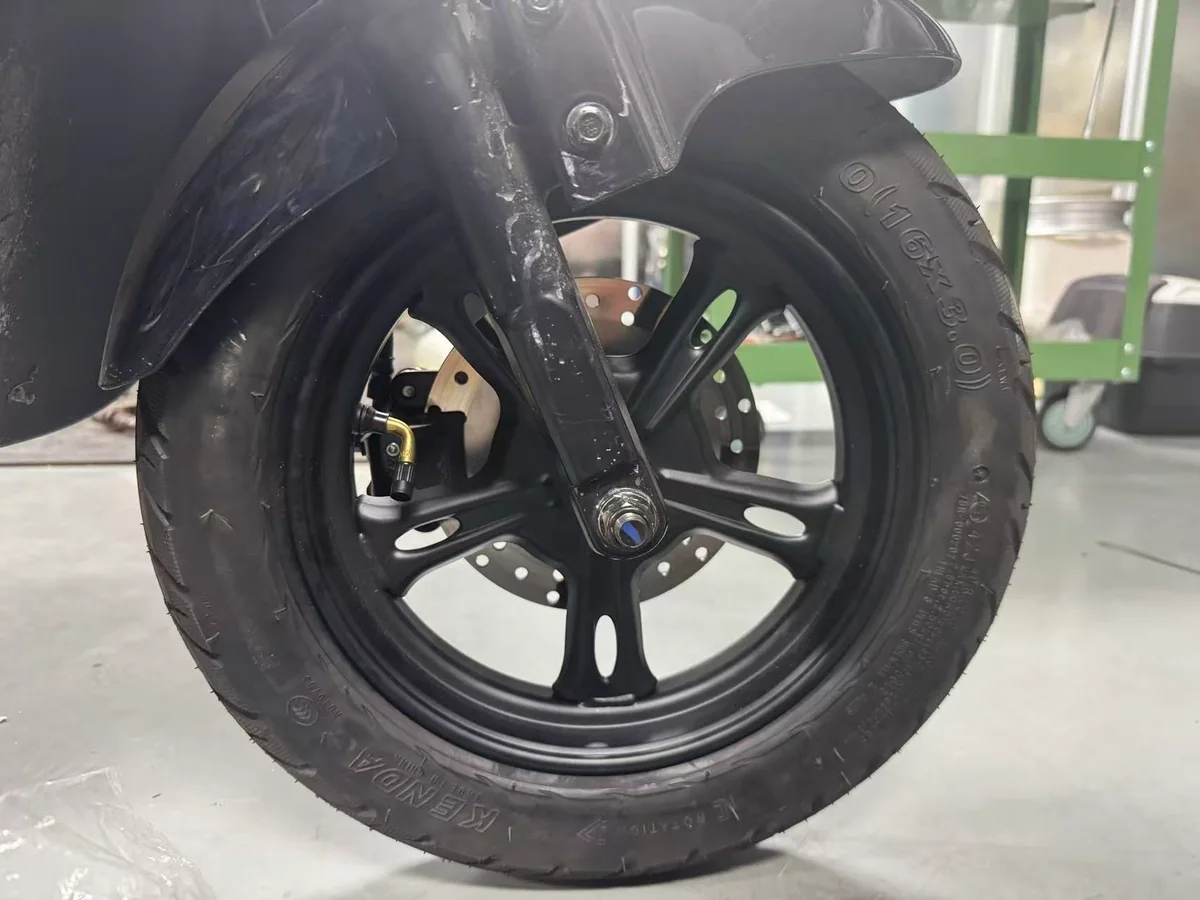
The photograph above is useful for identifying the photographed wheel and its visible components. It does not show the rim’s internal construction or provide a complete, legible construction marking. Its appearance should therefore not be used to label other models as tubeless.
How this changes a dealer’s order comparison
Consider two quotations for the same vehicle model and nominal tyre size. One says “TL tyre”; the other says “tubeless wheel assembly”. Those descriptions are not yet equivalent. The first identifies an outer-tyre characteristic. The second describes an intended assembly, which still needs to be tied to the quoted model and version.
This is an illustrative purchasing situation, not a comparison of two BG EBIKE offers. It shows why copying “tubeless” from a tyre description into a complete-vehicle specification can create an inaccurate sales description.
| Information received | What it establishes | What remains open |
|---|---|---|
| Tyre dimensions | The stated size | Construction and approved fitment |
| TL sidewall marking | The tyre’s tubeless designation | Whether this wheel is assembled with a tube |
| Model-specific wheel specification | The supplier’s stated assembly for that version | Any missing component references or approval conditions |
Resolve the missing assembly information before treating the quotations as the same configuration. Keep the answer with the accepted order version so sales staff and the service team work from the same specification.
Carry the distinction into after-sales identification
For a later replacement request, retain the original wheel configuration, tyre reference and relevant rim or tube references. A clear sidewall photograph helps identify the fitted tyre; the vehicle and order references connect it to the supplied assembly. A general product photo is less useful when similar-looking versions exist.
“Tubeless” should not be presented as “puncture-proof” or “maintenance-free”. This article does not establish pressure settings, repair suitability or an approved conversion. Those decisions require the instructions for the actual equipment.
Confirm the specification on a sample before committing a container; where a component or accessory needs to change, see what is possible through customization.
Frequently asked questions
Can a tubeless tyre be used with an inner tube?
Usually yes. A TL tyre can normally be fitted with a suitable inner tube, for example when the rim is not tubeless-compatible, provided the tyre manufacturer permits it. Check the tyre maker’s guidance and record whether a tube is fitted, so replacements are ordered correctly.
Can a TT tyre be run without a tube?
No. A TT (tube-type) tyre is designed to hold air with an inner tube and will not seal reliably on its own. Running it without a tube risks sudden air loss. If you want tubeless wheels, both the tyre and the rim must be designed for tubeless use.
What should the order specification say about tyres?
State the tyre size, the TL or TT marking, the rim type and whether an inner tube is fitted. Having all four in the specification makes after-sales replacements easier to identify and avoids stocking the wrong tyres or tubes.
Discuss the complete vehicle configuration with BG EBIKE
When comparing our seated electric scooters, include your selected model, destination market and estimated vehicle quantity. If tyre construction affects your selection, ask for the offered tyre-and-wheel specification for that version rather than requesting a generic “tubeless upgrade”.
For an existing vehicle, use the model-specific parts information and provide its identification and fitted-component references. This is a vehicle and after-sales inquiry route, not an offer of universally interchangeable tyres.