
A dealer choosing a Chinese electric moped range has two decisions to make: which models deserve a place, and which versions of those models deserve stock. This guide turns a catalogue shortlist into an order plan with a clear reason for every configuration.
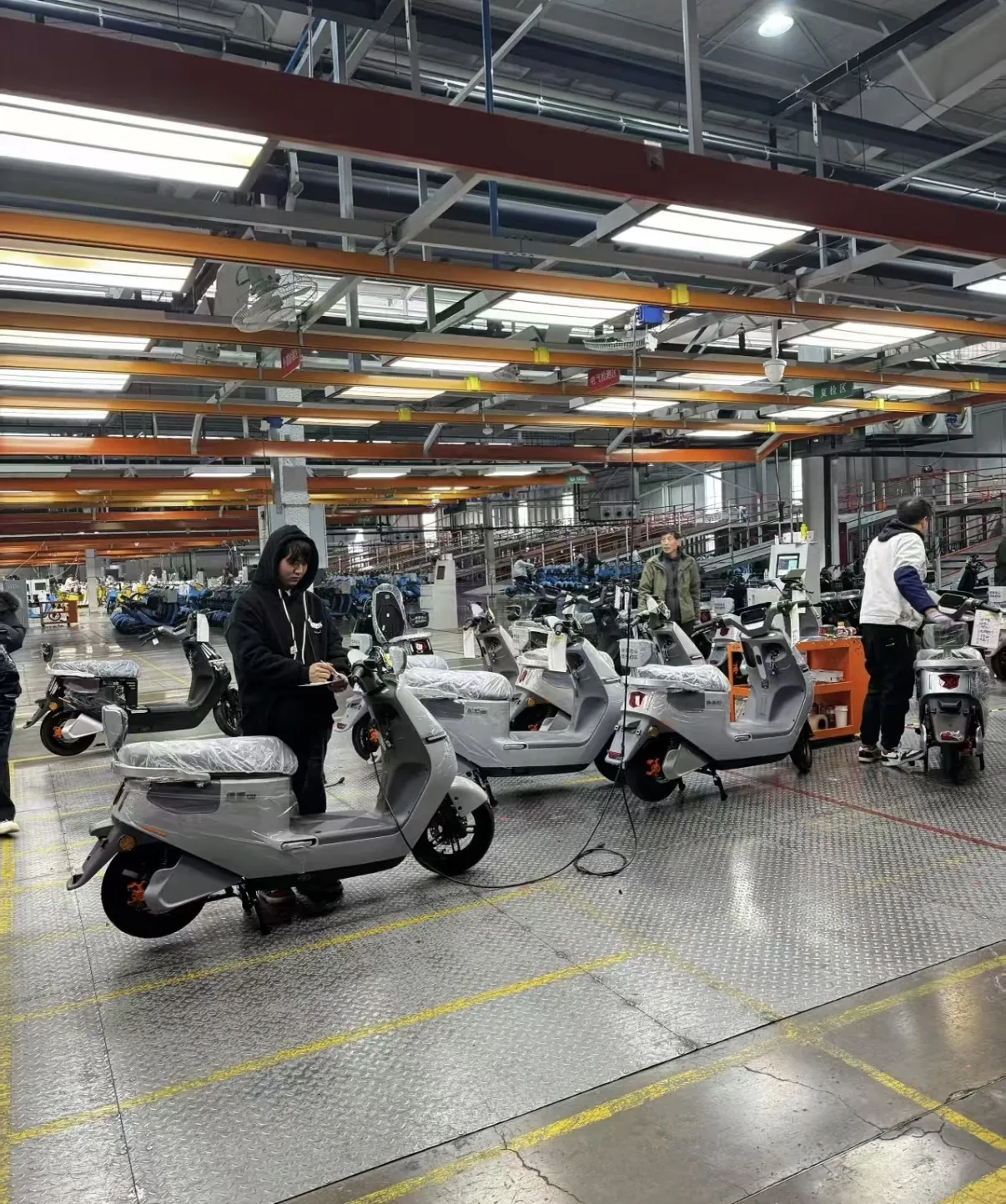
Short answer: Build a Chinese electric moped range by keeping models and versions that meet distinct, documented purchasing requirements, then combining options that serve the same purpose. The listed FUN, MEGA and H4 specifications offer eight model-and-voltage combinations in total; choosing one voltage per model reduces that shortlist to three builds before colours and accessories. Motor wattage alone cannot establish which build will sell or share service parts. BG EBIKE produces and assembles electric vehicles in its own factory in Taizhou, China, and accepts mixed-model orders with a flexible MOQ.
Which differences justify a separate model in your range?
A separate model earns its place when a documented requirement makes it meaningfully different from the other models you intend to carry. Record that difference before allocating quantities: otherwise a larger catalogue can become several competing versions of the same offer.
For this guide, electric moped describes the seated vehicle category buyers are researching; the destination’s vehicle classification and permitted use must be established for the exact version before it enters your order plan. Start with the requirements your import and sales team has already approved, rather than treating a product name as a market-access decision.
The following published BG EBIKE specifications provide a practical shortlist. Each voltage is a listed option, not a separate model, and the table does not assign sales tiers or performance rankings.
| Model | Listed electrical options | Listed brakes | Listed range |
|---|---|---|---|
| FUN | 500 W; 48 V or 60 V, 20 Ah | Front and rear drum | 60–80 km |
| MEGA | 1,000 W; 48 V, 60 V or 72 V, 20 Ah | Front and rear disc | 80–100 km |
| H4 | 2,000 W; 48 V, 60 V or 72 V, 20 Ah | Front and rear disc | 80–200 km |
These differences give a buyer useful questions to resolve. FUN brings a different brake arrangement and listed motor rating. MEGA and H4 have the same listed voltage choices and brake categories, but different motor ratings. Neither that overlap nor a shared voltage establishes component interchangeability.
Listed range depends on the battery fitted and riding conditions, so confirm it against the quoted configuration. Price, equipment and the intended sales offer need their own comparison; a higher listed wattage alone does not show acceleration, climbing ability or demand in your market.
How do you decide which configurations to keep?
Keep a configuration when removing it would leave a specific purchasing requirement unmet; merge or defer it when another retained configuration meets the same requirement. This gives each order line a purpose that the sales, service and purchasing teams can explain consistently.
Use a short decision sheet with four fields: the required difference, the proposed configuration, the reason another retained build cannot replace it, and the evidence needed before approval. A request for “more choice” is incomplete until someone identifies the choice that matters.
| Finding | Decision |
|---|---|
| A required specification is unique to this build | Keep it for verification |
| Two builds meet the same requirement | Compare and select one |
| A claimed difference has no supporting information | Defer the extra version |
| A mandatory requirement cannot be met | Remove it from this order |
For example, a dealer may have an approved requirement for a particular voltage in an existing product programme. That can justify retaining the matching version, provided the complete electrical specification also fits. “Our other vehicles use 48 V” alone does not establish that batteries, chargers or controllers can be shared.
A second model can also be useful when its confirmed equipment supports a different offer. The purchasing team should describe that offer in specific terms, such as a required brake arrangement or agreed equipment package. Avoid creating a tier around an unverified promise such as “twice the power, twice the capability.”
If MEGA and H4 remain on the shortlist, identify what the different motor specification changes in the intended offer and what still requires evaluation. If no meaningful distinction survives that work, selecting one for the first order is a valid outcome. The purpose of a three-model comparison is to make a choice, not to force three purchases.
How many versions are you actually committing to?
Count model-and-configuration combinations separately from model names, then count colour stock lines within the configurations you retain. Three model names can conceal a much larger replenishment and identification task.
In the listed shortlist, FUN has two voltage options, MEGA has three and H4 has three: 2 + 3 + 3 = 8 model-and-voltage combinations. Choosing one listed voltage for each leaves three builds. This count considers voltage only; battery specification, accessories and other agreed changes can create further distinctions.
A configuration count is a planning measure, not a multiplier for cost or spare-parts inventory. Eight builds do not automatically require eight complete parts inventories. Equally, three builds do not mean one charger, controller or brake component fits all three. Compatibility needs a part-level match.
Separate the records into three layers:
- Model: the named vehicle, such as FUN, MEGA or H4.
- Build: the model with its agreed electrical specification, brakes and included equipment.
- Stock line: that build in a specific agreed colour or saleable package.
This separation prevents a colour change from being confused with an electrical change. It also lets a replenishment request identify exactly what must stay the same. Your internal stock codes should point back to the accepted configuration record, rather than relying on a photograph or informal name.
What does a focused mixed-order plan look like?
A focused plan assigns quantities only after each retained build has a reason to exist and a defined specification. The following hypothetical 20-unit allocation illustrates the record structure; it is not a sales forecast or a recommended mix for every dealer.
| Illustrative line | Quantity | Configuration decision |
|---|---|---|
| FUN | 8 | One agreed voltage and equipment set |
| MEGA | 8 | One agreed voltage and equipment set |
| H4 | 4 | One agreed voltage and equipment set |
The total is 20 vehicles across three builds. Before using this structure, the buyer must replace each configuration description with the actual quoted version and document why each model remains.
Suppose the buyer cannot explain the distinction between the proposed MEGA and H4 offers. The correct response is to compare those two builds further or remove one, then revisit quantities. Keeping four H4 units merely to fill a third row would defeat the purpose of the exercise.
Conversely, a second voltage on one model may deserve its own line when an established purchase requirement calls for it. Add that line explicitly and reduce or reallocate another quantity. Do not hide the change in a general note saying “mixed battery versions,” because the accepted build and later replenishment would become harder to identify.
At BG EBIKE, the minimum order is flexible and set by model, because vehicle size decides how many units fill a container. Branding has a separate threshold: our logo service starts at one full container. An unbranded mixed order and a branded programme therefore need different planning even when the vehicle shortlist is identical.
Where can a wider range add cost or purchasing risk?
A wider range adds exposure when it divides stock among versions whose demand, specification or support needs have not been established. The practical question is whether the additional choice is worth the extra purchasing and service work it creates.
Consider capital allocation first. With a fixed vehicle quantity, adding more stock lines reduces the units allocated to some existing lines. Whether that is sensible depends on your own orders and sales evidence. There is no universal percentage split that can substitute for that information.
Next consider the work behind each difference: an additional specification to approve, an additional product description to maintain, and a potentially different service reference. Those are planning tasks, not proof that every extra option is uneconomic. A well-supported option serving a genuine requirement can justify them.
Before requesting prices, hold the relevant specification constant so that an equipment change does not masquerade as a supplier price difference. Use our wholesale pricing information to prepare the commercial request and the like-for-like quotation guide for the detailed comparison method.
Customization also changes the planning boundary. BG EBIKE offers colours and accessories by model, and handlebar or seat changes on most models, while existing frames remain unchanged. Review the model-specific customization scope before building an offer around a modification. A configuration that depends on a different frame is not a minor variation of the existing model.
What should you send before approving the range?
Send one consolidated specification schedule that lets the supplier respond to each build individually. This is the bridge between choosing an assortment and checking whether the manufacturer can supply it.
- Destination and use: identify the intended market and the requirements your team needs the exact version to meet.
- Model and build: name the model, selected voltage, battery specification, brake arrangement and required equipment.
- Allocation: state quantity per build and colour, keeping optional alternatives separate.
- Changes: distinguish essential modifications from preferences that can be dropped.
- Supply format: specify complete vehicles or the proposed kit scope and local assembly responsibilities.
- Approval owner: identify who accepts the specification and any subsequent changes.
BG EBIKE mainly supplies complete vehicles; SKD or CKD supply is agreed by model and scope. Choosing kits does not remove the need for configuration control: the buyer also needs a clear division of assembly work.
Once the shortlist is defined, use the companion guide to verify an electric moped manufacturer against your requirements. It covers the supplier decision rather than repeating the model-range exercise.
Models to compare
Use these three product pages to check the differences underlying your shortlist, then retain only the builds your purchasing brief justifies.
- FUN 500 W seated electric scooter: compare its listed drum brakes and two voltage options with the other candidates.
- MEGA 1,000 W seated electric scooter: examine whether its agreed configuration fills a distinct place in the offer.
- H4 2,000 W seated electric scooter: assess the different listed motor specification without assuming shared parts with MEGA.
Browse the wider seated electric scooter range if the shortlist does not meet a mandatory requirement.
Frequently asked questions
These answers address additional decisions after you have built an initial configuration shortlist.
Should a dealer launch every colour at once?
No; launch colours that your purchasing brief can justify and keep the rest as possible later additions. A colour split creates separate stock lines even when the mechanical build stays unchanged. Record the agreed finish and quantity against each line, then use your own enquiries, reservations or sales records to decide whether another colour deserves stock.
When should an importer add another model to the range?
Add a model when a documented unmet requirement remains after reviewing the existing range. Useful signals include repeated requests for a specific configuration that your current builds cannot provide, rather than general interest in a new appearance. Compare the new model with the nearest existing offer and decide whether it should supplement that offer or replace it.
Can the same model name be used for a repeat order?
The model name is a starting point, but a repeat order should refer to the previously accepted build and identify any changes. Include the agreed electrical specification, equipment and colour alongside your own stock reference. Ask for proposed substitutions to be listed explicitly so that a familiar name does not conceal a different configuration in the next shipment.
Basis of this guide: BG EBIKE’s published FUN, MEGA and H4 specifications and linked business terms, with an explicitly hypothetical allocation example. Configuration details are confirmed against the quoted version.
Related guides
- Electric moped manufacturers: how to verify a supplier
- Chinese electric motorcycles: what importers check before ordering
- Lead-acid vs lithium batteries for electric scooters
Send your shortlisted models, quantity per build and colour, destination and supply format. BG EBIKE replies within 24 hours on working days and provides a PDF catalogue on request.