
Some electric mopeds use a front disc and rear drum because the two wheels form one braking system with different design and service requirements. The combination can balance the selected components, packaging and purchase cost. It does not, by itself, tell a buyer how quickly the complete vehicle stops.
Short answer: Because the front wheel does most of the braking, many mopeds fit a disc brake there and an enclosed, low-maintenance drum brake at the rear. The pairing balances stopping power, weather protection, servicing and cost. It does not by itself tell you the stopping distance; combined braking (CBS) and ABS are separate functions.
For an importer choosing seated electric scooters, the useful comparison is between complete vehicle configurations. Start with the intended use and local service capability, then compare the specified brake assemblies and supporting evaluation. Counting discs is an incomplete way to select a model.
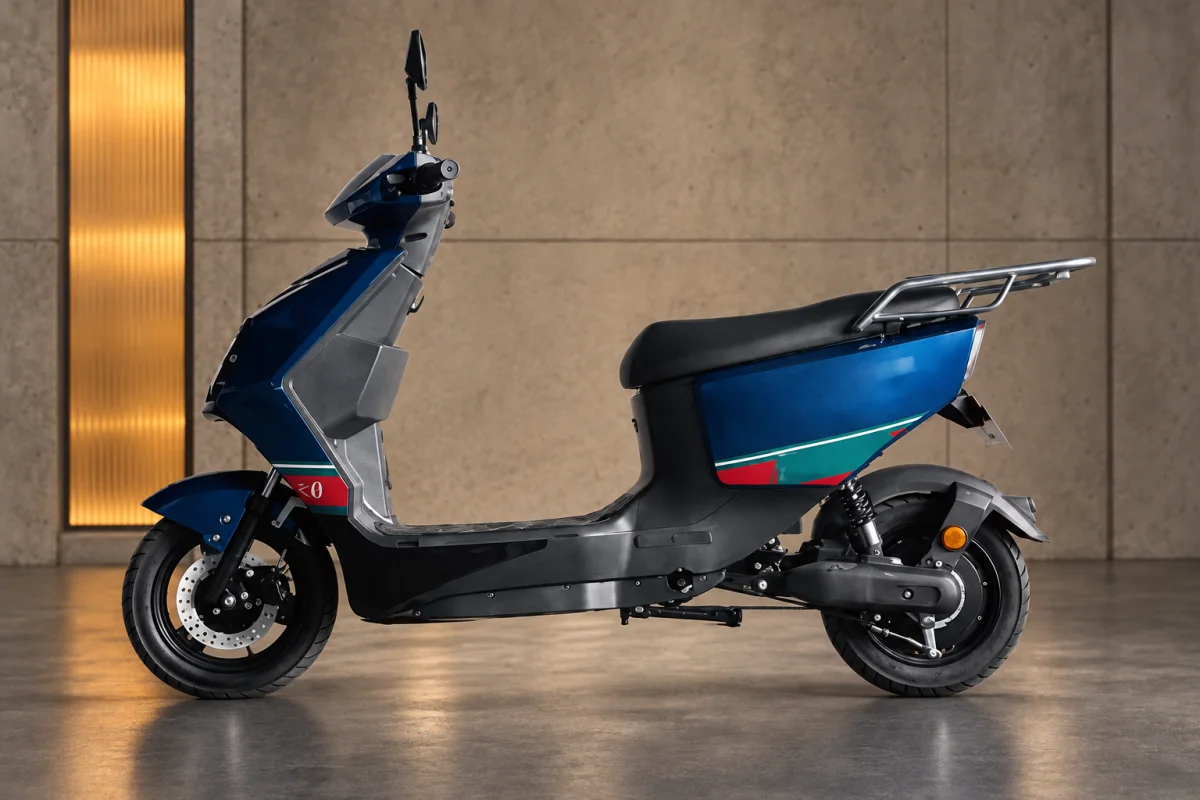
Why can the front and rear use different brakes?
A disc brake uses pads acting on a rotor. A drum brake uses shoes acting against the inside of a drum. These are different friction assemblies; using both on one vehicle does not mean that one wheel has no service brake.
During deceleration, load shifts towards the front wheel. The front and rear therefore do not perform identical jobs under braking. The vehicle designer selects the assemblies as part of the complete system, including tyre grip, weight distribution and control arrangement. A buyer should not assign a fixed front/rear braking percentage to every scooter.
Packaging also differs. A rear wheel can share space with the drive motor, suspension mounting and other hardware. The chosen assembly affects access for inspection and replacement. These practical differences help explain why using the same brake mechanism at both ends is not the only possible design.
Cost can be another consideration, but a catalogue label does not reveal a manufacturer’s design priorities or the price difference between two complete systems. Compare actual offers instead of assuming a rear drum always makes a vehicle cheaper to buy or maintain.
Disc and drum describe hardware; CBS and ABS describe other functions
A front-disc/rear-drum description identifies the friction mechanisms. It leaves other questions open: how each assembly is actuated, whether the controls link the two wheels, and whether anti-lock control is fitted.
Honda’s explanation of advanced brake systems distinguishes CBS, which links front and rear braking through a control input, from ABS, which controls braking to counter wheel lock. These are separate functions. A disc is not evidence of ABS, and a mixed disc-and-drum layout is not evidence of CBS.
Electrical motor cut-off is another distinct function. It stops motor drive in response to braking; it should not be described as proof of ABS, linked braking or a particular stopping distance. Our brake cut-off explanation covers that distinction.
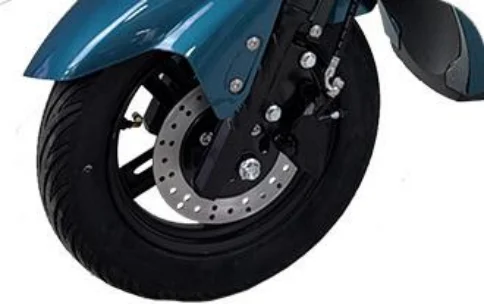
Does a dual-disc scooter automatically make a better purchase?
Dual disc describes a layout, not the result of a comparative braking test. Rotor and caliper specifications, tyres, controls, vehicle load and operating conditions all belong in a meaningful comparison. The number of discs cannot establish a stopping-distance advantage.
For repeated stops or loaded operation, ask for an evaluation suited to the intended duty and the vehicle’s permitted use. A short unloaded demonstration answers a narrower question. If the supplier has comparable results, retain the configuration and conditions beside them; if not, avoid presenting a layout preference as a measured result.
For dealer support, compare the actual service work: access to wearing parts, replacement references, applicable inspection instructions and local availability of the required parts and skills. A rear drum still needs maintenance. A disc assembly also needs the inspection and servicing specified for that assembly. Neither label establishes a universal service interval.
Two catalogue entries: what is actually known?
| Model | Listed brake entry | How to use it |
|---|---|---|
| OG5 | Disc and drum | Identifies a mixed entry; front/rear allocation is still needed. |
| OG6 | Dual disc | Identifies a different layout; it does not quantify braking performance. |
Source: BG EBIKE catalogue-based model records. OG5 and OG6 are different vehicles, so this is not a controlled brake-system comparison. Their hydraulic suspension entries describe shock absorption and should not be copied into a hydraulic-brake field.
Use these entries to identify which build to discuss. For a town-dealer range, service access and parts planning may influence the shortlist. For a project with frequent loaded stops, the relevant complete-vehicle evaluation becomes particularly important. In either case, the purchase decision needs more than a preferred brake label.
For the broader vocabulary used in quotations, see our brake types guide. This article focuses on the front/rear combination on seated vehicles.