
An electric cargo tricycle should be selected around the goods it must move, the space it must pass through and the way those goods will be unloaded. For importers, dealers and fleet buyers, starting with motor wattage alone can produce a vehicle that looks suitable on a quotation but does not fit the customer’s working route.
Short answer: Choose an electric cargo tricycle by matching the cargo-box dimensions and defined load allowance to the actual goods, then checking overall vehicle width, unloading method and the complete electrical configuration. Keep box size, vehicle size and shipping size separate. BG EBIKE’s listed 1.1m and 1.8m cargo models illustrate the distinction: their cargo-box lengths are 1,100mm and 1,800mm, while their overall lengths are 2,500mm and 3,300mm.
This guide covers motor-powered cargo-bed tricycles in our electric tricycle range. It does not treat a pedal cargo cycle, a passenger tricycle with a basket and a cargo-bed vehicle as interchangeable products.
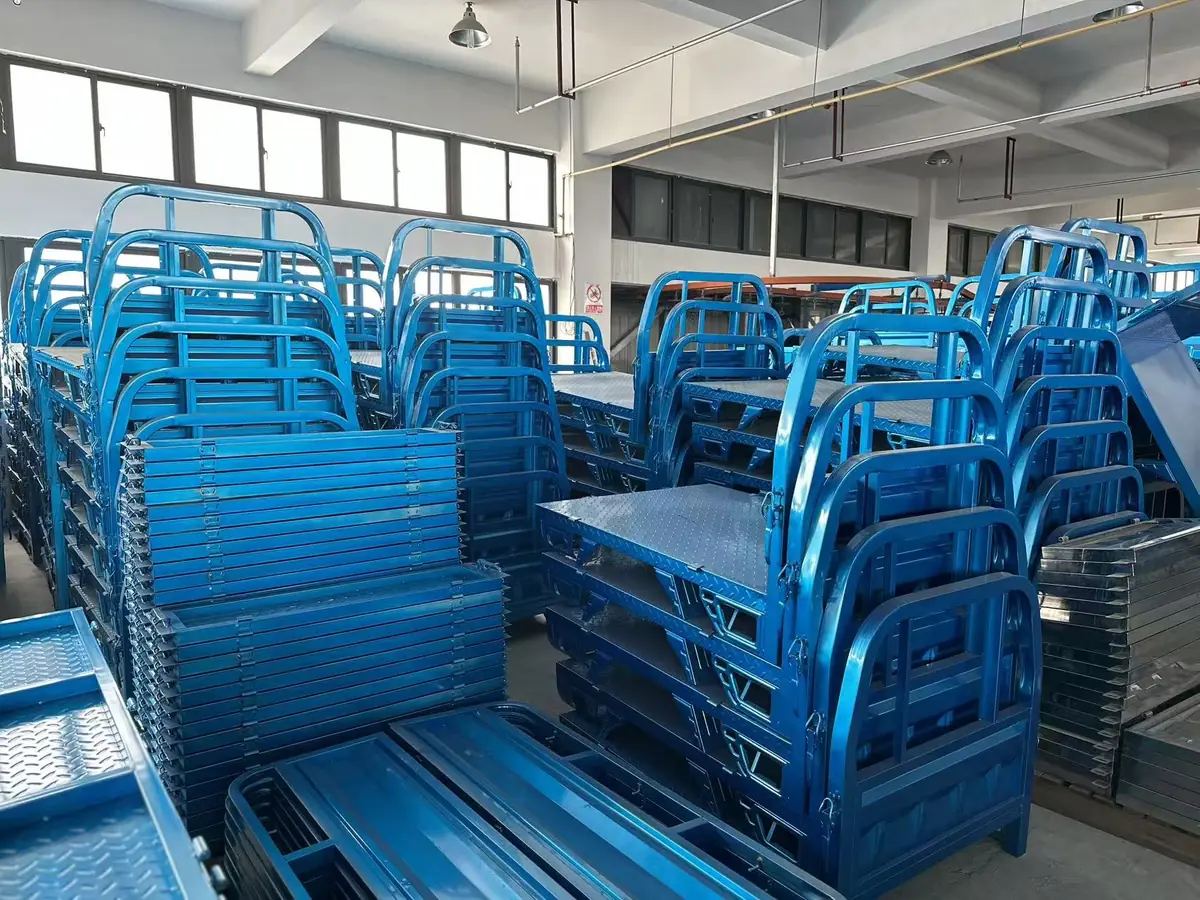
What should an electric cargo tricycle carry on a normal working day?
Start with a representative load and route, not the largest load a customer might occasionally want to move. A useful procurement brief describes the goods as they travel: packaged dimensions, combined mass, loading arrangement and destination within the site.
| Customer requirement | Record before choosing a model |
|---|---|
| Cartons, crates or tools | Largest packaged item, typical number per trip and combined mass |
| Loose material | Material type, normal load and whether tipping is permitted at the receiving point |
| Restricted access | Narrowest clear opening, turns, surface condition and overhead restrictions |
| Repeated trips | Distance per shift, loaded and empty legs, gradients and charging opportunity |
| Local dealer support | Vehicle version, tyre sizes and the replacement-part references to retain |
A dealer comparing a cargo electric tricycle for market deliveries with one for internal factory transport may therefore need different body sizes even when both customers ask for the same motor rating. Keep those applications on separate inquiry lines until the requirements show that one configuration serves both.
How do cargo-box dimensions differ from vehicle dimensions?
The box dimensions help assess the goods; the overall vehicle dimensions help assess access and storage. Neither gives the packed dimensions used for freight. A model described as “1.8m” does not mean the assembled vehicle is only 1.8m long.
These three current BG EBIKE listings provide useful reference points. Dimensions below are listed specifications, in length × width × height order.
1.1m cargo model: start with the smaller body
- Cargo box: 1,100 × 850 × 430mm.
- Overall vehicle: 2,500 × 850 × 1,440mm.
- Electrical configuration: listed 500W and 48V 20Ah.
Use this listing as the smaller-body comparison when the load is compact or access is limited. A nominal 850mm vehicle width is still not permission to pass through an 850mm opening: operating clearance and the complete supplied vehicle need to be checked.
1.8m cargo model: more box area, more vehicle width
- Cargo box: 1,800 × 1,300 × 430mm.
- Overall vehicle: 3,300 × 1,380 × 1,440mm.
- Electrical configuration: listed 60V 1800W and 60V 58Ah.
The listed overall width is 530mm greater than the 1.1m model’s. That difference matters at a warehouse doorway or between fixed obstructions, independently of the larger motor entry.
1.6m dump-bed model: include unloading in the comparison
- Cargo bed: 1,600 × 1,100 × 430mm, with a tipping body.
- Overall vehicle: 3,100 × 1,180 × 1,440mm.
- Electrical configuration: listed 60V 1500W and 60V 32Ah.
This is an unloading choice as well as a size choice. It should enter the shortlist when the intended material and receiving area suit tipping. Our dump-bed selection guide explains that decision without treating a raised-bed photograph as a lifting-capacity test.
How can buyers check whether the goods will fit?
Use measured usable space and a load layout, rather than dividing a box volume by the volume of one package. Side-panel thickness, openings, protrusions and restraint space can change the usable dimensions.
Illustrative layout: suppose a measured clear floor is 1,200 × 800mm and each packaged carton measures 600 × 400mm. A simple two-by-two arrangement uses the floor area for four cartons in one layer. If each packaged carton weighs 35kg, the cartons total 140kg. This is a layout example, not a capacity claim for any model; allowances for securing and handling the goods still need to be included.
For the listed BG cargo boxes, length multiplied by width gives 0.935m² for the 1.1m model and 2.34m² for the 1.8m model. Those are calculated rectangles from catalogue dimensions, useful for a first comparison. They are not verified clear floor areas and do not establish the number of cartons or pallets the vehicle can carry.
Attach a sketch or photograph of the proposed load to the sample evaluation. It should show the goods in their intended orientation, how they will be restrained and how the operator will remove them. For mixed-size loads, checking only the largest carton is not enough: the combination must fit too.
What does a load-capacity figure actually include?
A load figure is useful only when its definition and operating conditions are clear. Keep vehicle mass, goods, occupants and any fitted accessories separate until the supplier’s specification states how they are counted.
The 1.6m dump-bed page includes an 800kg rated-load entry. Record it as a listed specification for that version, with its driver allowance, load distribution and operating conditions to be established for the order. It is not evidence that the tipping mechanism can lift 800kg in every position, or that maximum load, speed, range and climbing performance are available together.
Use four fields on the purchase specification:
- Normal goods load: the customer’s measured working load, including packaging.
- Required allowance: any occupants, accessories or other items that the applicable limit must include.
- Approved distribution: how the load is positioned and restrained for the supplied vehicle.
- Operating conditions: the route, surface, gradients and loading or unloading arrangement covered by the instructions.
The UK Health and Safety Executive’s workplace loading guidance calls for distributed and secured loads, suitable loading areas and avoidance of overloading. These general principles help frame a procurement review; the chosen vehicle’s instructions determine its specific limits.
How should buyers compare voltage, Ah and motor power?
Compare the complete electrical package and the working duty. Ah alone does not compare battery energy across voltages, and motor wattage does not establish payload or loaded hill performance.
| Listed battery configuration | Calculated nominal energy |
|---|---|
| 48V × 20Ah | 960Wh / 0.96kWh |
| 60V × 32Ah | 1,920Wh / 1.92kWh |
| 60V × 58Ah | 3,480Wh / 3.48kWh |
These calculations compare nominal stored energy. They do not measure usable energy, charging consumption or range. Keep the battery chemistry, charger, controller and drive arrangement attached to the model version; do not treat two batteries as interchangeable because one number matches.
For a sample assessment, specify the representative cargo mass, route distance, stops, surface and charging window. Record the result under those conditions instead of accepting an unloaded range figure as proof of a full-shift duty. This produces a useful acceptance record without inventing a universal watts-per-kilogram rule.
What belongs in a dealer’s quotation and sample brief?
A comparable quotation fixes the body, electrical configuration and supply scope on each order line. A sample assessment then checks whether that version performs the intended work.
- Identify the body: cargo-box size, standard or tipping arrangement, openings and overall dimensions.
- Describe the work: goods, normal packaged load, access restrictions and unloading location.
- Fix the configuration: battery, charger, drive, brakes, tyres and included equipment.
- Define acceptance: the measurements and representative working conditions to record during sample evaluation.
- Plan support: model-specific tyre and component references, operating information and the parts required locally.
- Separate supply formats: complete vehicles or the agreed SKD/CKD scope, with the corresponding packing list.
At BG EBIKE, we produce and assemble electric vehicles in our own factory in Taizhou, China. MOQ is flexible by model and models can be mixed in one container. A mixed order should still retain separate configuration and parts records for each vehicle.
For freight, use the agreed packing and loading plan. For example, the 1.6m dump model’s listed 60 units per 40HQ is a CKD reference, not a count for assembled vehicles. Body size, battery specification, supplied equipment and packing also affect the scope of a wholesale quotation.
Frequently asked questions
Does a wider cargo box guarantee a higher permitted load?
No. Width describes space; the permitted load depends on the specified vehicle and operating limits. A wider box may suit bulky goods without establishing suitability for heavier goods. Keep the customer’s packaged load and its distribution alongside the model’s defined rating.
Can an electric cargo tricycle replace a passenger tricycle in an order?
Not as a like-for-like substitution. Seating, body structure, intended use and market requirements differ. A cargo bed or load figure is not passenger accommodation. Keep passenger and cargo requirements on different specification lines and review the exact version for the destination market.
Should every dealer order include the largest cargo model?
No. Include a larger model when the customer’s load and route need it. A vehicle that offers more box area but does not fit the receiving site is not a useful upgrade. Build the range around distinct working requirements rather than repeating the same application at several motor ratings.
Basis: BG EBIKE’s linked model specifications, reviewed on 17 November 2026; area and battery-energy calculations from the listed dimensions and electrical entries; HSE workplace loading guidance. The carton layout is an illustrative calculation.
Comparing body sizes for a dealer order? Add the 1.1 m and 1.8 m cargo models to the same quotation. Enter your required quantities and destination so the two configurations can be priced on the same basis.
Request a cargo-model comparison
Send the goods and packaged dimensions, normal load, access restrictions, unloading method, destination, quantity per model and colour, and preferred supply format. We can then compare the relevant cargo configurations and prepare a quotation for the actual requirement.
Related guides
- When a dump-bed tricycle belongs in the shortlist
- Chinese electric tricycles: models and import orders