
Short answer: To build a compliant EU Battery Passport before 18 February 2027, the EU operator must register an account on registry.product-passport.ec.europa.eu, secure an eIDAS QSeal (2–6 week lead time), assemble the 71 official EC data points (V3.0, October 2026) across three access tiers, and mark each serialized pack with an ISO/IEC 15459 QR code built to EN 18216–18246:2026.
A marketing QR code linking to a static PDF fails Regulation (EU) 2023/1542 Chapter IX. The EU Battery Passport requires statutory fields, dynamic lifecycle updates, role-based access control, central EU registry filing and harmonised EN interoperability standards.
How does the EU Central DPP Registry work for importers?
The European Commission portal (https://registry.product-passport.ec.europa.eu) opened on 20 July 2026 for initial onboarding (the battery semantic catalogue for individual passport submissions is still finalising as of November 2026).
- Central Registry layer: Stores unique battery identifiers, operator identifiers and registry metadata, connecting directly to EU customs via EU CSW-CERTEX.
- Decentralized storage layer: Full passport content (specs, conformity files, dismantling manuals, BMS data) stays on the operator’s or DPP service provider’s system and is queried via APIs.
- Immediate importer steps: (1) Open your Economic Operator account on the EU portal; (2) Apply for an eIDAS QSeal immediately (allow 2–6 weeks); (3) Confirm hosting/delegation roles in writing (see importer vs factory roles).
Which of the 71 EC data points are mandatory on 18 February 2027?
European Commission Guidance V3.0 (19 October 2026) defines 71 official data points, mapped by DIN DKE SPEC 99100:2025-02 and BatteryPass-Ready v2.0 (August 2026) into 8 categories (92 detailed attributes):
| Category (BatteryPass-Ready v2.0) | Fields | Core contents for LMT & EV packs | Required 18 Feb 2027? |
|---|---|---|---|
| 1. DPP header | 9 | Passport version, unique ID, status, language & encoding metadata | Yes |
| 2. Identifiers & product data | 13 | Unique ID, responsible operator, manufacturer name/address, category, model/batch/serial, plant location & month/year, weight, warranty, status | Yes |
| 3. Symbols, labels & conformity | 7 | Collection symbol, Cd/Pb marks (if applicable), extinguishing agent, EU Declaration of Conformity, compliance test reports | Yes |
| 4. Carbon footprint | 8 | Footprint per functional unit, lifecycle breakdown, performance class | Not yet (+12/18m after delegated act) |
| 5. Supply chain due diligence | 3 | Due diligence report & third-party assurance references | Not yet (from 18 Aug 2027) |
| 6. Materials & composition | 4 | Chemistry, critical raw materials (>0.1%), hazardous substances, cell composition | Yes (phased per EC V3.0) |
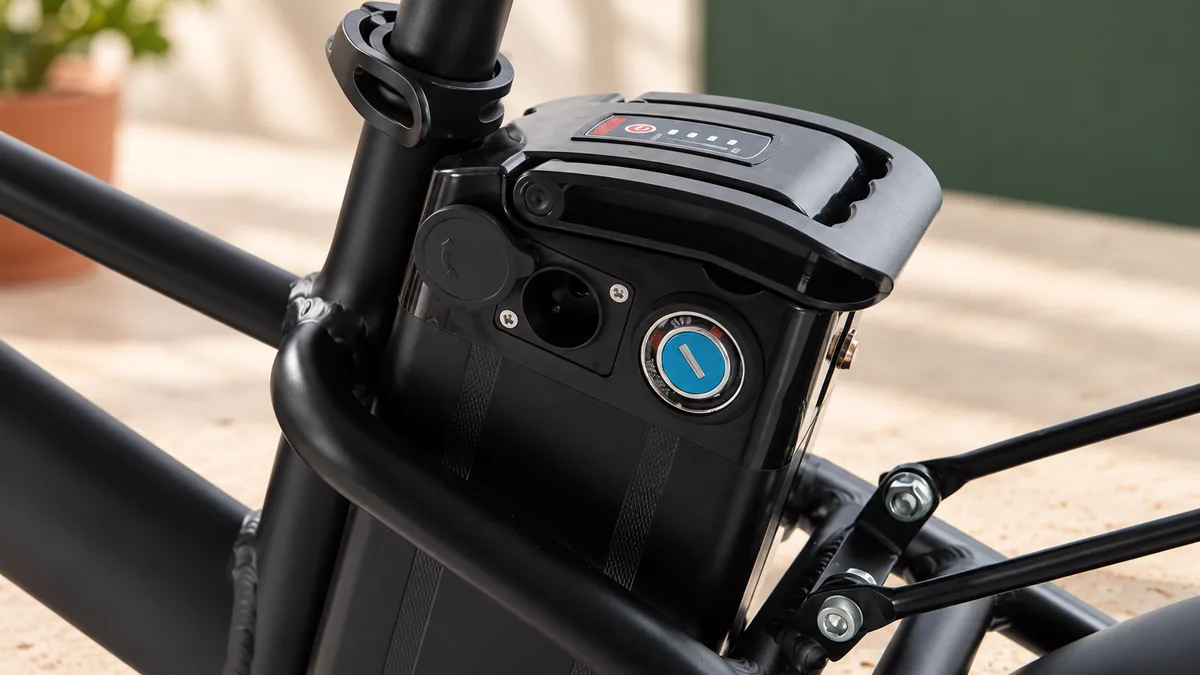
| 7. Circularity & resources | 12 | Dismantling/removal manuals, spare-part numbers & ordering contacts, safety & collection info (recycled content awaits Art. 8 act) | Yes (except recycled share) |
| 8. Performance & durability | 36 | Static: capacity, voltage, power, efficiency, expected life, temp limits. Dynamic (BMS): remaining capacity, SoH/SOCE, SoC, cycles, extreme-temp/overcharge events | Yes (dynamic where BMS used) |
How do the 3 access tiers protect supplier confidentiality?
| Access tier | Permitted audience | Visible data |
|---|---|---|
| 1. Public (QR scan) | Anyone (consumers, dealers, riders) | Model, category, manufacturer/operator, production date, capacity, weight, chemistry, hazards, extinguishing agent, collection/safety info, EU DoC. |
| 2. Legitimate interest | Repairers, recyclers, second-life operators, battery buyers & authorities | Dismantling manuals, spare-part numbers & contacts, detailed material breakdown, dynamic BMS state-of-health & cycle history. |
| 3. Authorities & NBs | Market surveillance authorities, Notified Bodies, European Commission | Complete test reports and full conformity assessment files. |
Key QR, EN 18216–18246:2026, language and accessibility rules
- Unique ID & QR carrier: Pack QR codes link to ISO/IEC 15459-1 to 15459-6 identifiers. EN 18219:2026 supports GS1/ISO 15459, EN 61406 Identification Links, DID and DOI—no single proprietary vendor format is forced.
- Eight 2026 harmonised EN standards: EN 18216 (exchange protocols), EN 18219 (unique IDs), EN 18220 (QR/RFID/NFC carriers), EN 18221 (storage, archiving & persistence), EN 18222 (lifecycle APIs), EN 18223 (interoperability), EN 18239 (access rights & IT security, Oct 2026), and EN 18246 (data integrity & anti-tampering, Oct 2026).
- Languages & accessibility: Under Article 6 of the December 2025 draft labelling implementing regulation (formal adoption pending), provide the official language(s) of the specific Member States where you sell—not all 24 EU languages by default—and ensure consumer-facing pages meet the European Accessibility Act (Directive (EU) 2019/882).
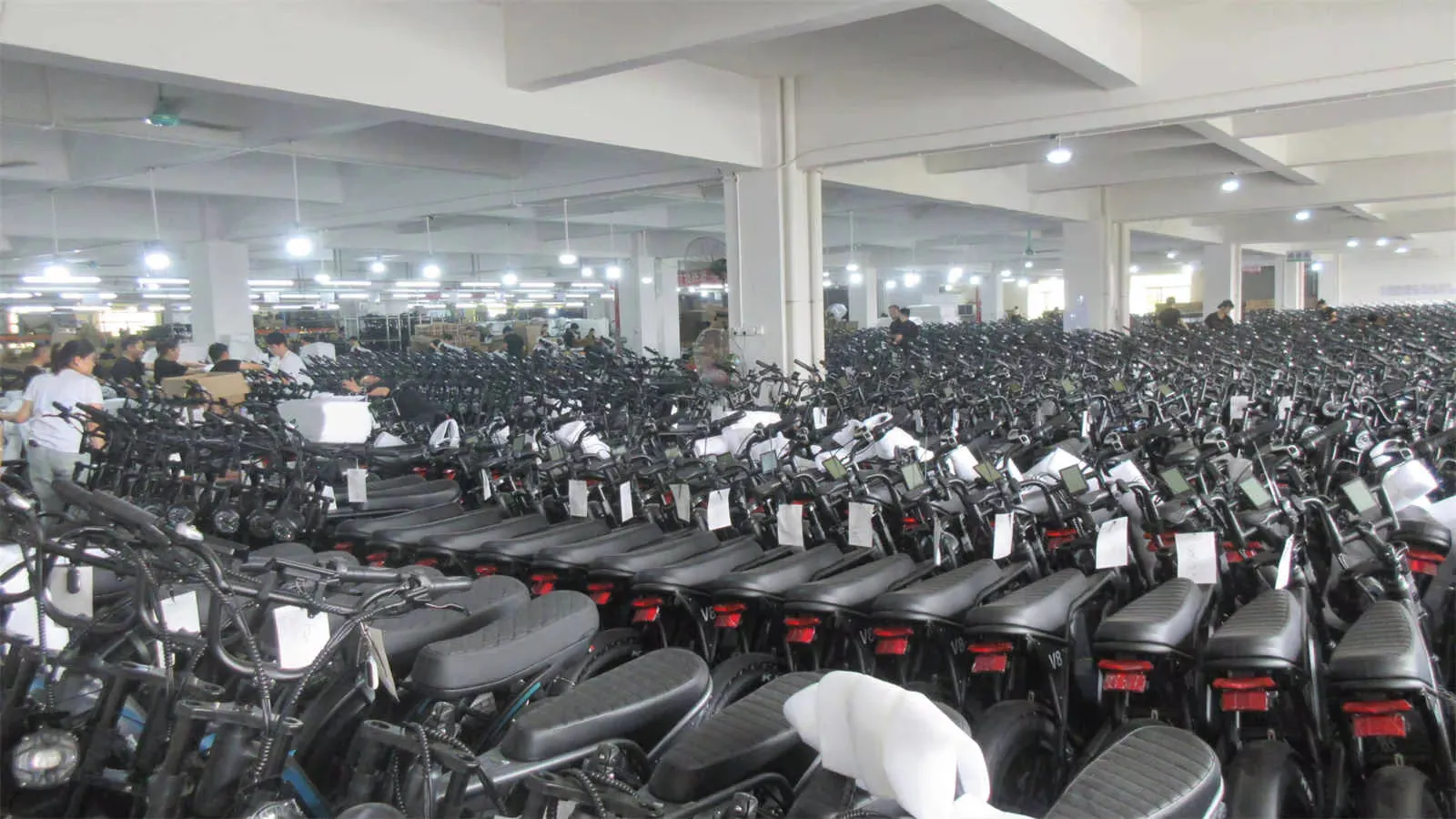
At BG EBIKE, we build electric bikes, scooters, motorcycles and tricycles in our own Taizhou factory and provide model-specific EEC/COC and CE files where listed, plus lithium transport documents (MSDS and UN38.3 test summary supplied for lithium battery shipments). Share your destination EU country matrix before production so battery specs and inspection checks stay aligned.
Method note: Reflects EC Guidance V3.0 (19 Oct 2026), DIN DKE SPEC 99100:2025-02, BatteryPass-Ready v2.0 (Aug 2026), EN 18216–18246:2026 and the Dec 2025 draft labelling act as of November 2026.
Continue to our LMT battery hardware & pre-order checklist, revisit the 2027 overview & shipping timeline, or browse EEC/COC models and send your EU order inquiry.
Frequently asked questions
Do I upload all 71 data fields into the European Commission central registry?
No. The central registry at registry.product-passport.ec.europa.eu stores metadata and unique identifiers linked to EU CSW-CERTEX customs, while the full passport dataset remains in decentralized storage operated by the economic operator or its DPP provider.
Must the Battery Passport page support all 24 EU official languages?
No. You only need the official language(s) required by each EU Member State where the battery is actually placed on the market.
Can an importer shut down its passport server if it later exits the EU market?
No. Under Regulation (EU) 2023/1542 and EN 18221:2026 persistence rules, passport data must remain accessible throughout operational life and recycling, backed by third-party backup interfaces once finalised.