
Short answer: From 18 February 2027, every battery placed on the EU market must carry a QR code, and every LMT battery (sealed, ≤ 25 kg for e-bikes, scooters and L-category mopeds) and EV battery (> 25 kg for heavier electric motorcycles or micro-cars) requires a registered Digital Battery Passport under Regulation (EU) 2023/1542. Allowing ~36 days for China-to-EU sea freight and customs clearance puts the practical factory coding cutoff around 13 January 2027.
UN38.3 and MSDS get lithium containers onto a ship, and model-specific EEC/COC covers road type-approval—neither replaces the EU Battery Passport. Missing QR codes or passport registrations can trigger EU customs holds under Regulation (EU) 2019/1020 Article 26(1).
Which Regulation (EU) 2023/1542 deadlines apply now, in 2027, or later?
Two tracks require immediate action: EPR (active since 18 August 2025) and the QR code + Digital Battery Passport (locked for 18 February 2027). Due diligence is postponed to August 2027, while carbon footprint and recycled content await delegated acts.
| Compliance track | Statutory date | Current status | Immediate importer action |
|---|---|---|---|
| EPR (Extended Producer Responsibility) | 18 Aug 2025 | Active & enforced | Maintain national EPR registration in every EU country sold into; Authorised Representative rules remain in force. |
| QR code & Digital Battery Passport (Art. 13 & Ch. IX) | 18 Feb 2027 | Locked for 18 Feb 2027 | QR required on all batteries; full passport required for LMT, EV & >2 kWh industrial packs. EU DPP Registry opened 20 July 2026 (semantic catalogue finalising). |
| Supply chain due diligence (Ch. VII) | Was 18 Aug 2025 | Postponed to 18 Aug 2027 via (EU) 2025/1561 | Check statutory turnover threshold and prepare upstream traceability before August 2027. |
| Recycled content (Art. 8) | 18 Aug 2028 or +24m | Pending delegated act | Draft consulted Aug–Sep 2026; formal adoption still pending. |
| Carbon footprint (Art. 7) | EV +12m / Ind. & LMT +18m | Pending delegated act | Not required for 18 Feb 2027 customs clearance until delegated act takes effect. |
How does the EU classify e-bike, scooter and motorcycle batteries?
Regulation (EU) 2023/1542 assigns every battery to one of five categories by use and weight—not chemistry. Both lithium-ion and sealed lead-acid (SLA/VRLA/gel) packs are covered.
| Category | Definition under (EU) 2023/1542 | Typical vehicle examples | QR (18 Feb 2027) | Passport (18 Feb 2027) |
|---|---|---|---|---|
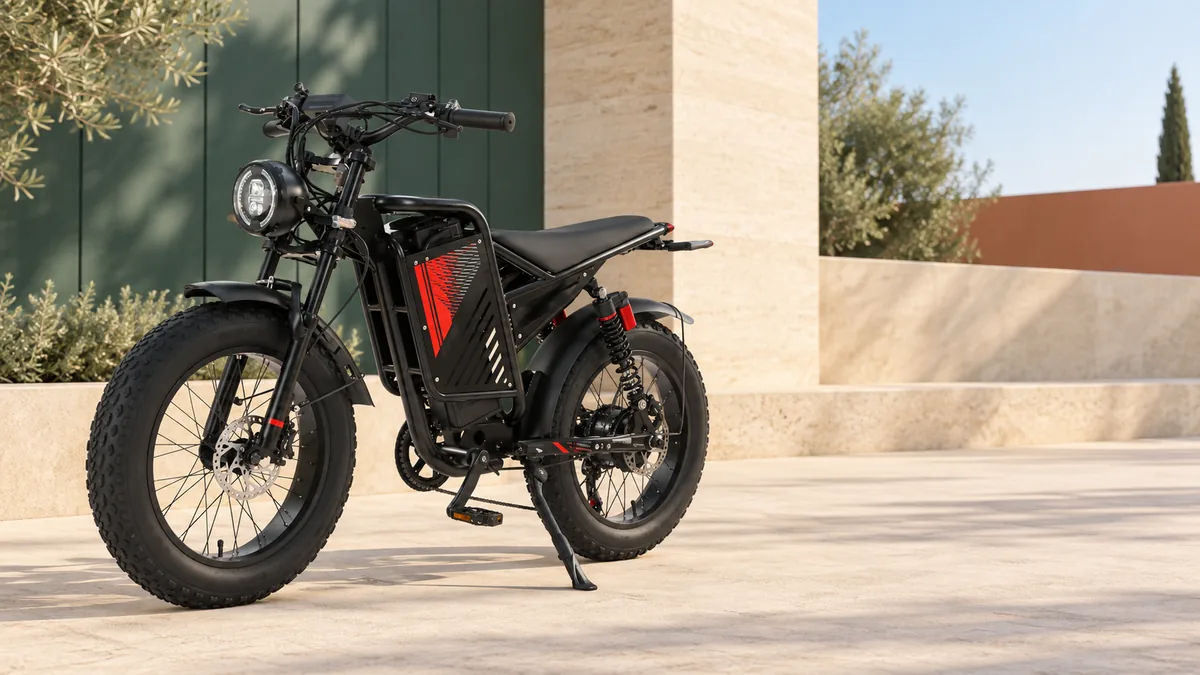
| LMT | Sealed, ≤ 25 kg, traction power for wheeled vehicles (including L-category under 168/2013), not EV | E-bikes, folding bikes, moped-style e-bikes, seated scooters, L1e/L2e mopeds (≤ 25 kg pack) | Mandatory | Mandatory |
| EV | Traction pack > 25 kg for L-category vehicles (168/2013), or M/N/O vehicles (2018/858) | Heavy L3e electric motorcycles, large multi-module packs > 25 kg, L6e/L7e micro-cars | Mandatory | Mandatory |
| Portable / SLI | Sealed ≤ 5 kg non-traction / starter-lighting auxiliary | Accessory lights, wireless displays, 12 V auxiliary | Mandatory | Not required |
| Industrial | Industrial traction/storage or other pack > 5 kg | Warehouse tuggers, charging cabinets | Mandatory | Only if > 2 kWh |
Check pack weight per SKU carefully: a 48 V lithium e-bike pack sits inside LMT, while a heavy 72 V lead-acid bank or large L3e pack can exceed 25 kg (EV). See our LMT battery checklist for pack-level hardware details.
Why is 13 January 2027 the real factory cutoff for China sea freight?
EU rules trigger on the EU import customs release date, not the China sailing date. Working backward 36 days end to end from 18 February 2027 sets 13 January 2027 as the latest line-coding cutoff with zero buffer.
| Stage | Duration | Cumulative |
|---|---|---|
| Factory pack QR coding & cartoning cutoff | 13 Jan 2027 | Day 0 |
| Port consolidation & drayage | 2 days | Day 2 |
| China export customs | 2 days | Day 4 |
| Vessel loading | 1 day | Day 5 |
| Ocean transit (China → EU port) | 28 days | Day 33 |
| EU import customs clearance | 3 days | Day 36 (18 Feb 2027) |
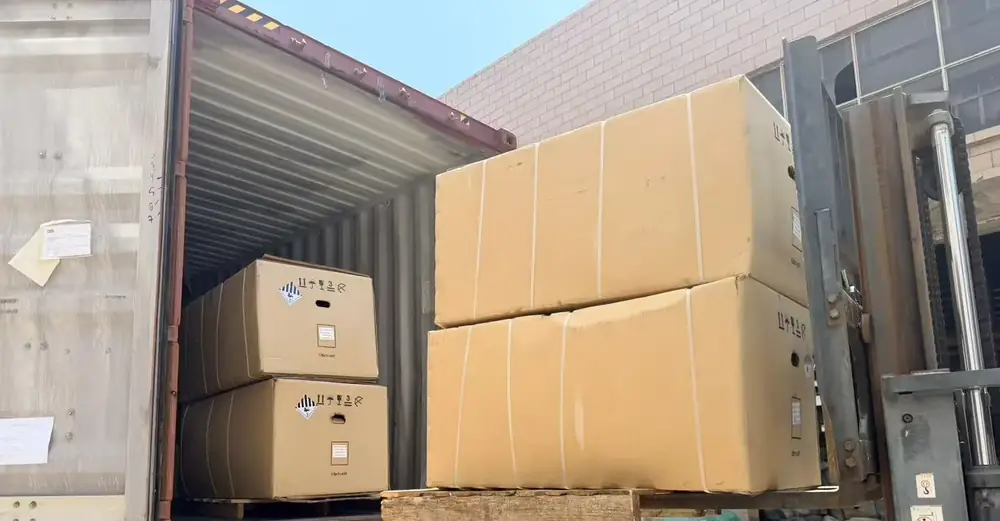
Standard factory lead time at BG EBIKE is typically 30–35 days (40HQ holds ~140 small e-bikes, 80–100 medium models, or 20–40 large vehicles). Review export packaging and 40HQ loading and our pre-shipment inspection checklist when scheduling Q1 2027 containers.
What happens at EU customs if a shipment lacks a QR code or passport?
- Customs hold (2019/1020 Art. 26(1)): Missing passport = missing compliance documentation; missing QR = missing mandatory marking.
- Withdrawal or recall (2023/1542 Art. 79): Unresolved violations escalate to EU-wide market surveillance alerts.
- National fines under Art. 93 (published examples): Italy (D.Lgs. 29/2026) €10,000–€150,000 per violation; Croatia (Art. 17) €3,000–€30,000; Germany (BattDG §60(2)) up to €10,000 (€100,000 for breaching an order); France (Décret 2025-992) €1,500 / €3,000; Denmark & Netherlands enforce via environmental law or administrative orders.
Your 3-step next roadmap across this compliance series
- Confirm legal ownership: Read Importer vs factory Battery Passport roles (especially if selling under your own brand).
- Register on the EU portal & map 71 data points: Open your account at registry.product-passport.ec.europa.eu and read our EU DPP Registry & QR code setup guide.
- Verify pack hardware & shipping files: Check Art. 11 removability, BMS data and UN38.3 vs MSDS in our LMT battery EU checklist.
At BG EBIKE, we produce and assemble vehicles in our own Taizhou factory with flexible MOQ by model and mixed containers. We supply model-specific EEC/COC and CE documents where listed per model, and MSDS and UN38.3 test summary supplied for lithium battery shipments; we do not print customer logos (buyers brand locally after delivery). Share your target EU country, models and arrival window when you request a factory quote or browse our EEC/COC models.
Method note: Based on Regulation (EU) 2023/1542, Regulation (EU) 2025/1561, European Commission guidance and published national acts as of November 2026; verify final filing rules with your EU customs or compliance adviser.
Frequently asked questions
Do lead-acid batteries in electric scooters and tricycles also need an EU Battery Passport?
Yes. Regulation (EU) 2023/1542 classifies batteries by application and weight, not chemistry. Sealed lead-acid traction packs fall under LMT (≤ 25 kg) or EV (> 25 kg) and require QR codes and Battery Passports from 18 February 2027.
Does EEC/COC, CE, UN38.3 or MSDS exempt a vehicle from the EU Battery Passport?
No. UN38.3 and MSDS cover transport safety, while EEC/COC covers road type-approval. The EU Battery Passport is a separate lifecycle compliance record required from 18 February 2027.
What if a December 2026 shipment is delayed past 18 February 2027?
Compliance is checked at EU customs release for free circulation, not the China sailing date. Delays pushing clearance onto or past 18 February 2027 expose non-compliant shipments to port holds under Regulation (EU) 2019/1020 Art. 26(1).