
Yes, electric bikes can have mechanical gears, but some use a single-speed drivetrain. For dealers comparing configurations, mechanical gears and electric assist levels describe different functions. The bicycle’s drivetrain provides mechanical gear ratios for pedalling; an assist setting controls the motor’s support according to the fitted system. A specification showing seven mechanical gears and five assist settings should not be advertised as a 35-speed drivetrain.
Short answer: Electric bikes can have mechanical gears as well as electronic motor settings, and the two numbers describe different functions. Mechanical gears change the rider’s transmission ratio; electronic settings control the electric system according to its configuration. BG EBIKE’s V1 lists seven mechanical speeds and five electric settings. Record those as separate quotation fields, then confirm the controls and supplied configuration on the sample rather than describing the bike as having thirty-five gears.
For importers and dealers, the purchasing task is to identify what each field means and what equipment the quoted version includes. This guide separates mechanical gearing, assistance settings and other electric controls so that an ambiguous catalogue description does not become an inaccurate product claim.
Mechanical gears and assist levels answer different questions
Mechanical gearing describes the ratios in the bicycle drivetrain. On a derailleur system, shifting moves the chain between sprockets or chainrings to change the relationship between pedal rotation and wheel rotation. Other drivetrain designs can provide their ratios differently, so retain the actual system type in the specification.
Assist levels describe selectable motor-support settings where pedal assistance is fitted. Their number and behaviour depend on the system. A level number is not a mechanical ratio, and the same number on two displays does not establish the same motor response.
The Shimano SC-E6100 user manual treats gear position and assistance settings separately. This reference explains the distinction between the functions; it does not identify the system fitted to a BG EBIKE model.
Read “speed” in its specific context
A catalogue can use “speed” in several ways: the number of mechanical gears, a selectable electric operating setting, or a vehicle-speed figure in km/h. These fields should not be merged.
The V1 catalogue entry uses both “Shimano 7-speed transmission” and “5-speed electric transmission”. Record the first under the mechanical drivetrain and retain the second as catalogue control wording until its function is defined. It is not enough evidence to rename it “five pedal-assist levels” or multiply the two numbers into 35 gears.
The V1 photograph below locates the chain drivetrain and handlebar controls. Use the model’s drivetrain list and operating instructions to identify the supplied ratios and control functions.
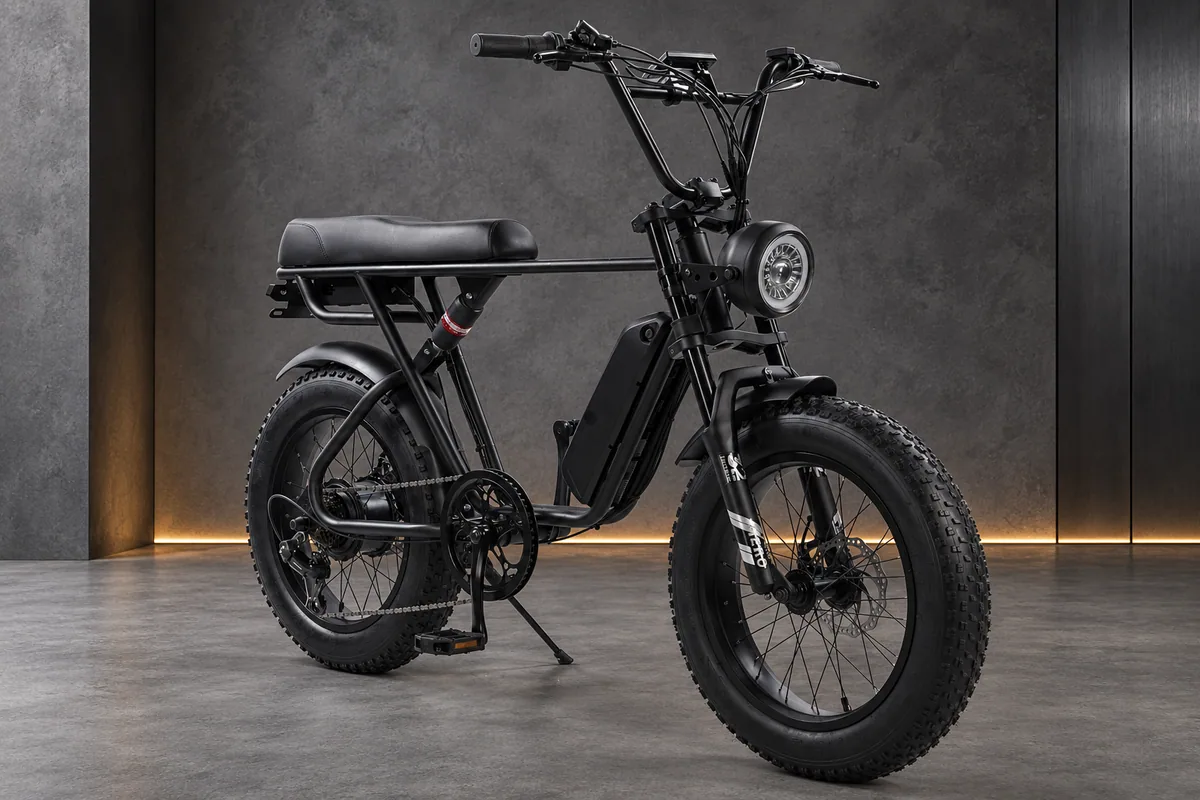
Keep maximum vehicle speed separate as well. A seven-speed bicycle does not mean a vehicle limited to seven speed settings, and a numbered electrical mode does not independently establish the vehicle’s maximum speed.
Separate the fields when requesting a quotation
Use a clear distinction between what the bicycle drivetrain does and what the electric system does. The following table is a specification-reading guide, not a claim that every model includes every feature.
| Specification field | What the supplier should identify |
|---|---|
| Drivetrain type | Single-speed, derailleur gearing, internal gearing or another documented arrangement. |
| Mechanical gears | Number of ratios and the relevant drivetrain specification; do not substitute a display setting count. |
| Gear controls and parts | Shifter and drivetrain component references supplied on the quoted version, with matching images or documentation. |
| Pedal assistance | Whether fitted, selectable levels or modes, and their documented function. |
| Other electric settings | Any separate operating modes or controls, with their purpose stated rather than assumed from a number. |
| Display and controller | Supplied references and the meaning of displayed mode indicators and control buttons. |
| Version and alternatives | Standard configuration, any offered alternative, price difference and associated component changes. |
For illustration, an accurately documented offer might state “seven mechanical gears” in one field and “five pedal-assist levels” in another. Those are two attributes, not 35 mechanical gears. This example explains the terminology; it does not resolve an undocumented mode description on a BG EBIKE model.
Do not read the whole control system from a screen photograph
The V1 display below shows a catalogue instrument and its nearby controls. The visible number does not, by itself, establish a selected mechanical gear, the total number of assist levels or the function of every button.
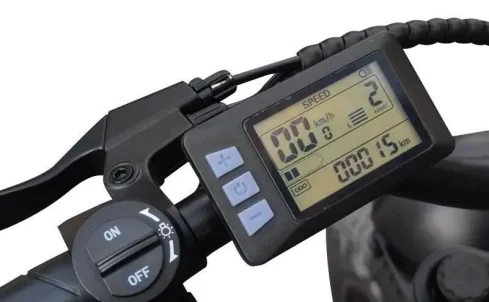
Request the display’s operating instructions and a clear view of the actual gear control when the distinction matters to the purchase. An instrument close-up and a mechanical shifter close-up serve different purposes. Neither should be replaced by an unrelated model’s photograph simply because the handlebars look similar.
Also keep electronic gear shifting separate from electric assistance. A bicycle can have electric motor support without electronically actuated gear changes. An LCD or a plus/minus button is not evidence that the drivetrain shifts electronically.
Compare configurations against the intended use
Gear count alone does not describe the full gearing range or establish which version is better for a customer. When gearing matters to the intended route, request the relevant drivetrain specifications and evaluate an appropriate sample rather than ranking offers only by the printed number of speeds.
For a multi-version order, keep the supplied drivetrain, display and electric-control description together. A change from one mechanical drivetrain to another does not automatically imply a change in assistance levels, and an extra electric setting does not establish a different mechanical gear range.
During sample review, have the supplier demonstrate the functions using the model instructions. Record which control operates which system and whether the sample matches the written offer. This is a configuration check, not a substitute for performance testing or a promise of improved climbing ability.
Write product specifications your sales team can use
A useful customer-facing description names the supported functions separately. Use separate fields for the mechanical drivetrain and motor-support settings in a supplier brief. In a published listing, fill them with verified information or omit an unresolved claim.
Avoid unsupported phrases such as “automatic shifting”, “torque-sensor assistance” or “five-level PAS” when the source only says “electric transmission”. These describe specific features, not interchangeable marketing language.
Keep the specification tied to the quoted version and retain the source document. If a component changes before delivery, update the affected description and supporting instructions. This makes the difference between versions easier for the sales and service teams to explain.
Confirm the specification on a sample before committing a container; where a component or accessory needs to change, see what is possible through customization.
Frequently asked questions
Do electric bikes have mechanical gears?
Some do, while others use a single mechanical ratio. BG EBIKE’s V1 lists seven mechanical speeds separately from its five electric settings. A buyer should record the transmission, shifter and electric controls independently in the specification, then check the supplied sample against those entries. The number shown on a display does not by itself identify the bicycle’s mechanical transmission.
Are assistance levels the same as gears?
No. Mechanical gears change the transmission ratio between pedalling and the driven wheel, while an electronic setting controls the motor system according to its design. Do not multiply the two numbers or assume that every electric setting is a pedal-assist mode. The supplier’s control description and sample operation should establish what each setting actually does.
Which gear information belongs in a bulk-order specification?
List the mechanical speed count, transmission component references, shifter, chain specification and electric control settings separately. Identify the approved sample version and any spare parts that need to match it. This gives the dealer’s service team a usable parts record and prevents an order described only as seven-speed from leaving the display or controller configuration unresolved.
Clarify the drivetrain and controls with BG EBIKE
Send the model or catalogue reference, destination market and estimated quantity. Describe the intended use and identify the mechanical gearing and operating features you need. If a specification uses an unclear “speed” description, include that wording so the relevant version can be discussed.
Review the V1 drivetrain and electric-control entries and 26-inch model’s listed Shimano 7-speed transmission. Keep mechanical gearing and any separately documented motor-support settings in different fields.
Request drivetrain and electric-control configuration details. Keeping these requirements separate helps the quotation describe what will actually be supplied.