
A hub motor drives a wheel, while a mid-drive motor delivers assistance through the bicycle’s drivetrain. This distinction helps a purchasing team read a motor specification. The BG EBIKE example in this guide is the V1 rear-wheel motor layout; the comparison does not establish an available BG EBIKE mid-drive model.
Short answer: A hub motor applies drive at a wheel, while a conventional mid-drive sends motor assistance through the bicycle’s drivetrain near the cranks. That changes the transmission and service parts a dealer must evaluate, but does not establish a universal winner for climbing, range or maintenance cost. BG EBIKE’s V1 provides a rear-wheel motor example with seven listed mechanical speeds. Compare the complete quoted configuration and its replacement-parts requirements before selecting a model for a bulk order.
Neither layout, by itself, establishes the bike’s climbing ability, range or suitability for a particular market. Compare documented versions and the requirements of your customers before choosing a model for your catalogue.
What changes when the motor moves?
A hub motor sits at the centre of the front or rear wheel. A mid-drive motor sits near the crank area and feeds assistance into the drivetrain. Bafang’s motor-location guide illustrates these three positions. Its product information explains the architecture; it does not identify the motor fitted to a BG EBIKE model.
With a conventional rear-hub system, the rider’s chain transmission and the motor act on the rear wheel through different paths. With a conventional mid-drive system, motor assistance passes through the bicycle’s transmission. This makes the specified drivetrain relevant to how assistance reaches the wheel.
Motor location and assistance control are separate specifications. Do not infer a torque sensor, a particular number of assist levels or automatic shifting from the words “hub motor” or “mid-drive”. Those functions need their own entries in the model specification.
Start with the complete bicycle
The V1 photograph below is a whole-bike reference for a rear-wheel motor layout. It provides context for the relationship between the rear wheel, pedals and chain. The illustration is not a comparison test against a mid-drive bicycle.
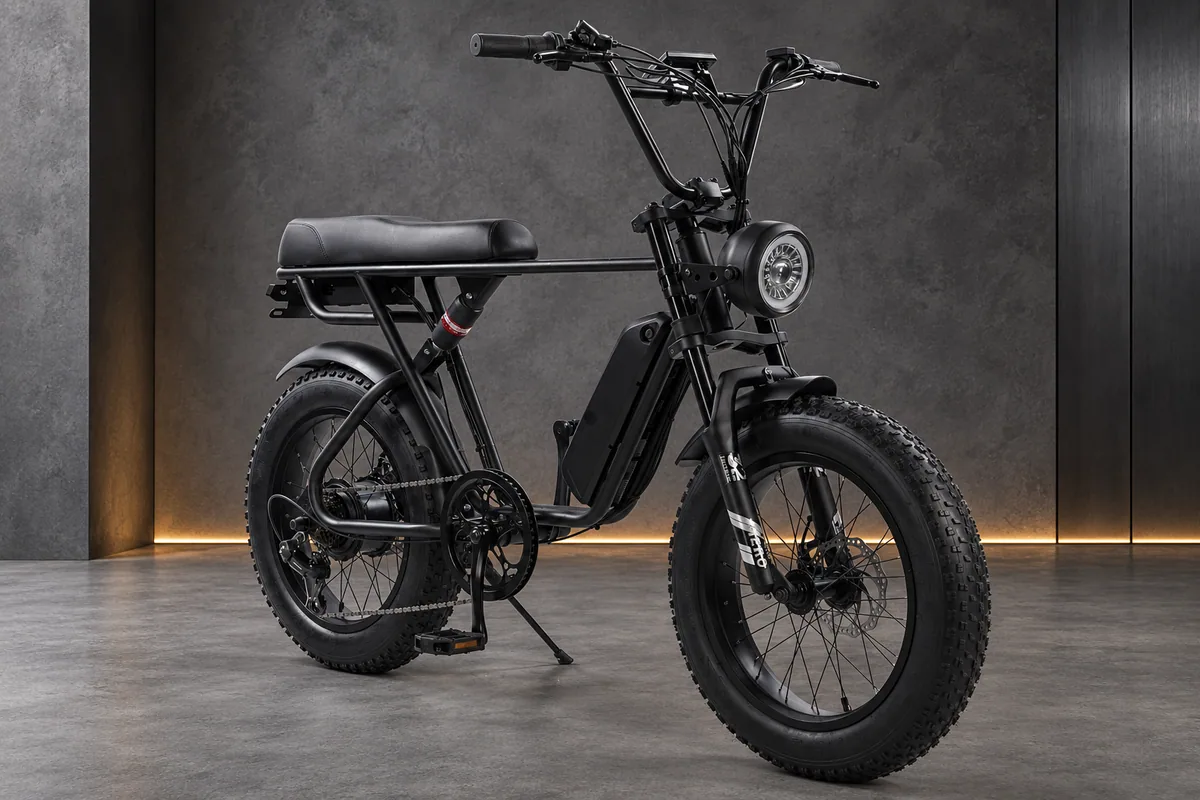
For a dealer, the useful question is which documented configuration fits the intended product line and service arrangements. A motor specification alone cannot establish the total bicycle weight, load limit, battery capacity or suitability for sustained climbing.
For the hub motor vs mid-drive comparison, separate the architectural differences from results that require a complete-bike test. Avoid promising that every mid-drive climbs better, or that every hub-motor bicycle is cheaper to maintain. Component selection, operating conditions and access to parts affect those decisions.
A specification checklist for supplier quotations
Use the same fields for each candidate bicycle. Keep unavailable information visible in your internal comparison instead of replacing it with assumptions based on the motor position.
| Field to compare | What to request and why it matters |
|---|---|
| Motor position and identity | Front hub, rear hub or mid-drive; manufacturer and model where documented. “Brushless motor” alone does not specify its location. |
| Electrical specification | Nominal system voltage and clearly labelled rated or peak output. Record the definition and conditions supplied with each figure. |
| Torque specification | Ask where torque is measured and under what conditions. Do not treat values at different points in the drive system as directly equivalent. |
| Transmission | Chain or belt configuration, gear system and component references. For a mid-drive, identify the transmission that carries motor assistance. |
| Assistance and controls | Document sensor type, assistance settings, display and controller separately. Motor position does not identify these functions. |
| Wheel and frame interfaces | Request the appropriate wheel, axle, mounting and drivetrain specifications for the supplied model. Similar appearance is not evidence of interchangeability. |
| Service information | Model-specific removal instructions, replacement part numbers, diagnostic requirements and the support available to your service team. |
| Quoted version | Link the specification to a model, revision and destination market. Identify any proposed alternatives separately from the quoted configuration. |
For power figures, our guide to rated versus peak motor power explains the distinction. For transmission and controls, see mechanical gears versus assist levels. Those are separate checks within a motor-layout comparison.
Plan service around the actual assembly
The V1 rear-wheel detail below shows the hub motor behind the brake disc, together with the spokes and surrounding wheel assembly. It is useful for locating the component; the photograph does not reveal its internal design, output or replacement compatibility.
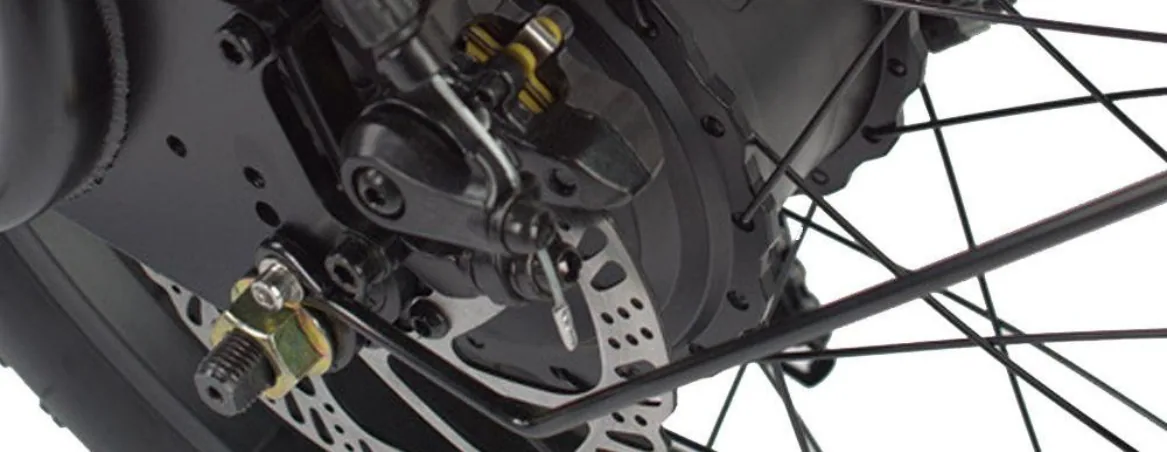
For a rear-hub bicycle, ask how the motor cable and wheel assembly are handled during tyre or wheel service. Obtain the correct instructions for axle hardware, cable routing and reassembly. Do not substitute generic tightening values or wiring instructions for the model’s service documentation.
For a mid-drive bicycle under consideration, ask which drivetrain parts and motor-mounting components are specified, and what access the dealer has to diagnosis and replacement procedures. The term “mid-drive” is not a guarantee that local shops can service that particular system.
For either layout, establish whether a replacement is supplied as a component or a larger assembly, which related parts are required, and how the correct revision is identified. This is more useful for a purchasing decision than an unsupported claim that one system is maintenance-free.
Compare sample bicycles against the same brief
If climbing, loaded operation or sustained assistance is important to the project, describe that use in the supplier brief and request relevant complete-bike evidence. Keep load, route or gradient, assistance setting and other test conditions alongside the results. A larger watt or torque number does not replace that context.
During sample evaluation, record whether the delivered motor, display and transmission match the quotation. Have qualified service personnel review the supplied documentation and access requirements. Their findings can help identify the parts and training needed before a larger order.
Compare the whole quoted package when considering cost: the bicycle configuration, included service items and the support actually offered. This article does not establish a universal price difference or maintenance-cost saving between drive layouts.
To check these details before a bulk order, order a sample of the version you plan to sell; colours, accessories and, on most models, handlebars and seats can be chosen through customization.
Frequently asked questions
Does a hub-motor bike also have mechanical gears?
It can. A rear-hub motor and the rider’s mechanical transmission are separate parts of the drive arrangement, so a hub-motor bicycle may still have a multi-speed gear system. The V1 example lists seven mechanical speeds. Dealers should specify the gear system separately from motor location, controller settings and display functions when comparing quotations and stocking service parts.
Can a hub motor simply be replaced with a mid-drive?
Do not treat that as a direct replacement. Motor mounting, frame clearance, drivetrain layout and electrical integration must suit the complete system. A matching wattage label does not establish interchangeability. BG EBIKE does not modify frames under its stated customization terms, so an inquiry should focus on an available documented model rather than assuming a motor-location conversion is offered.
Which layout is better for a dealer’s product range?
Choose using the complete vehicle specification, application and service arrangements, rather than motor location alone. Compare documented performance under relevant conditions, replacement-part availability and the tasks your workshop can support. A mid-drive routes motor assistance through the transmission; a hub drive applies it at the wheel. Those architectural differences guide the checks, but do not determine every maintenance cost or climbing result.
What should be included in the replacement-parts record?
Record the motor reference and location, controller, display, wiring connections and relevant transmission parts for the approved model. Keep electrical ratings and version identifiers with those entries. Before combining spare parts with a vehicle shipment, confirm that each part matches the ordered configuration; a generic hub-motor label or equal power rating is not enough to establish compatibility.
Turn the comparison into a useful inquiry
Send BG EBIKE the model you are considering, destination market, estimated quantity and intended application. Include any required motor arrangement and the configuration or service information your team needs to assess the quotation.
For the rear-wheel motor example discussed here, review the V1 model page. Then use the motor power guide to separate motor position from its stated output. Discuss any required drive layout for the selected model before requesting a configuration change.
Submit your sourcing inquiry with those details so the discussion can focus on the applicable model and supply configuration.