
Short answer: BG EBIKE lists the Dolphin at 21 kg without shocks or 23 kg with double shocks. The RX moped-style model is listed at 50 kg. These are bare weights. For a rack, lift or freight quote, ask for the weight of the actual configuration or packed carton.
Start with the weight of the configuration you will actually lift. A riding setup, a bike with its removable battery taken out, and a boxed shipment are three different loads. This guide helps buyers compare them and gives dealers a consistent way to record weight during sample evaluation.
How much do electric bikes weigh with the battery?
For a dealer order, ask for three labelled weights on the same sample: the bike ready to ride with the specified battery, the bike with its removable battery taken out, and the sealed shipping carton. Use the first figure for display stands, the second for permitted handling with the pack removed, and the third for freight.
The table shows listed bare weights for selected BG EBIKE models, taken from our product pages. Pound values are our conversions. Whether a bare weight includes the battery depends on the configuration, so confirm the complete-bike weight for the version you order.
| Model | Tyre size | Listed bare weight |
|---|---|---|
| Dolphin 14 Inch Folding Electric Bike | 14 × 2.5 | 21 kg (46.3 lb) without shock; 23 kg (50.7 lb) with double shock |
| Z6 14 Inch Folding Electric Bike | 14 × 2.5 | 22 kg (48.5 lb) |
| 26 Inch Electric Mountain Bike | 26 × 2.125 | 23 kg (50.7 lb) |
| 20 Inch Folding Electric Bike | 20 × 2.125 | 27 kg (59.5 lb) |
| 20 Inch Folding Fat Tire Electric Bike | 20 × 4.0 | 28 kg (61.7 lb) |
| Brown Bear 20 Inch Fat Tire Electric Bike | 20 × 4.0 | 35 kg (77.2 lb) |
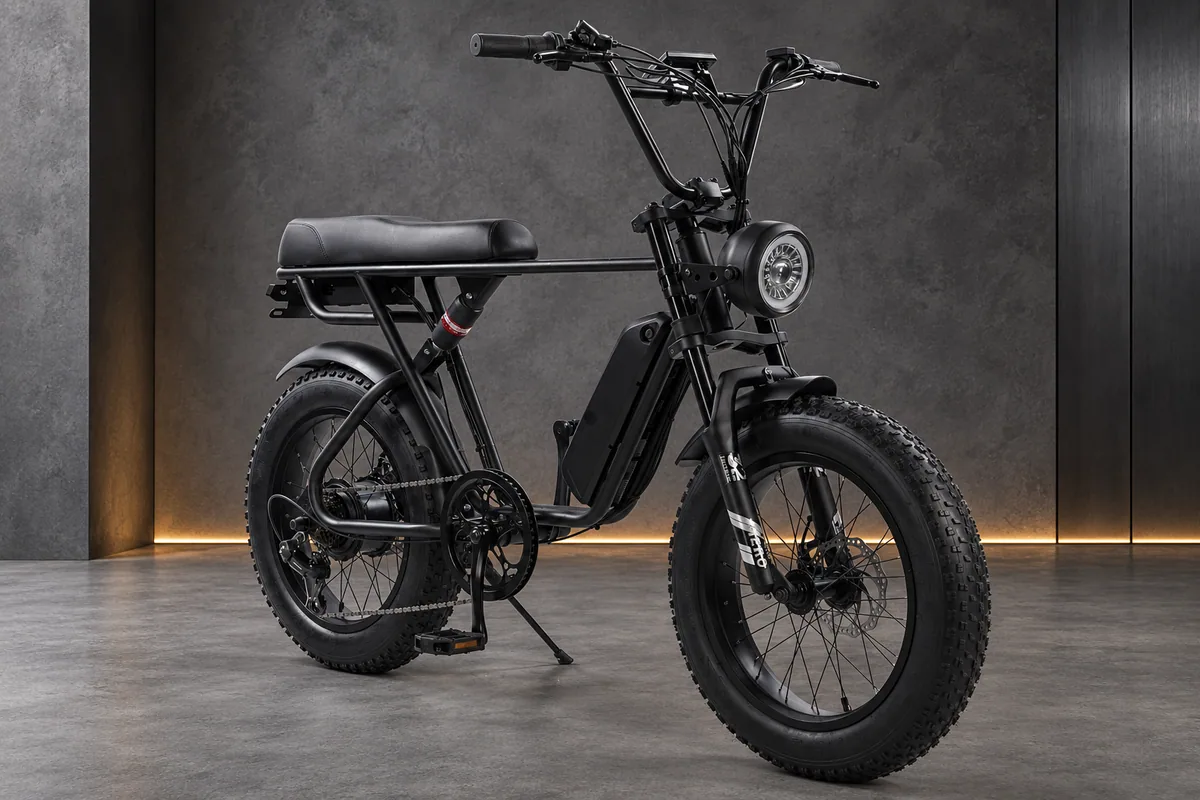
| V1 20 Inch Long Seat Electric Bike | 20 × 4.0 | 48 kg (105.8 lb) |
| RX 20 Inch Moped-Style Electric Bike | 20 × 4.0 | 50 kg (110.2 lb) |
The spread matters more than a single average: the 20-inch folding model and the V1 long-seat model are 21 kg (46 lb) apart. If you must carry the bike, that difference deserves attention before comparing motor power or advertised range. A weight close to a carrier’s limit also needs checking on the actual loaded configuration.
Does the stated weight include the battery?
Do not assume it does. Some manufacturers include the battery in the complete-bike figure; others explicitly exclude it. A label such as “bare weight” needs a definition before you can use it for a transport or lifting decision.
| Weight term | How to read it |
|---|---|
| Bike weight with battery | Check the battery version, frame size and included equipment. Optional racks, locks or bags may be additional. |
| Bike weight without battery | Useful when the battery can be removed according to the model’s instructions. Add the specified battery weight to understand the complete configuration. |
| Bare or net weight | Ask what has been excluded. The label alone does not establish whether the battery, pedals or accessories are counted. |
| Shipping or packed weight | Describes a shipment, which may include packaging, a charger and loose parts. It is not the bike’s riding weight. |
A bike’s own weight is also different from its permitted rider or cargo load. For those limits, use our separate e-bike weight-limit guide. A 27 kg vehicle weight does not tell you how much that bike is allowed to carry.
Why are some electric bikes heavier than others?
The battery and motor add weight, but they are only part of the picture. Frame dimensions, wheels, tires, suspension, seating and fitted equipment also change the total. Looking at the complete build is more useful than comparing motor wattage alone.
The battery: capacity is not a weight measurement
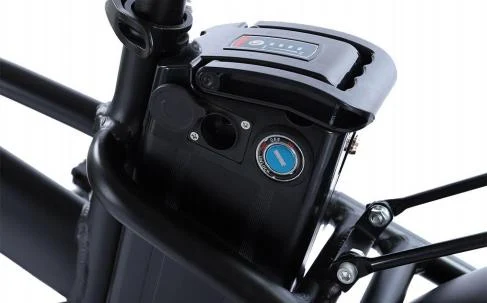
Battery energy and battery mass are separate specifications. Housing design, cell selection and mounting hardware all matter. For example, Bosch’s battery specifications list the CompactTube 400 at approximately 2.1 kg and the PowerTube 800 at approximately 3.9 kg. Those are specific Bosch products, not a weight allowance to apply to every e-bike or to BG EBIKE battery options.
Compare the actual pack specified for the bike. If the catalogue only gives voltage and Ah, it does not provide enough information to calculate battery weight. Our battery-capacity guide explains the separate roles of V, Ah and Wh.
The frame, wheels and equipment
A compact wheel size does not make every small-wheeled e-bike lightweight. A long frame, wide tires, substantial seating and extra equipment can change the result. Likewise, “aluminum frame” describes a material, not a complete-bike weight.
Accessories also add up: racks, baskets, mudguards, lights and locks can add several kilograms to the same frame. That is why an accessories list belongs beside the scale reading.
How much weight is practical for your use?
The best weight for a buyer depends on where the bike must go when it is not being ridden. A model that suits ground-floor storage may be awkward for someone who must carry it upstairs every day. Motor assistance during riding does not reduce the mass that person has to lift.
- For stairs or frequent lifting: first try the permitted lifting points on level ground with assistance available. Check whether you can control the folded or unfolded bike, clear doorways and put it down without catching cables or pedals. If that trial is awkward, do not progress to a staircase; consider ground-level storage or a lighter model.
- For folding and storage: compare both folded dimensions and carrying weight. Folding changes the shape, not the mass of an otherwise unchanged bike. See our folded-dimension guide.
- For a vehicle carrier: follow the carrier and vehicle manufacturer’s instructions, including per-bike and total limits, attachment compatibility and any battery-removal requirements. A weight figure alone does not establish a suitable setup.
- For a dealer range: keep a confirmed weight for each offered configuration so customers can compare the bikes they will actually receive.
If the battery is designed to be removed, removing it can reduce the weight of the bike being lifted. The battery still needs to be carried or transported separately. Follow the model’s removal and transport instructions; do not assume that every integrated pack is user-removable.
A weight record you can use at a sample inspection
Keep the bike stationary and use suitable weighing equipment with a safe capacity. Record the model version, battery identifier, fitted accessories, scale reading and date. If a pack is user-removable, weigh the intended carrying configuration separately; retain the weight of the battery and loose items as well.
| Item | Example mass | What you carry |
|---|---|---|
| Complete equipped bike | 28 kg | One 28 kg load if nothing is removed |
| Removable battery | 3 kg | A separate 3 kg item |
| Bike after battery removal | 28 − 3 = 25 kg | A 25 kg bike plus the separate battery |
The total remains 28 kg. Splitting it may make a lift easier, but it does not eliminate the separate battery or prove that 25 kg is manageable for a particular person. Photograph the weighed setup so a dealer and buyer can see which configuration the number describes.
To check these details before a bulk order, order a sample of the version you plan to sell; colours, accessories and, on most models, handlebars and seats can be chosen through customization.
Frequently asked questions
How much does an electric bike weigh in pounds?
Multiply kilograms by approximately 2.20462. For example, 24 kg is about 52.9 lb. Keep the measurement basis unchanged when you convert the unit.
Does a higher-wattage motor mean a heavier bike?
Not necessarily. Wattage describes power, not mass. Compare the complete model specifications rather than using the motor rating to estimate vehicle weight.
How much does an e-bike battery weigh?
Bosch lists the CompactTube 400 at about 2.1 kg and the PowerTube 800 at about 3.9 kg. For a different battery, use the weight of that exact reference, including any mount or cover that stays with the removable assembly.
Are folding electric bikes lighter?
Often, but not always. In the BG EBIKE catalogue, 14-inch folding models list 21–25 kg and the 20-inch folding models 27–28 kg, while fat-tyre folding builds can weigh more. Folding changes the shape you carry, not the mass, so compare the listed weight of the exact model.
Compare the weight of your shortlisted models
Start with the BG EBIKE electric bike range. For a model-specific enquiry, send your shortlist, battery preference and any carrying or storage requirement. Ask for the complete-bike weight and the equipment included before using a catalogue figure in your own sales material.
Request model and weight detailsSources: Bosch battery specifications and BG EBIKE product pages. Product data checked on 30 October 2026. Catalogue specifications may change by version; confirm the configuration supplied in your quotation.