
Short answer: Under Regulation (EU) 2023/1542 Article 77(4), legal responsibility for the EU Battery Passport belongs to the economic operator placing the battery on the EU market (or putting it into service) for the first time—in most China-to-EU shipments, that is the EU importer. Under Article 44(a), an EU importer or distributor selling under its own brand or trademark is legally deemed the manufacturer.
Assuming a Chinese vehicle factory or battery supplier automatically holds EU legal liability is one of the fastest ways to stall a Q1 2027 shipment. Under EU law, country of manufacture and cell brand do not determine passport ownership—first EU market placement does.
Which 3 articles decide Battery Passport legal ownership?
- Article 77(4) — Accuracy & written delegation: The operator placing the battery on the EU market must keep passport data accurate, complete and up to date. Technical tasks may be delegated to another operator in writing, but legal accountability must be defined explicitly.
- Article 3(1)(16) — First placement / first use: Triggered when a battery is first made available on the EU market (import clearance) or first put into service (e.g., direct fleet deployment).
- Article 3(1)(33) & Article 44(a) — Private-label rule: Selling a battery or vehicle under your own name or trademark makes you the legal manufacturer in the EU.
Who holds responsibility across 6 China-to-EU trade scenarios?
| Trade scenario | First EU placement | Responsible party | Legal basis |
|---|---|---|---|
| 1. Standard CBU wholesale import | EU importer | EU importer (factory remains upstream maker) | Art. 77(4), 38 |
| 2. Private-label / own-brand import | EU brand / importer | EU importer (legally deemed manufacturer) | Art. 3(1)(33), 44(a) |
| 3. Factory’s own EU subsidiary / warehouse | EU subsidiary | EU subsidiary | Art. 41 |
| 4. SKD/CKD assembled locally in the EU | EU assembler | EU assembler / importer | Art. 39, 3(1)(18) |
| 5. Rental / delivery fleet direct import | EU fleet operator | EU fleet operator (first putting into service) | Art. 3(1)(16), 77(4) |
| 6. Standalone replacement LMT/EV packs | EU importer | EU importer (each spare pack needs a passport) | Art. 77(1), 77(4) |
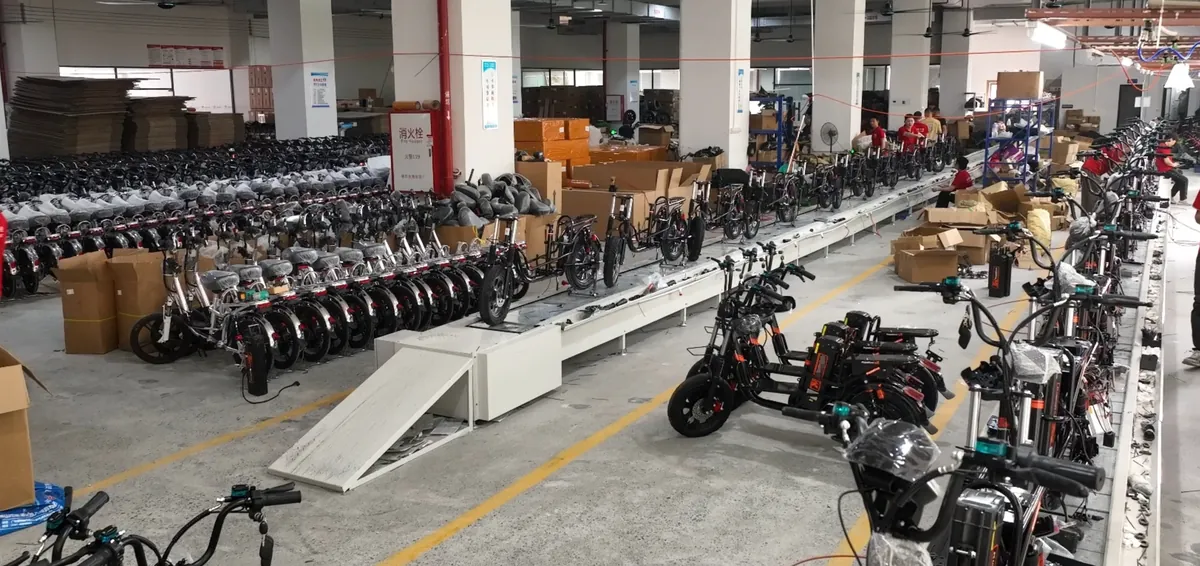
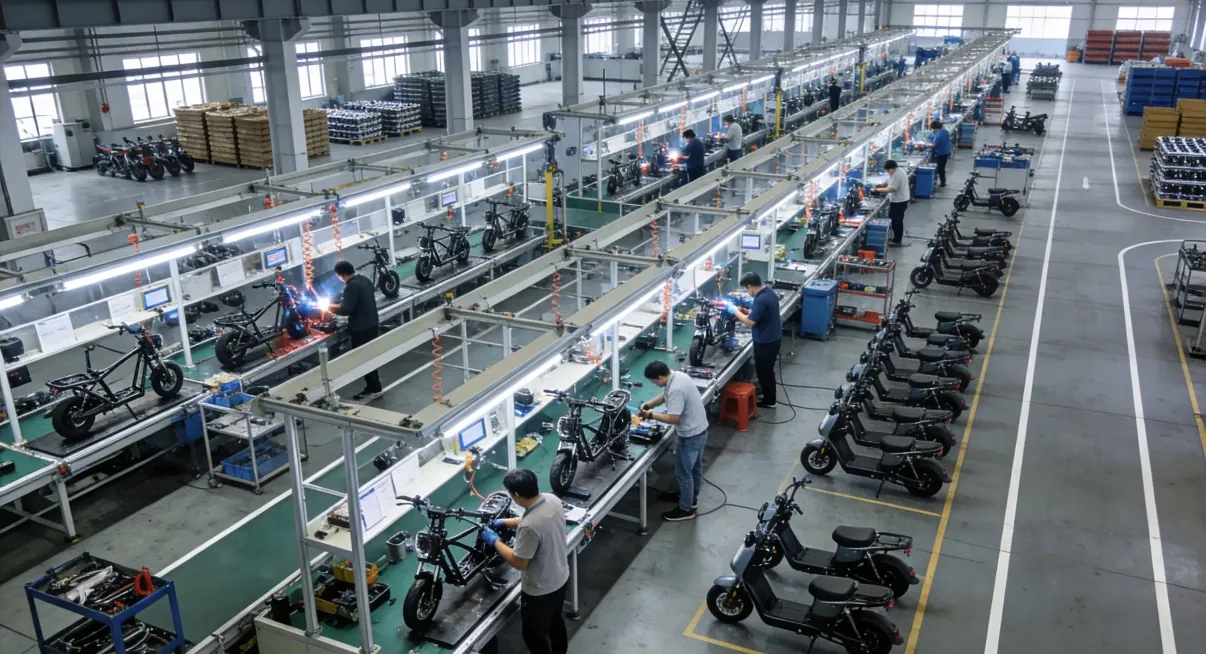
For buyers evaluating private-label electric bikes and scooters: BG EBIKE builds vehicles in Taizhou and does not print customer logos; buyers apply their own branding locally after delivery. Marketing under your own brand in Europe triggers Article 44(a) manufacturer duties. For knockdown orders, compare CBU vs SKD vs CKD and CKD/SKD supply early to decide whether packs ship with the kit or are sourced inside Europe.
How should the battery maker, vehicle factory and EU importer split tasks?
Under Article 39, upstream cell and module suppliers must provide compliance-relevant technical information free of charge—without shifting legal passport ownership away from the EU importer.
| Role | Deliverables before shipment | Boundary |
|---|---|---|
| Battery pack supplier | Cell chemistry, capacity, weight, hazardous/critical materials (>0.1%), BMS specs, dismantling/safety info, UN38.3 & MSDS. | Not the EU importer of record unless operating an EU entity. |
| Vehicle factory (BG EBIKE) | Model specs, vehicle-to-battery pairing, model-specific EEC/COC or CE files where listed, batch coordination and agreed packing/marking checks. | Cannot register an independent EU buyer’s legal identity without written authorisation and EU credentials. |
| EU importer / distributor | Register account on EU DPP Registry, obtain eIDAS QSeal, host or contract DPP service, maintain multilingual accuracy and lifecycle updates. | A static factory PDF certificate cannot replace individual pack registration. |
Two common traps EU importers should avoid
- “Can we just buy a Battery Passport certificate from a test lab?” No. A Battery Passport is a live serialized digital record linked via a physical QR code, registered centrally and updated over the pack’s life. Notified Bodies audit specific modules (carbon footprint, recycled content, due diligence once active), not Chapter IX passport hosting.
- “Should the Chinese factory open an EU subsidiary to become the importer?” That shifts VAT, national EPR across every country sold into, customs liability and recall risk onto the new entity. For most B2B orders, keeping the existing EU importer as market-placing operator—backed by a written Article 39 data checklist—is faster and cleaner before 18 February 2027.
At BG EBIKE (Taizhou Senpeng Technology Co., Ltd.), we manufacture and assemble vehicles in our own Taizhou factory with flexible MOQ and mixed containers. We provide model-specific EEC/COC or CE documentation where listed, and MSDS and UN38.3 test summary supplied for lithium battery shipments, coordinating upstream pack specifications with buyers prior to production.
Method note: Based on Regulation (EU) 2023/1542 Articles 3, 38, 39, 41, 44(a) and 77(4) as of November 2026; confirm written delegation clauses with qualified EU legal counsel.
Next: review the EU DPP Registry & 71 data fields guide, revisit the 2027 timeline & 36-day sea freight cutoff, or check our wholesale order terms and submit your EU order specs.
Frequently asked questions
Can an EU importer authorise a factory or platform to run the Battery Passport?
Yes. Article 77(4) allows written authorisation of another operator for technical execution, provided the agreement clearly assigns data accuracy, QSeal/registry access, hosting continuity and post-sale update duties.
Does a battery supplier selling only inside China have direct EU liability?
No direct EU market-placement liability applies if it does not import into the EU. Under Article 39 and supply contracts, however, it must furnish the technical, chemical and safety data needed for the EU importer’s passport.
Do standalone replacement e-bike batteries trigger the same importer duty?
Yes. Every standalone LMT (≤ 25 kg) or EV (> 25 kg) replacement pack imported into the EU on or after 18 February 2027 requires its own serialized QR code and Battery Passport registered by the EU importer.