
CBU supplies an assembled vehicle; SKD and CKD leave different amounts of assembly to the buyer. Choose by the work your team can complete, the agreed delivery scope and the total cost—not the kit price alone. This guide explains what electric two-wheeler importers should compare before ordering.
Short answer: CBU is a complete, assembled vehicle; SKD is partly assembled for completion locally; CKD is a full kit of components for local assembly. Choose by the assembly work your team can do, the duties and logistics in your market and the total landed cost. At BG EBIKE most orders are CBU, with SKD and CKD by agreement.
CBU, SKD and CKD at a glance
CBU usually involves the least local assembly, while CKD involves more. SKD sits between them, but the boundary is not a universal checklist of removed parts. Ask for a description of the delivered condition before comparing offers. The following table is a practical orientation, not a specification for every BG EBIKE model.
| Supply format | Common meaning | What the buyer should establish |
|---|---|---|
| CBU — Completely Built Up | A complete vehicle supplied assembled | Any preparation, fitting or checks needed after unpacking |
| SKD — Semi Knocked Down | Major assemblies supplied with selected parts separate | Exactly which parts need fitting, adjustment and inspection locally |
| CKD — Completely Knocked Down | A more extensively disassembled vehicle kit | The full local assembly scope, parts control, equipment and checking process |
These labels are used across the vehicle industry. Toyota’s production history, for example, distinguishes CBU vehicles from knockdown production. They do not, by themselves, settle customs treatment. For example, the World Customs Organization's General Interpretative Rule 2(a) addresses complete articles presented unassembled or disassembled. Confirm how your particular shipment is classified in its destination market rather than assuming the acronym determines the tariff. Read the WCO interpretative rules.
Which format fits your operation?
Choose the level of local work your team can consistently complete and check. This is a sourcing decision, not a ranking of vehicle quality. The same vehicle concept may be supplied in different forms, but a suitable supply arrangement depends on the model and the agreed project scope.
Who will complete the remaining work?
Write down the work between opening the packages and preparing each vehicle for sale. With CBU, focus on receiving checks and any dealer preparation. With SKD, add the agreed fitting and adjustment tasks. With CKD, evaluate the broader local assembly workflow and who will supervise it.
For example, a separately packed wheel would raise questions about fitting and brake checks. This illustrates the questions to ask; it is not a statement that wheels are removed from every SKD shipment. The quotation should make the actual division of work clear.
What can your local operation support?
A buyer with a sales warehouse and service technicians has different resources from a business operating assembly workstations. Assess the space, staff, tools and parts-storage arrangements available for the proposed kit before selecting a format.
Consider a hypothetical importer opening a new sales channel. The team may be able to receive, prepare and service complete vehicles, but lack the space to identify and store many separate components. In that situation, comparing CBU with a clearly defined SKD option is a more useful starting point than selecting CKD on price alone. This is a decision example, not a BG EBIKE customer case.
How will you check the finished result?
Decide who will check the work, record problems and release each vehicle for your sales process. Ask what instructions and inspection information are available for the selected model, and identify any local checking capability you still need.
For SKD or CKD, a sample or trial assembly can help reveal missing tools, unclear instructions or handling problems before a larger order. For CBU, receiving checks still matter. The supply label cannot replace an agreed process for dealing with damage, missing parts or configuration differences.
Compare the cost of a finished vehicle
When comparing CBU vs CKD or CKD vs SKD, use the same vehicle configuration and order assumptions. Otherwise a difference in battery, equipment or packing can be mistaken for a saving from the supply format itself. Compare costs up to the point at which the vehicle is ready for your intended sales process. Request quotations on the same delivery terms and named place, with the battery, charger, packing and local assembly costs clearly identified.
| Cost area | Useful comparison question |
|---|---|
| Vehicle or kit | Are the model, configuration and included components equivalent? |
| Packing and transport | What are the actual packed dimensions, package count and freight quotation? |
| Local assembly | What labour, tools, workspace and supervision will this scope require? |
| Checks and rework | Who completes the checks, corrects fitting problems and records the result? |
| Import charges | What treatment has been confirmed locally for the actual shipment? |
| Stock handling | How will you identify and store parts, then match them to each vehicle? |
Do not assume a more disassembled shipment automatically provides the best overall result. A potential transport saving needs to be compared with the additional work and resources it creates. Likewise, a substantially assembled vehicle may be simpler to receive but still require a different packing volume and freight budget.
Agree the packing and assembly scope
Ask the supplier to describe the shipment in terms your receiving team can use: what is assembled, what is separate, how parts are grouped and what must happen after unpacking. This makes supplier comparisons more meaningful and gives your local team a concrete basis for preparation.
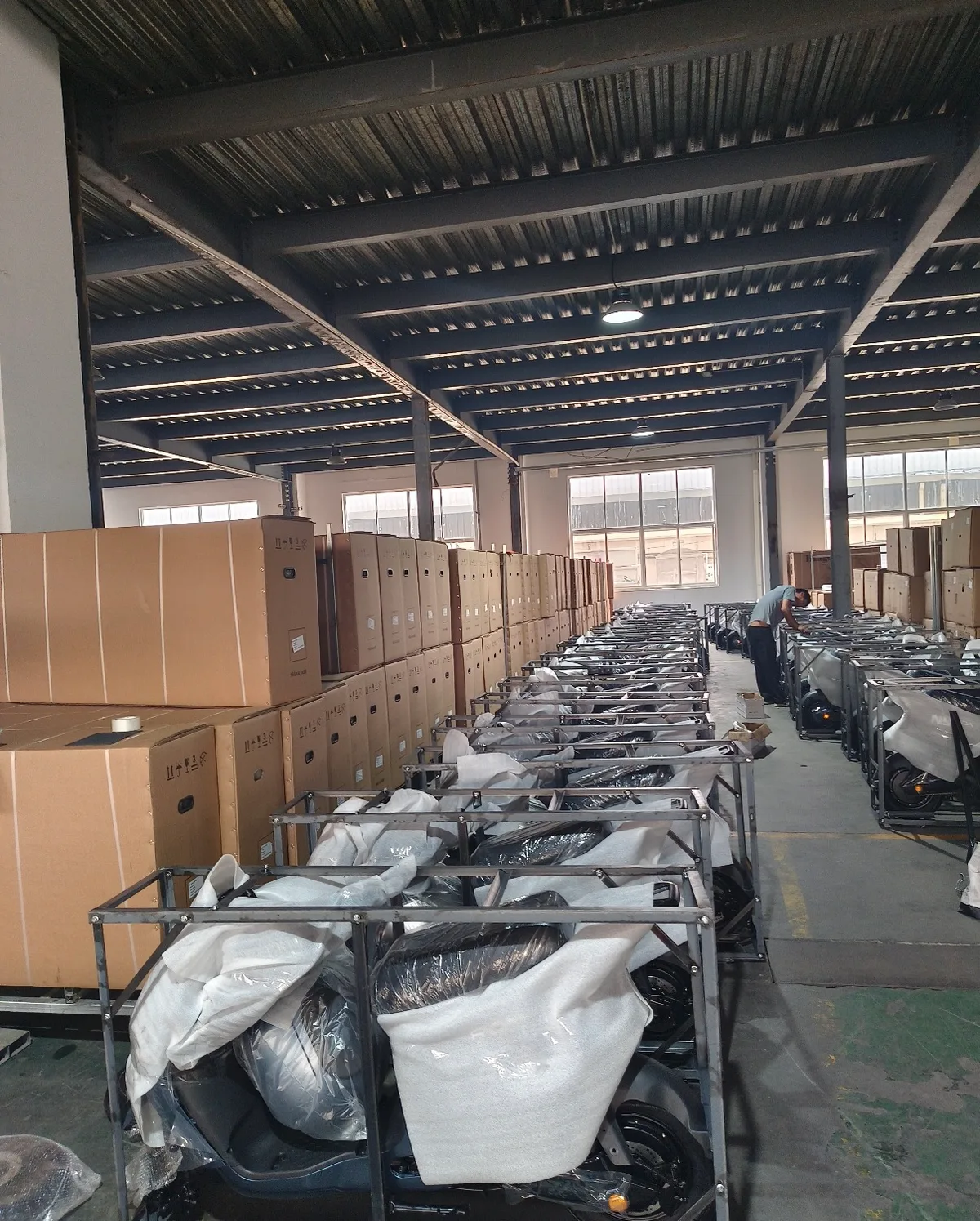
Keep the discussion focused on four items:
- Delivered condition: identify the assemblies already completed and each part packed separately.
- Package identification: establish how the model, configuration, quantities and separate components will be matched on receipt.
- Local tasks: agree the fitting, adjustment and checking work expected of the buyer, together with the instructions or other support available.
- Problem handling: clarify how to report missing or damaged parts and how assembly-related issues will be investigated.
For the wider purchasing process, use our Buyer Resources. It brings together model information and purchasing tools for the next stage of your inquiry.
See how we supply CKD and SKD kits and how complete vehicles are packed and loaded.
Frequently asked questions
Is CKD always cheaper than CBU?
No. Compare the total cost of the finished vehicle, including packing, freight, local assembly, checking and any confirmed import charges. A kit quotation alone does not show the resources needed to make that kit ready for sale.
Is SKD always the same level of disassembly?
No universal parts list should be assumed. Ask for the selected model's delivered condition and a list of the work left to complete. Two offers labelled SKD may place different responsibilities on the buyer.
Are CBU vehicles better quality than CKD vehicles?
The supply label alone cannot establish quality. Compare the agreed components and inspection arrangements, including how local assembly will be carried out and checked. A purchasing decision needs evidence about the finished vehicle, not a quality ranking based on the abbreviation.
Can I use the same supply format for every model?
Do not assume so. Bodywork, components and packing arrangements can affect the practical split. Discuss the intended supply format for each shortlisted model rather than treating one kit description as valid for an entire range.
Before choosing a supply format, shortlist the vehicles in our product catalogue, review the manufacturing overview, and agree what the pre-shipment inspection must cover for that order. Availability of a format must be confirmed for the selected model and project.
Discuss a supply format with BG EBIKE
BG EBIKE is the brand of Taizhou Senpeng Technology Co., Ltd. Our electric two-wheeler range is presented for importers, distributors and mobility brands, with CBU, SKD and CKD supply discussed according to the selected project.
Send your destination country, shortlisted models, estimated order quantity and a brief description of your local assembly capability. If you are unsure which format to request, describe the work your team can already perform. That gives the discussion a more useful starting point than choosing an abbreviation first.