
For importers, dealers and private-label buyers, electric bike container loading starts with the proposed order: which models, which configurations and how many units. Packing data then helps you assess the shipment and prepare a useful inquiry. Choosing the smallest carton should not replace choosing a vehicle that suits your customers.
Short answer: Estimate container loading from each model’s final package dimensions and quantity, then check the physical arrangement and weight limits. BG EBIKE’s 40HQ planning references are approximately 140 small e-bikes, 80–100 mid-size vehicles or 20–40 large models, depending on the selected vehicles and packaging. Mixed-model orders need their own loading plan rather than an average of those figures. BG EBIKE accepts mixed containers with MOQ agreed by model and confirms the proposed mix before production.
At BG EBIKE: As a guide, a 40HQ holds about 140 small e-bikes, about 80–100 mid-size scooters or e-bikes, and about 20–40 large models, depending on the exact models and packing. We confirm how your mix fits before production — see export packaging and container shipping.
Use carton CBM to estimate package volume, then request a loading plan for the actual order. Volume alone does not establish how many bikes fit in a container. Package orientation, permitted stacking, additional packages, weight and the selected equipment also need to be considered.
This guide shows how to compare model-level packing information and turn a shortlist into a clearer bulk-order inquiry.
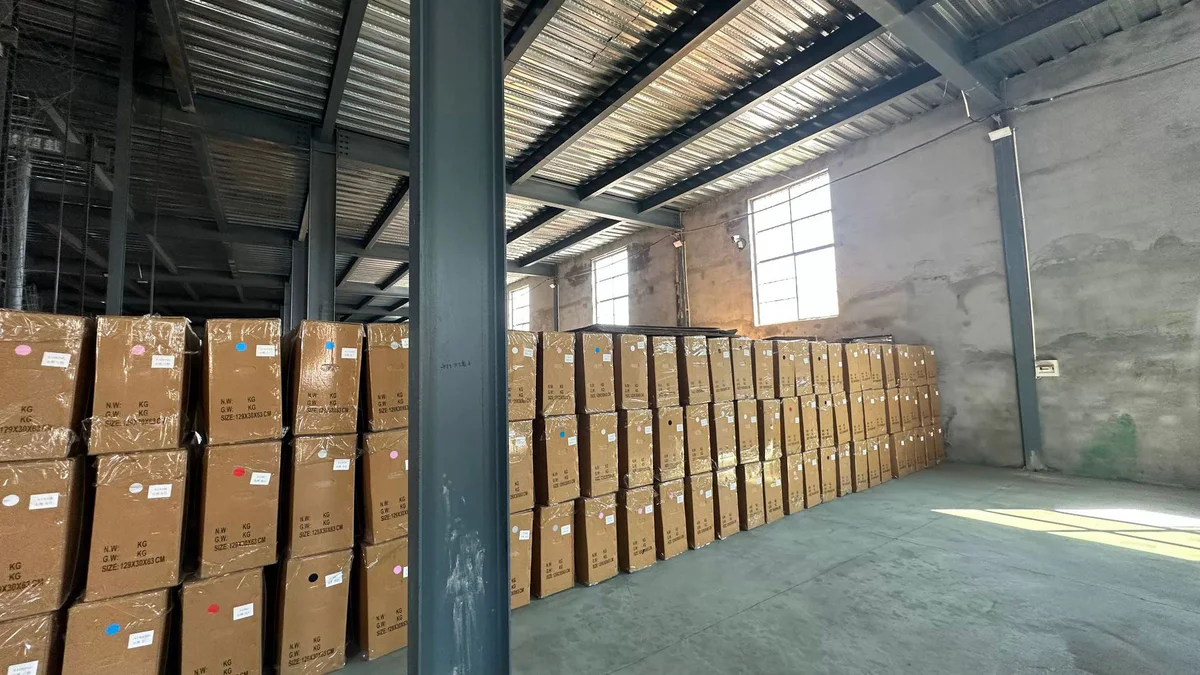
Start with the quoted configuration and its packaging
Record the model, battery version, selected accessories and supply arrangement before comparing packing dimensions. Ask whether the listed package size covers the complete supplied configuration. Separately packed batteries, chargers, spare parts or accessories must not disappear from the shipment record.
Keep these descriptions separate:
- Vehicle dimensions: the assembled or folded vehicle's size, as identified by the supplier.
- Package dimensions: the external length, width and height of the final package, including any frame or pallet where applicable.
- Bare or net weight: the product weight under the supplier's stated definition; do not substitute it for shipping gross weight.
- Gross weight: the shipment weight including packaging and pallets. DHL distinguishes this from dimensional weight, which is calculated using volume and the applicable transport ratio. See DHL's explanation of chargeable weight.
If a sheet says only “size” or “weight”, ask which measurement it represents. Keep the answer with that version's quotation rather than applying it to every model in the range.
Compare catalogue packing dimensions on the same basis
The examples below use the supplied catalogue entries for the Z3 electric bike and Z6 14-inch folding electric bike. They illustrate packing calculations, not equivalent vehicle performance or confirmed container quantities.
On a small screen, scroll the table horizontally to read all columns.
| Catalogue model | Listed package dimensions | Calculated package volume | Listed weight and its limitation |
|---|---|---|---|
| Z3 electric bike | 150 × 30 × 90 cm | 0.405 m³ | 35 kg, labelled bare weight; not shipping gross weight |
| Z6 14-inch folding electric bike | 132 × 21 × 65 cm | 0.18018 m³ | 22 kg, labelled bare weight; not shipping gross weight |
Source: supplied product catalogue, Z3 entry on printed page 60 and Z6 electric-bike entry on printed page 44. Obtain the final dimensions, package contents and gross weight for the ordered configuration before booking freight. The Z6 example refers to the folding electric bike, not another vehicle sharing the Z6 model code.
These figures show a difference in listed packing volume. They do not establish that one model is the better purchase, that either configuration uses exactly one package per vehicle, or that freight savings follow the same ratio. Compare customer fit and configuration first; use packing data to assess the resulting order.
Calculate CBM for single-model and mixed-model orders
CBM means cubic metres. For a rectangular package measured in centimetres:
Package CBM = length × width × height ÷ 1,000,000.
For each package type, multiply its volume by the number of packages. Add the subtotals for a mixed shipment. Use external dimensions and distinguish package quantity from vehicle quantity.
For illustration, assume an order has 20 packages at the listed Z3 dimensions and 30 packages at the listed Z6 dimensions:
- Z3-size packages: 20 × 0.405 = 8.10 m³.
- Z6-size packages: 30 × 0.18018 = 5.4054 m³.
- Combined geometric package volume: 13.5054 m³, approximately 13.51 m³.
This is a calculation example, not an actual shipment or an order minimum. It excludes any additional packages or external packing not included in those dimensions. It also does not include the empty spaces that may remain between packages in a loading arrangement. Do not use it as a confirmed container requirement or freight price.
If the shipping unit is a loaded pallet or an outer frame, record that unit's final measurements. Do not add its external volume to the volume of the cartons already contained within it, which would double-count the same space.
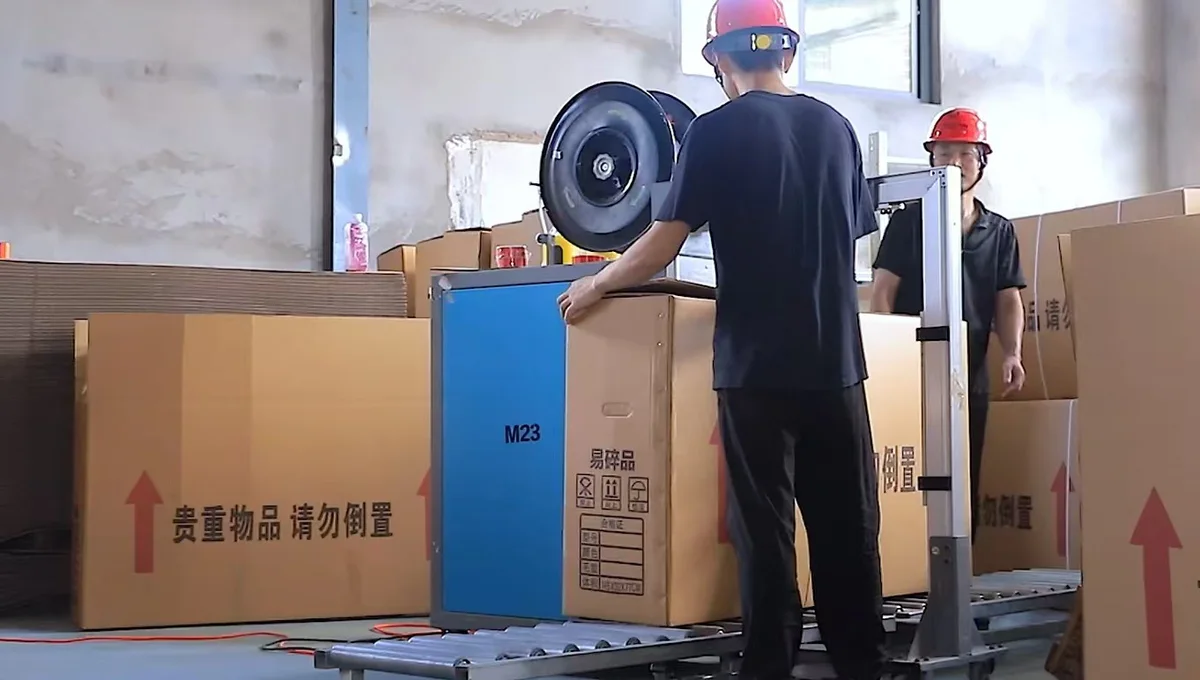
Why dividing container volume by carton CBM is not a loading plan
A volume calculation measures space; a loading plan establishes how the packages can be positioned and secured. Container specifications separately identify internal dimensions, door openings and payload. Hapag-Lloyd also notes that its published fleet specifications are examples and vary by manufacturer. See Hapag-Lloyd's container specifications.
Ask the party preparing the loading plan to address:
- The equipment type and usable dimensions, including access through the door.
- The permitted orientation of each package and whether it may be stacked.
- Any stacking-height or load limits supplied for the packaging.
- Space and materials needed to secure the load, including frames or pallets.
- The complete cargo weight and applicable payload constraints.
- The arrangement of different carton sizes and any separately packed items.
Do not infer a permitted stacking pattern from a warehouse photograph. Likewise, a loading quantity from a different model or packing version is not a reliable commitment for your order.
Prepare one packing inquiry sheet for the whole order
Use one row per model and configuration, with separate entries for additional package types. This gives the sales team and freight provider a shared starting point and makes unresolved information visible.
On a small screen, scroll the table horizontally to read all columns.
| Information | What to provide or request |
|---|---|
| Model and version | Exact vehicle reference, battery configuration and selected accessories |
| Order quantity | Proposed units per configuration; identify sample and bulk requirements separately |
| Package breakdown | Number and contents of packages per vehicle, plus separately packed items |
| External measurements | Length, width and height with units, including the final shipping frame or pallet |
| Gross weight | Weight per shipping unit and the shipment total, with the measurement basis |
| Handling constraints | Permitted orientation, stacking limits and any special packing instructions |
| Route and quotation scope | Origin, destination, proposed delivery terms and named place |
| Open items | Missing data, document version and the person responsible for confirmation |
Describe how batteries are supplied and whether any are packed separately. Have the freight provider confirm acceptance and documentation for the actual shipment; this packing worksheet does not establish transport eligibility.
Ask for freight quotations on the same order and service basis. DHL distinguishes volume-based LCL calculations from per-container FCL charging and notes that applicable ratios can vary. A CBM total therefore should not be presented as a universal shipping-cost formula. Use the carrier's stated quotation basis.
Bring your model shortlist into the inquiry
Start with the electric bike catalogue. Select the vehicles that fit your intended range, then send the model names, battery preferences, proposed quantities and destination. You can use this request:
Please quote the listed models and configurations. For each version, identify the number of packages, their contents, final external dimensions and gross weights. Please state any separately packed items and the permitted stacking arrangement, and advise whether a loading plan can be confirmed for this order.
Review the Z3 two-seater catalogue model and Z6 folding electric bike used in the calculation above. Record the selected battery and equipment with their packing information before requesting a shipment quotation.
Send BG EBIKE your sourcing requirements. If you are still deciding quantities, provide a proposed mix and identify it as preliminary. This is more useful than requesting a container quantity without specifying the vehicles and configuration.
See how we pack and load containers in export packaging and shipping, and how inspection before loading works in quality control.
Models to compare
Use these model pages to define the vehicle mix before requesting packing, timing or spare-parts details. Keep every configuration on its own inquiry line.
Browse electric bike models and seated electric scooters for the rest of your range.
Frequently asked questions
How many electric bikes fit in a 40HQ container?
BG EBIKE’s planning references are about 140 small e-bikes, 80–100 mid-size vehicles or 20–40 large models per 40HQ. These are size-based ranges, not a fixed capacity for every configuration. Provide the model quantities and supply format so the final packaging, stacking arrangement, weight and any separately packed parts can be included in the loading plan.
Can different electric bike models share one container?
Yes, BG EBIKE accepts mixed-model containers. Calculate the package volume for each model separately and add the subtotals, including any separate accessory or parts cartons. The combined CBM is a planning input; package orientation, stacking limits and weight still determine whether that particular mix fits. Keep a quantity breakdown for each model in the inquiry.
Does a smaller carton always reduce shipping cost?
A smaller carton alone does not establish a lower total delivered cost. Compare the same vehicle configuration and supply format, then account for freight charges, packaging and any assembly work at destination. A compact SKD arrangement may change the receiving workshop’s workload, so compare the complete supply proposal before choosing packaging solely by its dimensions.
Can catalogue bare weight be used as shipping gross weight?
No, catalogue bare weight and shipping gross weight describe different quantities. Shipping gross weight must account for the supplied configuration and its packaging, with separate packages recorded where applicable. Send catalogue figures as labelled references, then obtain the final package weights for the freight quotation and loading plan instead of relabelling a bare-weight figure.
References
- Supplied electric-bike product catalogue: Z3, printed page 60; Z6 14-inch folding electric bike, printed page 44. Model data are catalogue references, subject to final packing confirmation.
- DHL Global Forwarding: Calculating Chargeable Weight by Air, Ocean, Road and Rail.
- Hapag-Lloyd: Container Specifications.
External sources reviewed on 19 October 2026. Calculations illustrate package volume; no freight rate, container quantity or savings percentage is promised.