
Electric bike suspension types describe where the bicycle allows movement to absorb bumps: at the front wheel, at the rear wheel, or in a separate rider-support component such as a suspension seatpost. For an importer or dealer, the useful comparison is the supplied structure and component specification—not the number of visible springs or a catalogue label alone.
Short answer: E-bikes use 3 main suspension layouts: a front suspension fork only, front and rear suspension (full suspension), or rider-side suspension such as a suspension seatpost. Compare the supplied components—fork travel, rear shock, adjustments and dimensions—for the exact version, not just whether suspension is listed.
Start by identifying the front and rear arrangement. Then compare the quoted component references, documented adjustment functions, intended use and service requirements.
Choose the layout before comparing adjustments
First decide whether the customer requirement concerns front-wheel suspension, rear-wheel suspension or saddle support. Then compare components within the relevant layout. The Dolphin versions below provide a catalogue comparison; their weight differences are useful version identifiers, but do not measure suspension performance. Use the version table to shortlist the build, then the component record to assess adjustments and service requirements.
Understand the main suspension descriptions
Rigid describes a bicycle without suspension at either wheel. A rigid frame can still have a sprung saddle or suspension seatpost; that does not give the rear wheel suspension.
Front suspension uses a suspension fork while the rear wheel is mounted in a rigid rear structure. In conventional mountain-bike terminology, this is a hardtail. Full suspension has suspension at both the front and rear wheels. These structural definitions are also used in Canyon’s explanation of hardtail and full-suspension e-MTBs. They do not, by themselves, establish a particular model’s suitability for mountain-bike use.
Seat suspension acts at the saddle or seatpost and should be recorded separately from wheel suspension. When a compact folding bike has several visible spring units, identify which assembly each one supports before assigning a category.
Translate catalogue labels into supplied components
The Dolphin photograph below shows the catalogue double-shock configuration. Treat that name as a version reference, then identify the actual components in the model specification. “Double shock” is not automatically another name for full suspension.
Separate the two Dolphin catalogue versions
| Catalogue version | Known distinction | Listed bare weight |
|---|---|---|
| No-shock version | Rigid rear support; front and rear disc brakes listed | 21 kg |
| Double-shock version | Rear shock components shown; treat the version as a separate build | 23 kg |
Source: BG EBIKE catalogue, printed pages 47 and 50, and the corresponding model references. Bare weight is not a load rating. These differences identify versions; they do not quantify suspension travel or ride comfort.
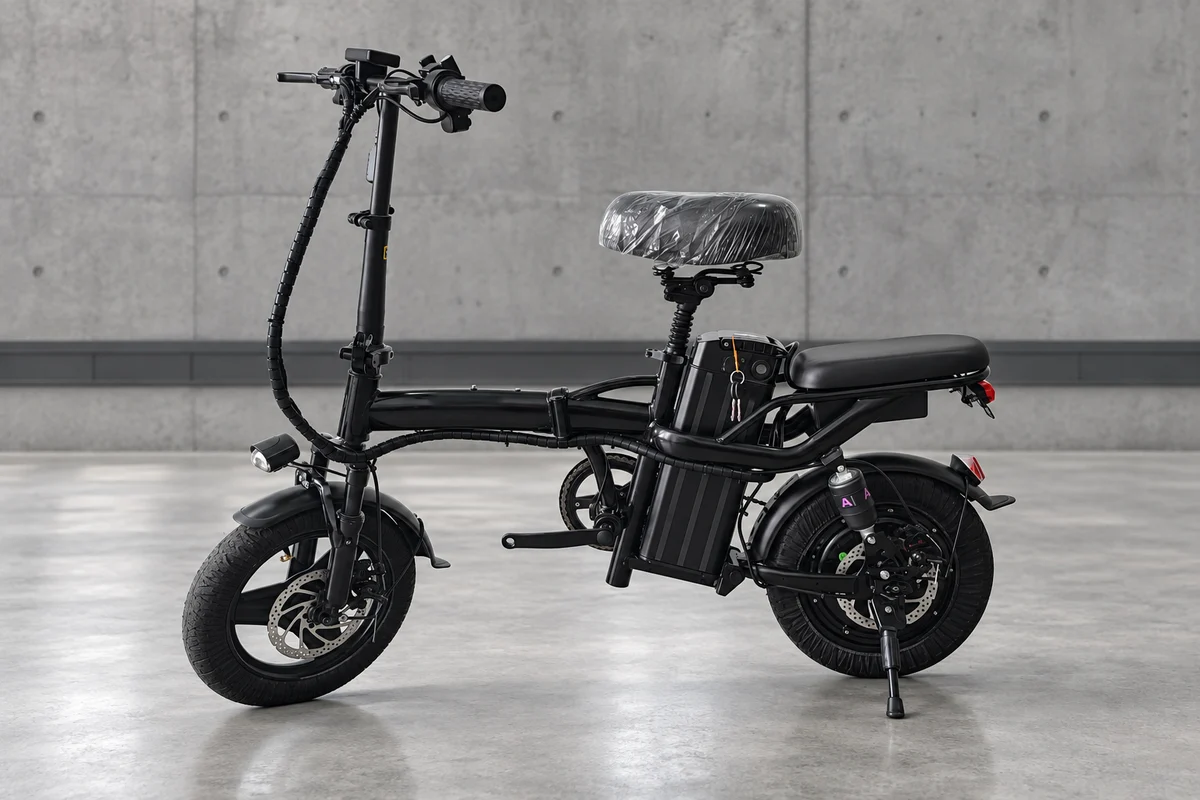
A useful supplier description names the front fork and rear assembly separately. It also distinguishes standard equipment from optional alternatives. A component shown on another version or in a shared catalogue detail is not necessarily included in the price you received.
Counting shock units cannot establish suspension travel, damping, load suitability or ride quality. Two units in one part of a frame do not describe the same arrangement as one front suspension fork and one rear shock. Use the layout to understand the offer, and documented specifications to compare it.
Separate travel, adjustment and component dimensions
Suspension travel describes available movement at a specified part of the system. Ask whether a quoted figure refers to fork travel, rear-wheel travel or shock stroke, and retain that label with the value. These are not interchangeable measurements.
For replacement identification, a component’s mounting dimensions are a different record from its working movement. A part with a similar exterior is not established as compatible. Obtain the supplier’s replacement reference and mounting specification for the exact model/version.
The V1 detail below shows a rear suspension unit and its mounting points. It is a different model from the Dolphin pictured above. The photograph helps locate the component, but it does not establish its travel, damping system, load rating or interchangeability.
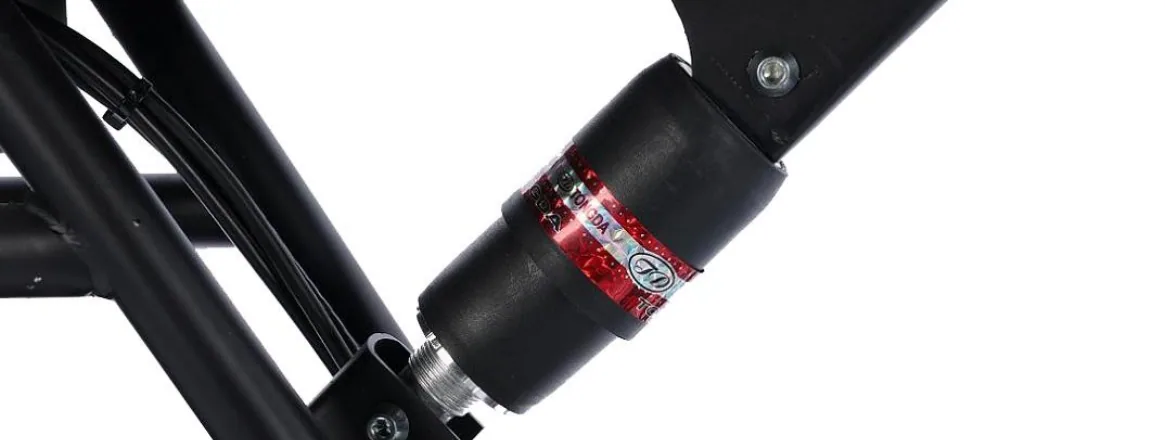
If an offer includes an adjustment feature, ask what it changes and how it is used. Record preload, rebound, compression or lockout only when the supplied component documentation identifies that function. A visible threaded section or a broad word such as “adjustable” is not enough to populate those fields.
Use one suspension record for each quoted version
Give suppliers the same comparison fields. This makes a specification gap visible without assuming that an undocumented feature is either present or absent.
| Field | What to record in the offer |
|---|---|
| Model and version | Exact vehicle reference, configuration revision and a matching photograph. |
| Front arrangement | Rigid or suspension fork; manufacturer/model reference where supplied; documented travel and functions. |
| Rear arrangement | Rigid rear structure or suspension assembly; component reference, quantity and installation location. |
| Seat components | Any sprung saddle or suspension seatpost, listed separately from wheel suspension. |
| Measurement meaning | Units and whether figures describe fork travel, wheel travel, shock stroke or mounting dimensions. |
| Use and load limits | Supplier-stated intended use, vehicle load limits and any applicable component restrictions; do not infer passenger capacity from a rear cushion. |
| Supply scope | Standard configuration, optional alternatives, price differences and any conditions attached to the alternative. |
| Aftersales support | Replacement reference, approved matching information, inspection/service instructions and applicable warranty terms. |
Keep this record alongside the quotation and agreed sample. Before a bulk order, resolve any difference between the photographed sample and the written configuration. If a component substitution is proposed later, review the affected specification and support information rather than accepting a matching appearance as sufficient.
Evaluate the sample against a customer brief
Tell the supplier what the model is intended to do: for example, routine paved commuting or travel over uneven local roads. Add the anticipated load, riding conditions and service resources available to your dealers. Use the supplier’s stated limits to choose an appropriate sample evaluation, rather than treating a suspension label as permission for off-road riding.
When comparing samples, record the configuration and relevant conditions, including rider/load and tyre setup within the manufacturer’s instructions. Keep observed ride impressions separate from measured component specifications. A short demonstration can inform the purchasing decision, but it does not establish long-term durability or a universal comfort advantage.
Also evaluate how your sales and service teams will explain the configuration. They should be able to identify the supplied parts, describe documented adjustments and locate replacement information. Those details are more useful to a purchasing decision than an unsupported claim that one version has “better suspension”.
A sample of the exact configuration is the quickest way to confirm these points, and model-specific changes are covered under customization.
Frequently asked questions
Does a suspension seatpost make an e-bike full suspension?
No. Seatpost movement is separate from rear-wheel suspension. Describe the seatpost as its own feature and identify the wheel-suspension arrangement independently.
Can a suspension upgrade be added to any frame?
Do not assume so. Request a supplier-approved configuration for that frame and version, including matching parts and instructions. This buying guide is not a retrofit procedure.
What should a dealer do when the catalogue omits travel?
Request the component documentation or a clearly defined measurement from the supplier. Until that information is available, describe the documented structure without inventing a travel figure or borrowing one from a similar-looking bike.
Discuss the required configuration with BG EBIKE
Send the model or catalogue version you are considering, destination market, estimated quantity and intended operating conditions. Tell us which suspension features matter to the project and request the corresponding configuration and support details.
Compare the versions on the Dolphin configuration page and review the separate V1 model specification. Use each vehicle’s own component record when discussing suspension or service parts.
Send a model-specific suspension configuration inquiry. If you are comparing two offers, include both version references so that the discussion can focus on the supplied components rather than broad labels.