
A cadence sensor identifies pedal rotation; it does not define the whole pedal-assist response. Two e-bikes described as having cadence sensor pedal assist can respond differently because their control systems use that input differently. For importers and dealers, the useful comparison is how the complete system behaves on the proposed vehicle.
Short answer: PAS stands for pedal assist system. A sensor detects that you are pedalling, and the controller adds motor power at the assist level selected on the display; when you stop pedalling, assistance stops. A cadence sensor detects pedal rotation, while a torque sensor measures how hard you push. That is why the same “PAS 3” setting can feel different on two e-bikes.
For sample approval, record the sensor reference, controller version and assist setting together. Compare start-up and cut-off on the approved sample under the same conditions. If the controller is substituted, use the controller identification checklist and repeat the comparison before accepting the new version.
Follow the signal from the pedals to the motor
Pedal rotation → sensor signal → control-system processing → motor assistance.
A basic cadence sensor detects crank movement without measuring the rider’s pedal force. The control system determines how that information becomes an assistance command. Grin Technologies’ pedal-assist explanation describes several approaches, including power-based assistance and control that varies with cadence. A cadence-sensor label therefore does not identify one universal output pattern.
A torque sensor adds information about pedal effort, but this is still an input to a complete system. The sensor category alone does not establish the quality of its implementation or the suitability of a particular vehicle for a customer.
Speed-related assistance and power regulation are different choices
On some systems, the selected assist level is associated with a speed-related setting. On others, it primarily governs a power level. The distinction changes what the level is asking the system to do; the actual response remains subject to the vehicle’s controls and operating limits.
Some controllers regulate assistance by power level rather than by speed alone, while still using a cadence sensor to detect pedalling. Two bikes with the same sensor type can therefore respond differently, so ask how the controller maps each assistance level to motor output for the model you are comparing.
| Question about the system | Why the answer matters |
|---|---|
| What does the sensor detect? | Pedal rotation and rider effort are different inputs. Identify the documented input before describing its function. |
| What does each assist level govern? | A speed-related setting and a power setting are different control descriptions, even if both displays show levels 1–5. |
| How does assistance begin and end? | The complete system’s response needs its own description and sample observation; the sensor name is insufficient. |
For the separate distinction between bicycle gearing and electric settings, see our mechanical gears and assist-level guide. Five assist levels do not identify a control strategy or make level three equivalent on two vehicles.
Starting response also involves signal detection
The electronics first need usable information that pedalling has begun. Grin describes how sensor pulse arrangements and direction detection can influence that process. This is another reason to evaluate the response of the fitted system instead of assigning every cadence-based e-bike the same starting delay.
Accelerated Systems’ pedal-sensor documentation also treats sensor inputs and controller configuration as connected parts of the system. Its technical instructions apply to its equipment; they are not settings to copy into a different vehicle.
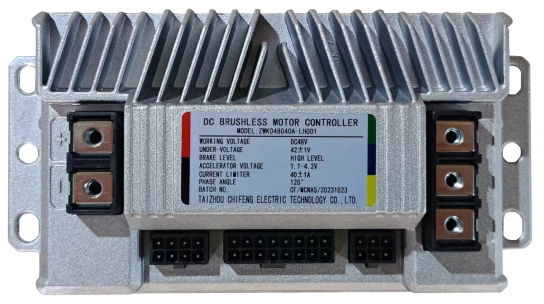
A controller photograph can help identify a component. Its casing and connectors do not demonstrate the software behaviour discussed here. Likewise, a visible pedal or crank does not establish that a vehicle has a particular pedal-assist system.
Compare sample behaviour without guessing the cause
Imagine two shortlisted e-bikes whose documentation identifies cadence sensing. On an authorised sample demonstration, the evaluator notices a different assistance response at a low setting. That is a useful observation, but it does not prove that one sensor is better or identify the control strategy by itself.
This is an illustrative comparison, not a BG EBIKE test result. Record the exact vehicle versions, battery condition, selected assist mode, mechanical gear, load and demonstration conditions. Use the manufacturer’s procedure and an appropriate setting for the evaluation.
Write down the response you observed: how assistance engaged, how it behaved during continued pedalling, and how it ended when pedalling stopped. Ask the supplier to explain the documented behaviour and any mismatch. “Please provide smoother assistance” is less precise than identifying the condition and response that concerned the evaluator.
The resulting record should distinguish an observation, the supplier’s explanation and any agreed change. Our sample evaluation guide explains how to keep those findings linked to the proposed order configuration.
To check these details before a bulk order, order a sample of the version you plan to sell; colours, accessories and, on most models, handlebars and seats can be chosen through customization.
Frequently asked questions
Do you have to pedal an electric bike?
On a pedal-assist-only e-bike, yes: the motor helps only while you pedal. E-bikes fitted with a throttle can also move without pedalling. Which type a buyer may sell depends on the destination market’s rules, so confirm whether a throttle is included in the configuration you order.
What do the PAS levels on an e-bike display mean?
The level selects a setting in that controller. Depending on the system, it may govern power or a speed-related target. Ask for the level table and controller version for the quoted bike. Two displays that both show level 3 can command different assistance.
Can you ride an e-bike without the battery?
Yes, if it has pedals and a working chain, it rides like a heavier ordinary bicycle. The motor, lights powered by the battery and the display will not work, so riders feel the extra weight, especially on climbs.
Do electric bikes charge when you pedal?
Usually no. A cadence sensor detects pedalling; it does not charge the battery. A drive system designed for regenerative braking can recover energy while slowing down. The amount depends on the drive system and route. Check the exact model before including regeneration in a quotation.
Use the findings to choose a configuration
Choose the response that suits the intended customer requirement, alongside the vehicle’s other characteristics. Avoid promising that cadence sensing always supplies constant power, that torque sensing always extends range, or that either label guarantees a particular acceleration feel. Those claims need evidence for the complete vehicle and conditions.
If a controller, sensor or software version changes after sample review, identify the affected configuration and whether another evaluation is needed. Similar-looking components do not establish equivalent behaviour or approved interchangeability.
When discussing models from the BG EBIKE electric bike range, send your shortlist, destination market, estimated quantity and the assist behaviour your customers need. Ask for the documented control functions on the offered version and the sample arrangements available for assessing them. Pedals, a display or an ambiguous catalogue mode name should not substitute for that information.