
A dealer searching for a 2 seater electric bike is often looking at four different machines: a moped-style bicycle with a split or long seat, a longtail cargo bike with a rear deck, a tandem with two sets of pedals, or a two-seat trike. This guide uses BG EBIKE’s listed Z3 and V1 data to separate those types and to show what the quotation must name: seat layout, intended passenger use and any load limits that belong to the model.
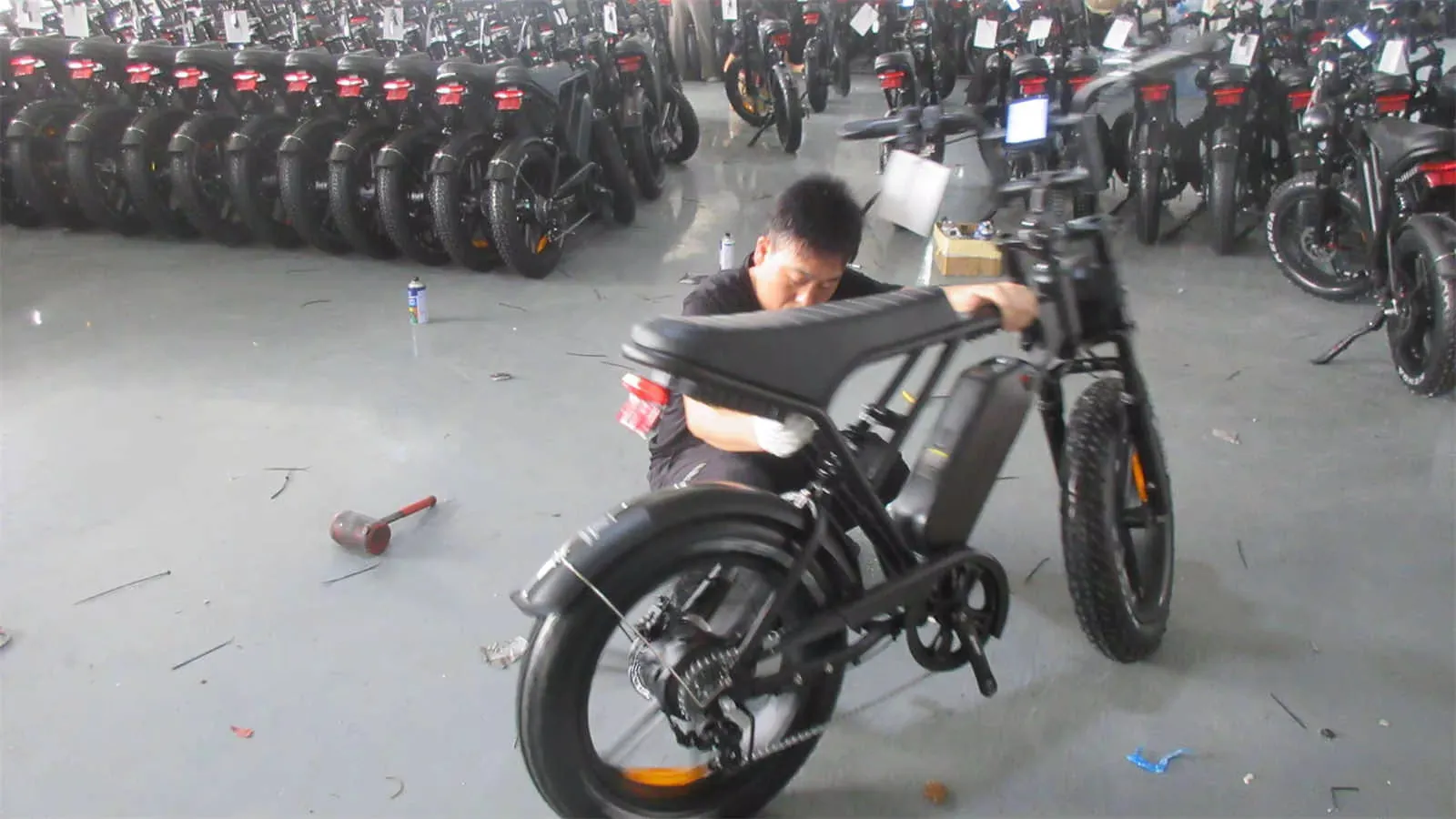
Short answer: A 2 seater electric bike is an electric bicycle the manufacturer presents with two seating positions, not a long saddle by itself and not a tandem with two sets of pedals. On BG EBIKE’s listed range, Z3 has a split seat and V1 has one continuous long seat; both are 20 × 4.0 bikes with a 1000 W motor and a 48 V 10–25 Ah lithium battery (480–1,200 Wh). Listed bare weights are 35 kg and 48 kg. A rear cushion does not set a passenger load, so the quotation should record intended use, seat equipment and any agreed load limits. BG EBIKE produces and assembles these models in its own factory, with flexible MOQ by model and mixed containers.
What is a 2 seater electric bike?
A 2 seater electric bike is an electric bicycle sold with two intended seating positions on one frame, with the front rider steering and a second person sitting behind. It keeps bicycle pedals and a bicycle drivetrain. That is a different machine from a longtail cargo e-bike with an extended rear deck, from a tandem with two sets of pedals, and from a two-seat electric trike.
Search results mix those types under the same query, including “two seater electric bike” and “2 person e bike.” For a dealer, the useful test is not saddle length. It is whether the manufacturer describes two seating positions, whether foot support and other passenger equipment are in the quoted version, and whether a load limit for that use is written down. A long cushion can be there for one rider’s comfort, or for luggage, without any passenger rating.
Moped-style frames are the group that includes BG EBIKE’s Z3 and V1. They share the long bench look discussed in our moped-style e-bike guide for dealers, but seat layout still has to be specified line by line. A seated electric scooter with a long saddle is another category; it should not be quoted as an e-bike.
How do two-seater, long-seat, longtail and tandem layouts differ?
The four layouts that appear in “2 person ebike” and “two seater e bike” searches are not interchangeable on a purchase order. Keep the distinction below on the quotation, before motor power is compared.
| Layout | What the passenger (or second rider) sits on | Pedals | What a dealer should record |
|---|---|---|---|
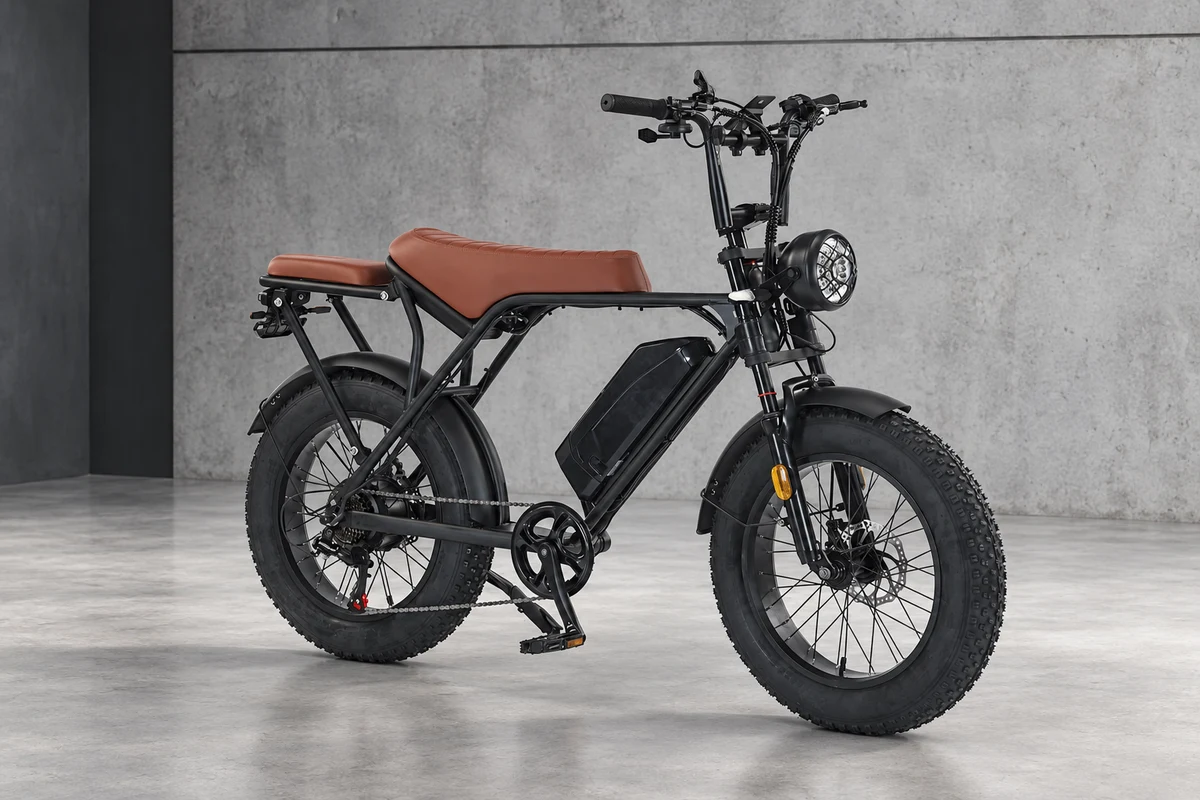
| Two-seater e-bike (split seat) | A main saddle plus a separate rear cushion, as on Z3 | One set, for the rider who steers | Seat type, intended use, foot supports if supplied, and any agreed load limit |
| Long-seat e-bike | One continuous saddle, as on V1 | One set, for the rider who steers | That a long seat is not, by itself, a passenger specification |
| Longtail cargo e-bike | An extended rear deck or pad, often with a child seat or rail kit | One set, for the rider who steers | Deck or rack rating, kit list, and whether the passenger is a child or an adult |
| Tandem e-bike | Two riding positions, each with handlebars or a stoker bar | Two sets | That this is not a 2 seater electric bike in the moped-style sense |
BG EBIKE does not list a longtail cargo e-bike or a tandem in this range. If a buyer asks for a 2 seater electric bike for adults, do not answer with a child-seat longtail, and do not assume that Z3 or V1 carries a published two-adult payload. How to read rider, payload and rack figures is in our electric bike weight limit guide; the Z3 and V1 pages do not list a payload figure.
How do Z3 and V1 compare on listed figures?
On the listed 1000 W platform, Z3 and V1 are not separated by motor power or tyre size. The useful comparison is seat layout, bare weight, packing size and the figures that are present on one page but not the other.
| Listed figure | Z3 (two-seater) | V1 (long seat) |
|---|---|---|
| Seat layout | Main saddle and separate rear cushion | Continuous long seat |
| Motor | 1000 W brushless | 1000 W brushless |
| Battery | 48 V 10–25 Ah lithium | 48 V 10–25 Ah lithium |
| Listed top speed | 30–50 km/h | 50 km/h |
| Listed maximum range | 60 km | 60 km |
| Tyres | 20 × 4.0 | 20 × 4.0 |
| Brakes | Not listed | Disc components visible |
| Suspension | Not listed | Rear suspension unit visible |
| Charging time | 5–8 hours | 3–6 hours |
| Bare weight | 35 kg | 48 kg |
| Package size | 150 × 30 × 90 cm | 149 × 30 × 90 cm |
| Controller, gears and display | 12-tube controller, Shimano 7-speed, 5-level electric control, LCD dashboard | 12-tube controller, Shimano 7-speed, 5-level electric control, LCD dashboard |
Figures are as listed on each product page for the standard configuration on 12 November 2026. Speed, range and charging time are catalogue figures, not test results.
Three points follow from the table. First, V1’s 48 kg bare weight is 13 kg, or about 37%, heavier than Z3’s 35 kg, so shop handling and van loading differ even when the motor and tyres match; these are listed bare weights, not shipping gross weights. Second, the cartons are almost the same: 1.50 × 0.30 × 0.90 m equals 0.405 m³ for Z3, and 1.49 × 0.30 × 0.90 m equals 0.402 m³ for V1, which is not a reason to treat the bikes as the same vehicle. Third, Z3 does not list a brake type, while V1 shows disc components; if brakes matter, write them into the quotation rather than inferring them from the sister model.
Battery energy is nominal voltage multiplied by capacity. On both models, 48 V × 10 Ah is 480 Wh and 48 V × 25 Ah is 1,200 Wh, so the top option stores 2.5 times the energy of the entry option. Both pages list one 60 km maximum range for the whole 10–25 Ah span, so compare watt-hours when you price two capacity tiers. Our e-bike battery capacity guide sets out the same calculation.
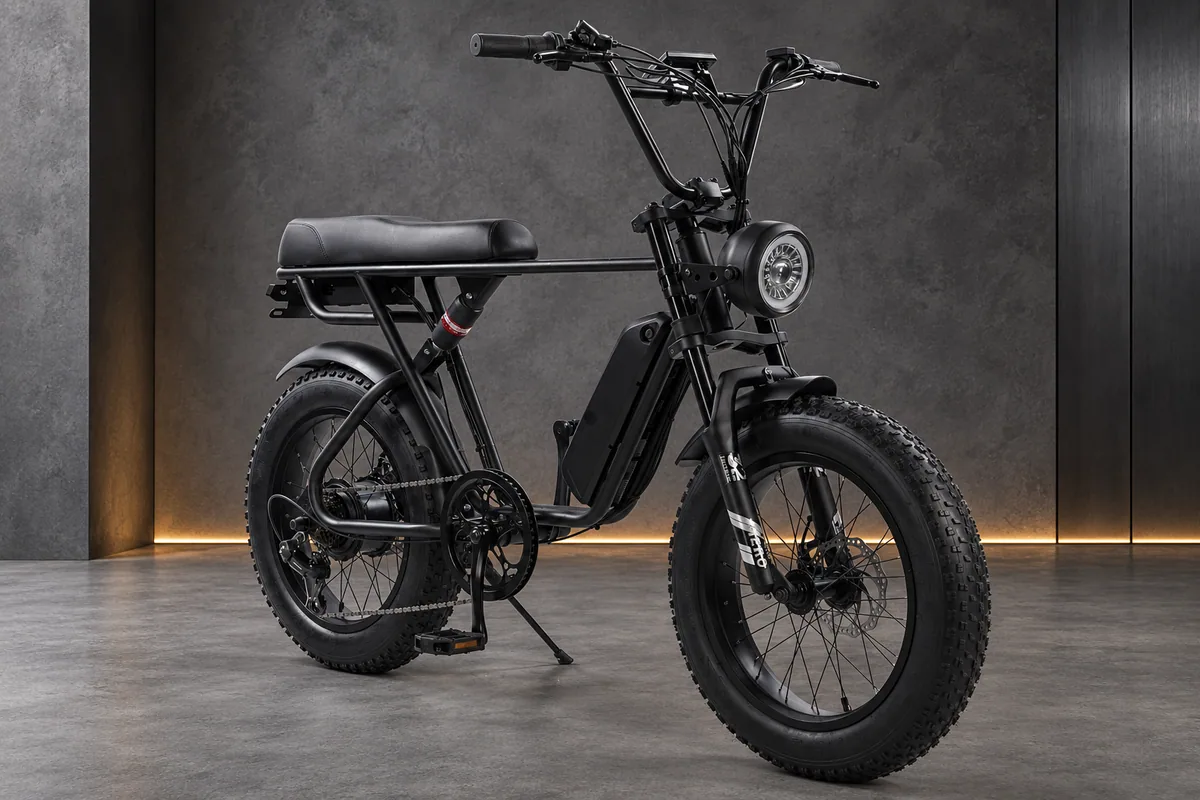
S1, listed on the Z3 page as a 1000 W, 48 V 10–25 Ah, 20 × 4.0 comparison model, sits on the same platform without a two-seater or long-seat description. Use it when a buyer wants that platform but not a second seating position. TANK is a seated scooter with a long seat, 10-inch hubs and 3.0-10 tyres; quote it from the seated scooter range, not as a 2 seater electric bike. When a long seat counts as a passenger model is covered in Electric Bike with Passenger Seat: What Counts as a Passenger Model?
What should the quotation for a two seater electric bike include?
Write the quotation so that two suppliers would describe the same vehicle, and so the seat story cannot be rewritten after the deposit. Include at least:
- Model and seat layout. Name Z3 or V1, or the agreed alternative, and say whether the seat is a split two-seater or a continuous long seat.
- Intended use. State whether the rear position is for a passenger, for luggage, or is not to be sold as a passenger position. Z3’s page says passenger use, rear-seat load and foot supports are confirmed in the quotation; V1’s page does not list foot supports.
- Load limits. If a total payload or rear-seat limit is agreed, write the figure, the unit and what it includes. If no figure is listed, say so; do not invent one from saddle length.
- Motor, battery and charger. Record rated power, voltage, capacity in Ah and the resulting Wh, and the charger to be supplied.
- Speed and controls. Record the destination’s speed and motor limits and whether throttle or pedal assistance is required. These models list 1000 W and 30–50 km/h or 50 km/h, which may sit above some e-bike thresholds; match the quoted version to the market before production. We do not state that any model is road-legal in a given country.
- Brakes, tyres and other equipment. Use listed values where they exist, and name any item that is not listed, such as Z3’s brake type, so it is confirmed rather than assumed.
- Colours, quantities and logo. Quantity per model and per colour, and any logo requirement. On most models the handlebar and seat can be changed; frames stay as designed. Logo printing is available from a full container; see the OEM and ODM page.
- Packing and battery documents. Carton size, battery packing and the documents needed for lithium shipments.
Battery capacity, seat equipment, colours and quantity per model usually move the unit price; see our wholesale price page. A comparable request also names the destination and whether you need complete bikes or kits.
How should a dealer stock two-seater and long-seat versions?
A practical first range is one split-seat model and one long-seat model from the same electrical platform, plus a single-seat model for buyers who do not want a second seating position. On BG EBIKE’s listed range that can be Z3, V1 and a same-platform single-seat bike such as S1.
Keeping Z3 and V1 together simplifies service talks because the listed motor, battery voltage range, tyre size, controller tube count and gearing are shared. Matching listed figures do not prove that parts are interchangeable, so spare parts are still ordered by model and part reference; see our spare-parts planning guide.
For a rental fleet or a dealer who will be asked about passengers, the stock decision is what you are prepared to write on the specification, not how long the saddle looks in a photo. If the destination requires a vehicle designed and equipped for a passenger, the order has to say so, with the seat equipment and any load limit attached. If that confirmation is missing, do not sell the bike as a passenger model.
How do two-seater and long-seat e-bikes pack in a container?
These models ship in long cartons whose volumes are almost identical, so a mixed container is planned by carton volume and weight, not by treating one unit as a substitute for the other:
| Model | Listed package size | Carton volume (calculated) | Listed bare weight |
|---|---|---|---|
| V1 | 149 × 30 × 90 cm | 0.402 m³ | 48 kg |
| Z3 | 150 × 30 × 90 cm | 0.405 m³ | 35 kg |
The two cartons differ by only about 0.003 m³, but V1’s listed bare weight is 13 kg higher. As a general reference, a 40HQ holds about 140 small e-bikes, 80–100 mid-size vehicles or 20–40 large vehicles; these 20-inch fat-tyre bikes sit in the mid-size guidance of about 80–100 units, and the exact mix is planned from the real carton sizes before production. See the container loading guide and the packaging and shipping page.
MOQ is flexible by model, and models can be mixed in one container. A full container is usually produced in 30–35 days once the configuration is agreed; allow 45–50 days before Chinese New Year. Payment is 30% deposit, with the remaining 70% due after inspection and before loading, from Ningbo. Samples are sold at the unit price and credited against a bulk order; lead time depends on the model. Lithium-battery samples are difficult to ship; samples without a battery can go by international express or in a consolidated shipment. MSDS and UN38.3 test summary supplied for lithium battery shipments.
Models to compare
- Z3 20 Inch Two-Seater Electric Bike: split seat, 1000 W, 48 V 10–25 Ah, 35 kg bare weight, 150 × 30 × 90 cm carton.
- V1 20 Inch Long Seat Electric Bike: continuous long seat, 1000 W, 48 V 10–25 Ah, 48 kg bare weight, 149 × 30 × 90 cm carton.
- TANK 1000W Seated Electric Scooter: a seated scooter with a long seat, 10-inch hubs and 3.0-10 tyres, not an e-bike.
- All models in the wholesale electric bike range.
Frequently asked questions
Short answers to questions dealers and importers ask when they specify a 2 seater electric bike.
Is a long seat electric bike the same as a 2 seater electric bike?
No. A long seat is one continuous saddle; a two-seater, as listed on Z3, has a main saddle and a separate rear cushion. Neither layout, on its own, is a passenger rating. Treat the long-seat V1 and the two-seater Z3 as different order lines, and write intended use and any agreed load limit on the quotation rather than inferring them from saddle length.
Can a dealer quote a 2 person e bike without a payload figure?
You can quote the model, seat layout and equipment, but you should not present the bike as a passenger model unless intended use and any load limit are written into the quotation. Z3 and V1 do not list a payload figure on their product pages. If no limit is agreed, say that on the quote. Do not invent a number from seat length or from another model’s catalogue.
Is a tandem the same thing as a two seater e bike?
No. A tandem has two riding positions and two sets of pedals. A two seater e bike, in the sense used for Z3, has one set of pedals and a rear seating position behind the rider who steers. A longtail with a rear deck is a third type. Keep those names separate on the purchase order so the factory does not build, or omit, the wrong seat equipment.
Can two-seater and long-seat models be mixed in one container?
Yes. MOQ is flexible by model, and models can be mixed in one container. Z3 and V1 cartons are about 0.405 m³ and 0.402 m³, so they take similar volume, but V1’s listed bare weight is 13 kg higher. Plan the mix by carton volume and weight, and confirm the loading plan from the real packing version before production starts.
Related guides
- Electric bike with passenger seat: what counts as a passenger model?
- Moped-style e-bikes: what dealers should stock and specify
- Electric bike weight limits: rider, payload and rear rack capacity
To get a comparable quotation, send the models, quantity per model and colour, seat layout and intended use, battery capacity, destination and its speed and motor requirements, and whether you need complete bikes or kits. See wholesale order terms for the buying process. BG EBIKE replies within 24 hours on working days and can send a PDF catalogue on request.
How this guide was prepared: model figures are taken from the Z3, V1 and TANK product pages as listed on 12 November 2026; watt-hour and carton-volume figures are calculated from those listed values. Wholesale terms follow BG EBIKE’s published order, sample and packaging pages.