
Short answer: With the motor off, first find out whether the disc scrapes with the brake released or the wheel fails to stop when you pull the lever. A scrape after a wheel change calls for a wheel-fit and alignment check. A firm lever with weak braking calls for a pad and rotor inspection. If either brake has lost stopping power, the lever reaches the grip, or a hydraulic fitting is leaking, keep the bike out of use until a mechanic has checked it.
What does the faulty brake actually do?
Leave both wheels fitted and switch off assistance. If you see fluid leaking from a brake, frayed brake cable strands or a loose wheel, skip the walking check and arrange service. Otherwise, with the brakes cool and the bike easy to control, stand beside it on level ground, walk it slowly and apply each lever separately. Note which wheel responds. Listen with the lever released and as it engages. Keep fingers clear of the disc and spokes. This check can help describe a fault. A bike with reported brake failure needs professional inspection before riding.
| What you notice | What to record | Where the repair starts |
|---|---|---|
| A scrape with every wheel turn | Which wheel? Did it start after an impact or wheel refit? | Check wheel seating, then look for sideways rotor movement. |
| A steady scrape with the lever released | Does it continue throughout the turn? Does the lever return freely? | Check the wheel position and pad clearance before adjusting the caliper. |
| Firm lever, little stopping power | Sudden change after chain lubrication, or gradual loss? Pads recently changed? | Keep the bike parked. Inspect pads and rotor for contamination or wear. |
| Lever pulls unusually far or feels soft | Which lever? Cable or hose at the caliper? Any fraying or fluid? | Inspect the cable and its housing on a cable brake, or the hydraulic system on a hose-fed brake. |
| Bike slows but the motor keeps pushing | Does this model have a brake cut-off? Which lever was applied? | Switch off and have the motor cut-off checked before riding again. |
Why did the disc start rubbing after a wheel change?
The rotor comes out with the wheel. If the axle sits differently when the wheel goes back in, the rotor passes through the caliper in a different position. If the brake ran quietly before a puncture repair, tell the mechanic about the wheel removal before anyone moves the caliper. The first fix may be to seat and secure the wheel correctly.
Once the wheel is correctly seated, a scrape that repeats at the same point gives the mechanic a place on the rotor to inspect for sideways movement. A scrape throughout the turn calls for a look at the gap between each pad and the disc, and whether the pads release. A cracked or visibly deformed rotor takes the bike out of service. If the rotor itself needs measuring, use the rotor thickness and compatibility guide to identify the appropriate limit. Park Tool’s illustrated wheel and caliper checks show where those gaps are visible.
Should you tighten the cable if the lever pulls too far?
Look at the connection at the wheel. A cable-actuated brake has an inner wire fixed to a moving arm. A fully hydraulic brake has a hose entering the caliper. Some e-bikes also have a thin electrical lead at the handlebar for the motor cut-off. Trace the brake line to the wheel to identify the mechanism. The e-bike brake type guide shows how the systems differ.
Cable-actuated brake. Look for frayed strands and a housing end sitting outside its stop. Tell the mechanic if the lever suddenly gained travel after transport or wheel work. Adding tension can take up slack, but it cannot replace worn friction material. On some mechanical calipers, taking up pad wear at the barrel adjuster leaves the arm too little travel to apply the brake. The repair depends on the fitted caliper’s pad adjustment and the condition of the cable. Park Tool shows the different mechanical caliper designs.
Hydraulic brake. A suddenly soft lever or fluid around the lever, hose or caliper calls for professional inspection. With the wheel in place, note where fresh fluid is visible and whether the lever reaches the grip. Leave the hose connections closed and the bike parked. A mechanic needs to find the reason for the pressure loss before deciding whether the system needs a replacement component or a bleed. See Shimano’s hydraulic disc brake pre-ride checks, page 7.
Why is stopping power poor when the lever feels firm?
The lever can feel firm while the pads have too little grip on the rotor. If stopping power fell just after spray lubricant was used near that wheel, tell the shop which spray was used and where it landed. Do not add lubricant to silence a squeal. Keep the bike out of service while the shop inspects both friction surfaces. If the loss was gradual, ask the mechanic to measure pad material and rotor thickness separately against the limits for those exact parts.
If pads or a rotor were just replaced, tell the shop whether the manufacturer’s bed-in procedure was completed. New pads can gain braking force during bed-in, but a brake that cannot stop the bike needs inspection first. Shimano’s disc brake safety manual covers contamination, damaged cables, fluid leaks and bed-in. When inspection confirms the pads need replacement, use the e-bike brake pad replacement and matching guide to identify the correct set for the caliper.
What if the wheel brakes but the motor still pushes?
On a bike equipped with a brake cut-off, applying the lever also sends a signal to interrupt assistance. The pads and rotor slow the wheel. A fault in one function can leave the other working. If the rider reports that the motor kept driving while braking, switch the bike off, record which lever was involved and have the system checked. Leave the cut-off connected. The brake cut-off sensor guide explains what to identify at the lever before looking for an electrical replacement.
What should you send the workshop or parts supplier?
A note such as “rear wheel, recurring scrape with the lever released, started after puncture repair, lever still feels firm” tells the workshop where to begin. A request for “rear brakes” leaves open whether the repair needs a cable, pad, rotor or simply correct wheel seating.
- Bike and wheel: record the model, build or order reference, and front or rear wheel. Label any photos with the same wheel position.
- Symptom and timing: describe what you heard or felt, whether the lever was pulled or released, and the last change before the problem appeared.
- Part identification: take a photo of the complete caliper on the wheel and another of its model marking with the bike switched off. If the workshop has confirmed a worn part, include its reference and the quantity needed.
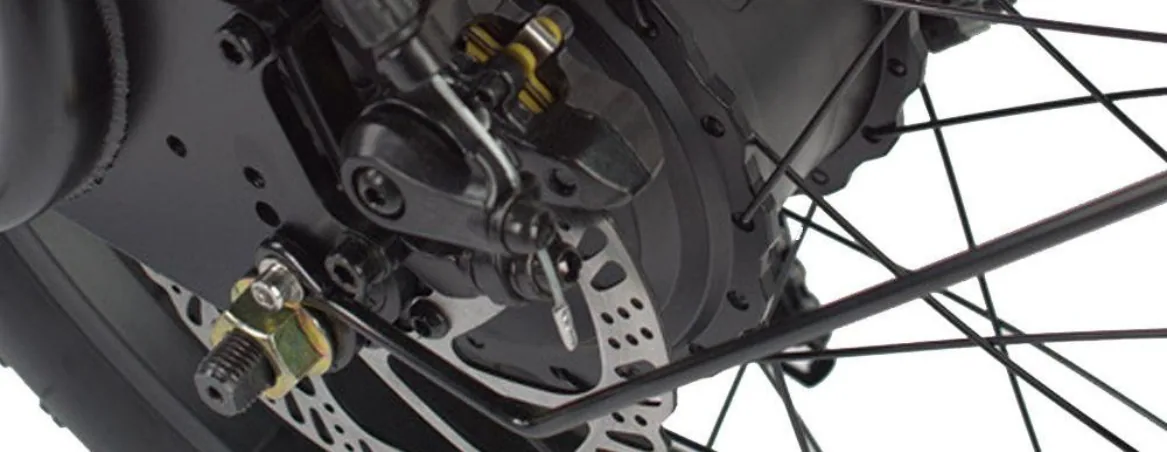
For example, the BG EBIKE Z6 specification lists disc brakes at both wheels. The V1 product gallery shows the rear disc beside the hub motor. Those details help identify which assembly is in the photo. For a replacement order, add the marking on the actual caliper. A shop supporting a BG EBIKE order can then request the identified brake parts with the wheel position, quantity and destination.
Frequently asked questions
Does a squeal mean the brake pads need replacing?
Sound alone is insufficient to order pads. Report whether the noise occurs only when braking, whether stopping power changed, and whether any lubricant came near that wheel. The mechanic can inspect for contamination and measure the remaining friction material against the fitted pad’s service limit.
Can I ride to the shop using the other brake?
If either brake has lost stopping power, leave the bike out of service and arrange transport or collection. A working brake on the other wheel cannot clear the defective brake for road use. Let the shop know if a wheel also drags or locks so it can plan collection.
What should the shop confirm before the bike goes back into service?
Ask which wheel and component caused the fault, what the shop corrected, and how it verified brake application and release. If pads or a rotor were fitted, ask about the maker’s bed-in procedure. If the original complaint involved continued motor drive, the shop should also verify the brake cut-off on the affected system.