
Two bicycle brake rotors with the same diameter are not automatically interchangeable. Disc brake rotor thickness is a separate specification, and the replacement must be compatible with the brake system. For an e-bike dealer, a stock description such as “180 mm rotor” is therefore incomplete.
Short answer: No—two 180 mm rotors are not automatically interchangeable. Thickness is a separate specification (for example 1.8 mm versus 2.3 mm), and the caliper and pads must be designed for the rotor fitted. Record diameter, thickness, mounting type and minimum wear thickness, and replace a rotor only with one approved for that brake system.
This guide explains the distinction using published component specifications. It concerns bicycle disc brakes and helps importers and dealers compare complete-bike configurations and organise service stock; it is not a universal rotor conversion procedure.
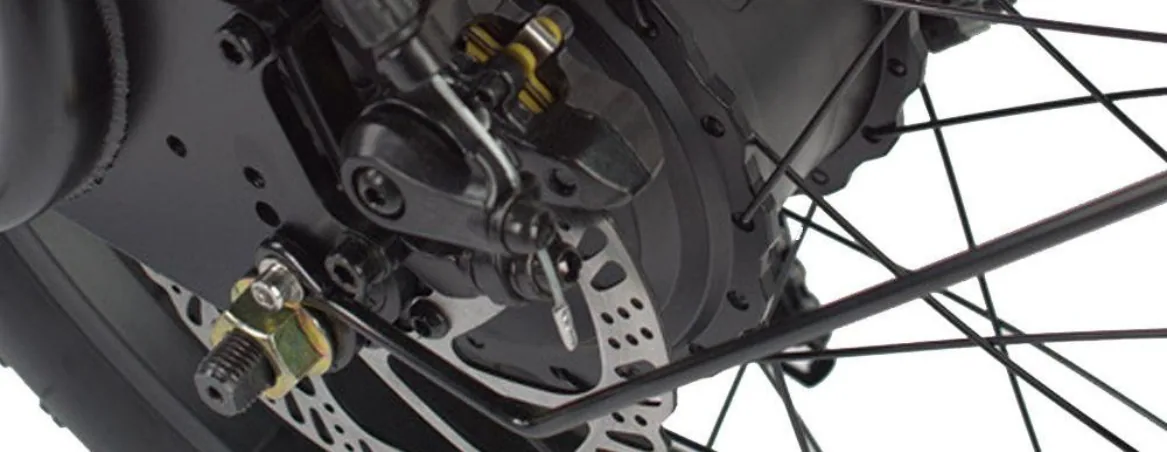
Diameter and thickness answer different questions
Diameter describes the rotor’s outside size. Thickness describes the dimension across its braking track. A complete identification also needs the rotor model, mounting interface and the brake manufacturer’s approved combination. Matching one dimension does not establish the others.
The distinction is visible in TRP’s published rotor specifications: both the RS02M and RS01E families include a 180 mm option, but their listed thicknesses differ.
| Published rotor example | Dimensions relevant to this comparison |
|---|---|
| TRP RS02M, 180 mm option | 180 mm diameter; 1.8 mm listed thickness; six-bolt mounting. |
| TRP RS01E, 180 mm option | 180 mm diameter; 2.3 mm listed thickness; six-bolt mounting. |
These are manufacturer examples, not specifications for the V1 pictured above or a list of components available on every BG EBIKE model. They demonstrate a narrower point: even the same stated diameter and mounting style can describe different rotors.
1.8 vs 2.3 mm: why the difference is not an automatic upgrade
A 2.3 mm rotor is 0.5 mm thicker than a 1.8 mm rotor. That arithmetic identifies a dimensional difference; it does not tell you whether a particular caliper accepts it. In its R2 Extra Thick rotor guidance, Yokozuna explicitly directs buyers to check whether their brakes safely accommodate 2.3 mm rotors.
The purchasing decision should therefore concern an approved assembly, not a thickness preference in isolation. An apparent fit between the pads is not a substitute for the manufacturer’s compatibility information. Nor does a thicker rotor, by itself, prove that a complete e-bike will stop in a shorter distance.
If two bicycle offers use different rotor specifications, compare the identified brake systems and their intended duty. Do not treat a rotor change as an option that can be added to any frame, fork and caliper combination without further engineering review.
New thickness and minimum thickness are not the same value
A rotor’s original specification and its permitted wear limit serve different purposes. The first identifies the supplied component; the second belongs to inspection and replacement decisions. A worn rotor should not be reclassified as another thickness family because its current measurement happens to resemble that family’s new specification.
For example, the same TRP page gives a 1.5 mm wear limit for its 1.8 mm discs and a 1.9 mm limit for its 2.3 mm discs. These values apply to the products described there. They are not universal bicycle-brake limits and should not be copied into another manufacturer’s service instructions.
For purchasing records, store the specified new thickness with the part reference. For workshop records, retain the applicable manufacturer’s inspection method and replacement criteria. A photograph or an old, worn sample cannot supply all of that information.
A shared “180 mm” stock bin can hide two different parts
Consider an illustrative dealer-stock example: two bicycle models both list 180 mm, six-bolt rotors. The first is documented for one rotor and caliper combination; the second for another. If the receiving label records only diameter, the warehouse loses the distinction needed by the workshop.
Keep separate stock identities until an approved common replacement is documented. A useful label combines the part reference, diameter, specified thickness and the vehicle configurations it is approved to support. The vehicle model alone may also be insufficient when production versions use different assemblies.
This is where thickness information becomes useful to a business: it supports traceable ordering and picking, rather than an assumption that similar-looking parts can share a stock code. Our spare parts planning guide covers the wider link between vehicle versions and service stock.
Confirm the specification on a sample before committing a container; where a component or accessory needs to change, see what is possible through customization.
Frequently asked questions
Can I fit a 2.3 mm rotor where a 1.8 mm rotor was used?
Only if the brake manufacturer approves that thickness for the caliper and pads. A thicker rotor may not fit between the pads or may change how the pistons retract, and a thinner one can reduce braking. Check the brake system’s specification instead of treating a thicker rotor as an automatic upgrade.
When should a brake rotor be replaced?
Replace it when it reaches the minimum thickness marked on the rotor or given in the brake manual, or if it is bent, cracked or deeply scored. Measure with a micrometer at several points around the braking surface, because wear is not always even, and replace pads at the same time if they are contaminated.
What should a rotor stock description include?
Diameter, thickness, mounting type such as 6-bolt or Center Lock, and the brake systems the rotor is approved for. A bin labelled only “180 mm rotor” can mix parts that are not interchangeable, which leads to wrong replacements and comebacks in the workshop.
Thickness is one compatibility field, not the whole specification
Mounting style is another independent field. SRAM’s rotor overview distinguishes six-bolt and Centerlock interfaces and explains that rotor sizing must respect the frame and fork specification. Knowing thickness does not remove those requirements.
For a replacement or a proposed configuration change, use the manufacturer’s matching references for the rotor, caliper and pads, together with the relevant mounting and vehicle requirements. Have service work performed according to the actual component instructions; this article does not provide a method for modifying an incompatible assembly.
For the broader difference between disc layout and mechanical or hydraulic actuation, see our guide to reading e-bike brake specifications. Here, the key procurement lesson is more specific: diameter identifies only one dimension, so it cannot establish a shared replacement part.
Comparing brake configurations for an e-bike order? Browse the BG EBIKE electric bike range, then send your sourcing requirements with the shortlisted model, destination market and estimated quantity. Include any dealer service-stock requirements so the discussion can address the proposed vehicle version and its component references.