
Short answer: To plan your first e-bike rental fleet, count how many bikes people want at the same time, add the bikes unavailable during that same pickup window, then work out how many paid rental days will cover your costs. Before placing the order, run a sample through a guest pickup, your actual route and a return to the counter.
How do you test demand before you buy a fleet?
Start with a specific offer: a bike collected from your shop or hotel, for a named route, at a stated price and return time. Put the offer in front of people who could actually book. A guest who asks about a weekend ride is a useful lead. A guest who requests two bikes for Saturday morning at your proposed rate gives you something you can plan around.
For each request, log the pickup and return times, party size, and whether it became a reservation, a cancellation or an unfilled walk-in. Match walk-ins to reservations so a caller who later appears at the counter counts once. For a hotel, have the front desk record requests alongside occupied rooms. Check how many rooms requested bikes and how many bikes each party needed. Full occupancy alone tells you little about the number of bikes to buy.
Compare busy weekends with ordinary weekdays and poor-weather days. Before accepting paid bookings, confirm with the local authority or route manager which vehicle configurations may use your intended route. Ask your insurer for terms covering the rental operation, the bikes and where they will be kept. The U.S. Small Business Administration’s launch guide provides a starting point for local permits and insurance.
How many e-bikes should a rental business start with?
Pick the busiest overlapping pickup window in your log. Count bikes needed by paying riders, bikes at the counter being turned around, and bikes held out for repairs or reserve. Each bike belongs in one column at that moment.
| Where the bike is needed | Bikes | What to check |
|---|---|---|
| Out with riders, including bookings about to leave | 6 | Count bikes across overlapping trips. A group reservation may require several bikes. |
| Returned, awaiting inspection or charge | 1 | Time how long it takes the return to become ready for another guest. |
| Held out of service | 1 | In this example the operator allows for one unavailable unit. A bike under repair cannot also serve as a ready spare. |
This window takes 8 bikes. Repeat the count at the other busy times and use the largest simultaneous total. If moving a pickup later makes a returned bike available, test that timetable before ordering another bike.
How many paid rental days cover the first fleet?
Use what you keep from a rental after discounts and refunds, excluding sales tax. Subtract the costs triggered by that rental, such as payment fees, charging, usage-related wear and extra turnaround labor. What remains is the contribution toward fixed costs and the money invested in the bikes. Keep salaried counter staff in fixed costs if they are paid for the shift regardless of bookings.
Worked example in U.S. dollars. Every price and operating figure below is hypothetical. Assume full-day rentals at $40 net per bike-day, $8 in variable costs, and $1,200 per bike landed and prepared for rental. Each paid bike-day contributes $32. With an assumed resale value of zero, one bike needs 38 paid days to recover its purchase and setup cost ($1,200 ÷ $32, rounded up). The shop still has rent, staff and insurance to pay.
| Question | Calculation |
|---|---|
| How much capacity can the shop sell? | 8 bikes × 20 open days = 160 bike-days. Allow 20 distinct unavailable bike-days across the fleet, leaving 140 saleable bike-days. |
| What covers fixed operating costs? | $2,400 per month ÷ $32 per paid bike-day = 75 paid bike-days. |
| What also recovers the fleet investment? | $9,600 over 24 months adds a $400 monthly recovery target. ($2,400 + $400) ÷ $32 = 87.5. Budget for 88 paid bike-days, about 63% of saleable capacity. |
| What if bookings come in lower? | At 50% of saleable capacity, 70 paid days leave a $560 shortfall. At 70%, 98 paid days leave $336 above the monthly operating and recovery target. |
The monthly difference is before financing costs, income tax and exceptional losses. For this full-day model, subtract only days when a bike cannot take a paid booking at all. If it earned a full-day rental and needed charging after return, keep it as a paid day. Count a blocked day once even if both repair and charging are due. When using a capital recovery target, leave the same purchase cost and its depreciation out of monthly operating costs. If the contribution per rental is zero or negative, additional bookings at that rate cannot cover the fixed costs. The arithmetic follows the SBA break-even calculation, using a paid bike-day as the unit.
Which sample should the counter staff try?
Give staff the actual jobs that tend to hold up a booking: fit a first-time renter, bring a bike through the stockroom door, and prepare it for the next departure. Two BG EBIKE models illustrate what to put on a sample sheet.
| Sample and published details | Trial at the rental site |
|---|---|
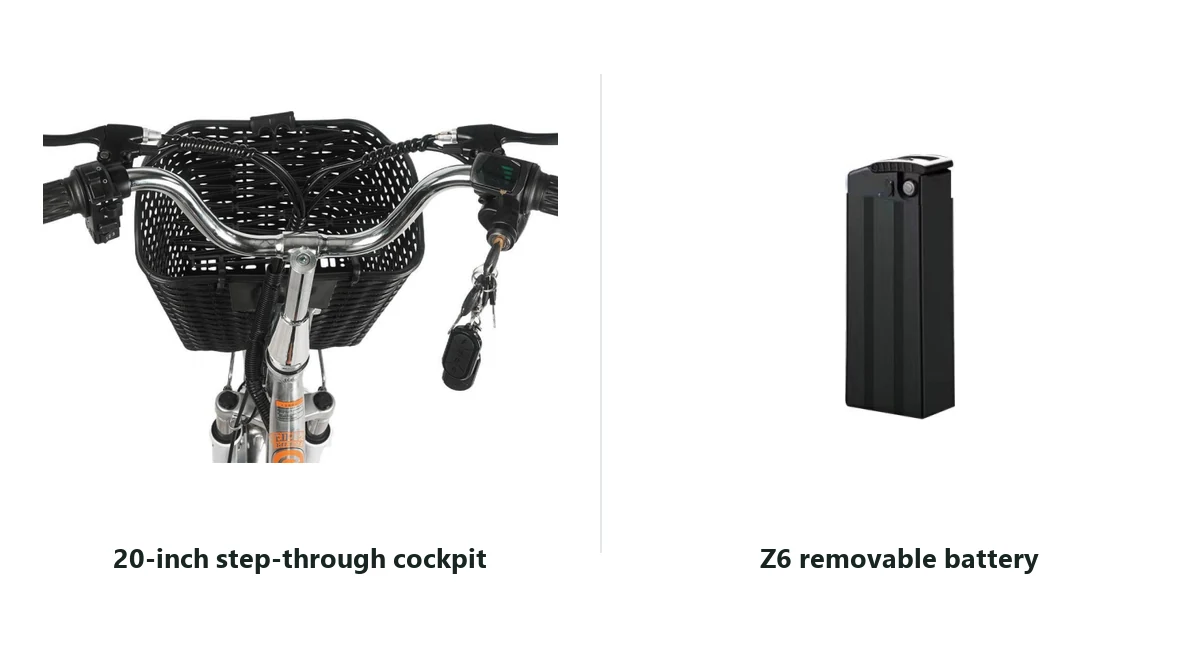
| 20-inch step-through Low frame opening, 20 × 2.5 tires, 41 kg listed bare weight. |
Have a prospective rider mount, dismount and park the bike. Have staff wheel it through the actual doorway. Record the battery capacity on the sample: the model lists 48V lithium options from 10 to 25Ah. |
| Z6 14-inch folding e-bike 14 × 2.5 tires, 22 kg listed bare weight, removable battery. |
Ask the closing-shift employee to stow the bike in its assigned space and retrieve it for the next guest. Measure the parked footprint, time the handling steps, and check access to the battery with adjacent bikes in place. |
Record the sample’s exact configuration, rider and route conditions, indicated battery level on return, and time until it is ready for the next booking. Keep the approved combination of battery and charger with the sample record. If the trial raises questions about rider access, use the step-through and step-over frame comparison. Use the sample approval checklist to carry accepted details into the production order.
First-fleet worksheet for a shop, hotel or tour desk
Copy these rows into a purchase brief. Ask the person who takes bookings and the person who prepares the bikes to complete it together.
| Item | Enter your figures or decision |
|---|---|
| Offer and peak window | Route ___ · rental duration ___ · pickup and return times ___ · overlapping rider demand ___ bikes. |
| Fleet size at that window | Riders ___ + in turnaround ___ + out of service or held in reserve ___ = ___ bikes. |
| Rentable capacity this month | ___ bikes × ___ open days − ___ distinct blocked bike-days = ___ saleable bike-days. |
| Contribution and capital | Net rental per paid day ___ − variable cost ___ = contribution ___. Landed and prepared cost per bike ___ − expected resale value ___ = capital to recover per bike ___. |
| Target and capacity test | (Monthly fixed costs ___ + monthly fleet capital recovery ___) ÷ contribution ___ = required paid days ___. Round up. Divide by saleable days ___ to get required utilization ___% (multiply the ratio by 100). Above 100%, even a fully booked fleet would miss the target. |
| Sample and support | Model/version ___ · trial route ___ · ready-to-rent turnaround ___ · matching charger and key IDs ___ · critical spare part numbers and lead times ___ · commercial rental warranty terms received ___. |
At receiving, give each bike an asset ID and match its battery, charger and keys to that record. Assign someone to release bikes back into service after inspection. A returned bike with a fault stays off the booking calendar until cleared. The dealer handover checklist covers the checks before the first guest takes a bike.
For a comparable supplier quote, send the deployment location, approved sample version, active and spare quantities, destination, and the required opening date. Ask the supplier to separate bikes, matched chargers, spare parts and freight, and to state which warranty terms cover paid rentals. Paste the key figures into the Project requirements field when you request a first-fleet quotation.
Frequently asked questions
What if most guests book by the hour?
Use a paid bike-hour as the unit throughout the worksheet. Calculate net revenue and variable cost per paid hour. From your opening hours, remove the periods reserved for returns, checks, charging and maintenance. Log short bookings by pickup time so a busy hour does not hide a largely empty afternoon.
How should a hotel account for rides included in the room rate?
Keep complimentary rides in the capacity count because they occupy bikes. Credit them in the financial model only if the hotel allocates an agreed amount to the rental operation. Keep that transfer separate from paid guest bookings so the same room and ride revenue is counted once.
What would justify a second fleet order?
Track bookings lost while suitable bikes were already out, alongside bookings lost because returned bikes were waiting for a check, charge or part. Extra bikes can help with the first pattern. For the second, price the change to staffing, charging or parts supply and compare it with the cost of adding bikes.