
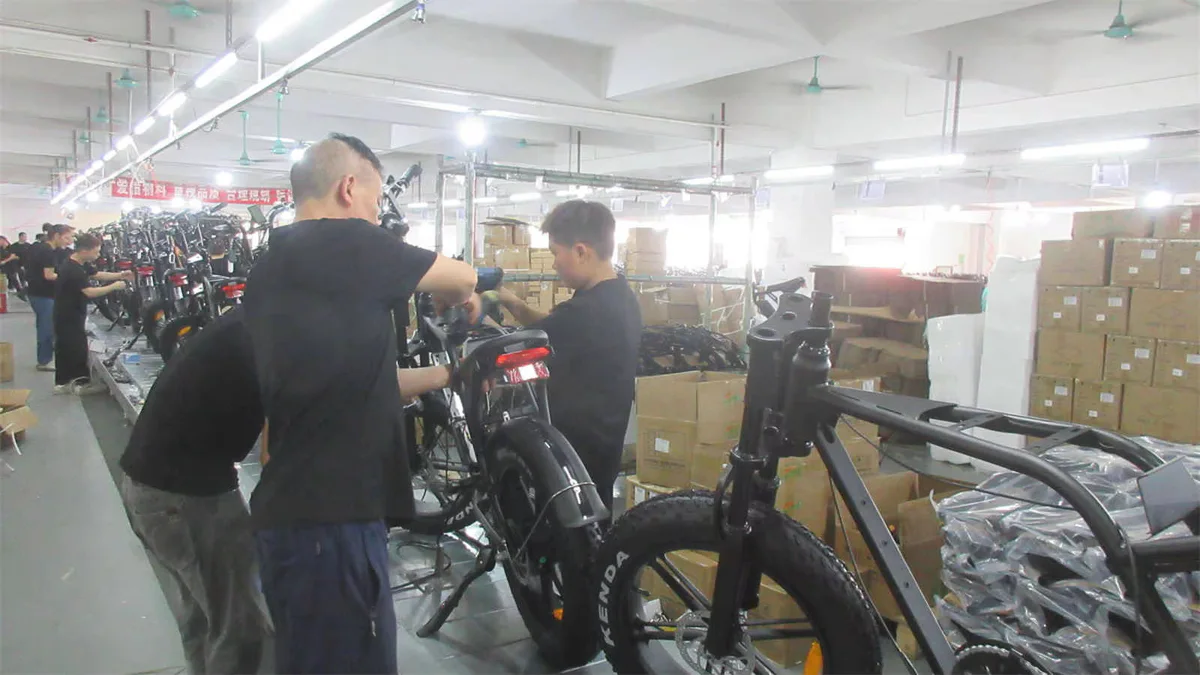
An e-bike pre-delivery inspection needs a clearly defined handover point. A factory check records an agreed condition before dispatch. A dealer’s final preparation and inspection address the bicycle presented to the customer after transport, any required assembly and adjustment. An earlier report cannot describe work performed later.
Short answer: A factory pre-delivery check records the bike’s condition before dispatch; the dealer’s handover check covers the bike after transport, unpacking, final assembly and adjustment. Both are needed. Agree in the order which checks the factory records and which the dealer completes, because an earlier report cannot cover work done later.
For importers and distributors, the practical task is to connect these stages: what leaves the supplier, what the receiving workshop must complete, and what evidence supports customer handover. This guide helps define that scope before ordering.
Define what “PDI completed” actually covers
PDI stands for pre-delivery inspection. The word “delivery” can refer to different handovers in a supply chain, so the abbreviation alone is an incomplete description. Ask who performed the check, which vehicle or batch it covers, when it occurred and whether it preceded packing, final assembly or customer collection.
In this article, dealer PDI means the preparation and inspection completed before handing the bicycle to its final customer. For a current brand example, TAUBIK describes assembly and pre-delivery inspection within its authorised-dealer offering. That illustrates a dealer-stage service; the applicable arrangement for another supplier must be defined separately.
Compare the stage, object and evidence
| Stage | Main question | Useful record |
|---|---|---|
| Before dispatch | Does the inspected supply match the agreed order and inspection scope? | Dated report identifying the order, inspected units or sampling basis, findings and packing state |
| On receipt | What arrived, and what condition or completeness issues need review? | Receiving record, vehicle or carton identifiers and photographs of relevant findings |
| Before customer handover | Has the actual bicycle completed its required preparation and checks? | Model-specific preparation/PDI record with outstanding items resolved and completion recorded |
These are complementary records. A receiving photograph helps document a visible arrival condition; it does not establish that the assembled bicycle has completed all required functional checks. Likewise, a dispatch report applies to its stated inspection scope and date, rather than automatically proving the condition of every unit at every later stage.
Our pre-shipment inspection guide covers the earlier order and batch checks. Keep its report connected to the receiving and handover records instead of replacing one with another.
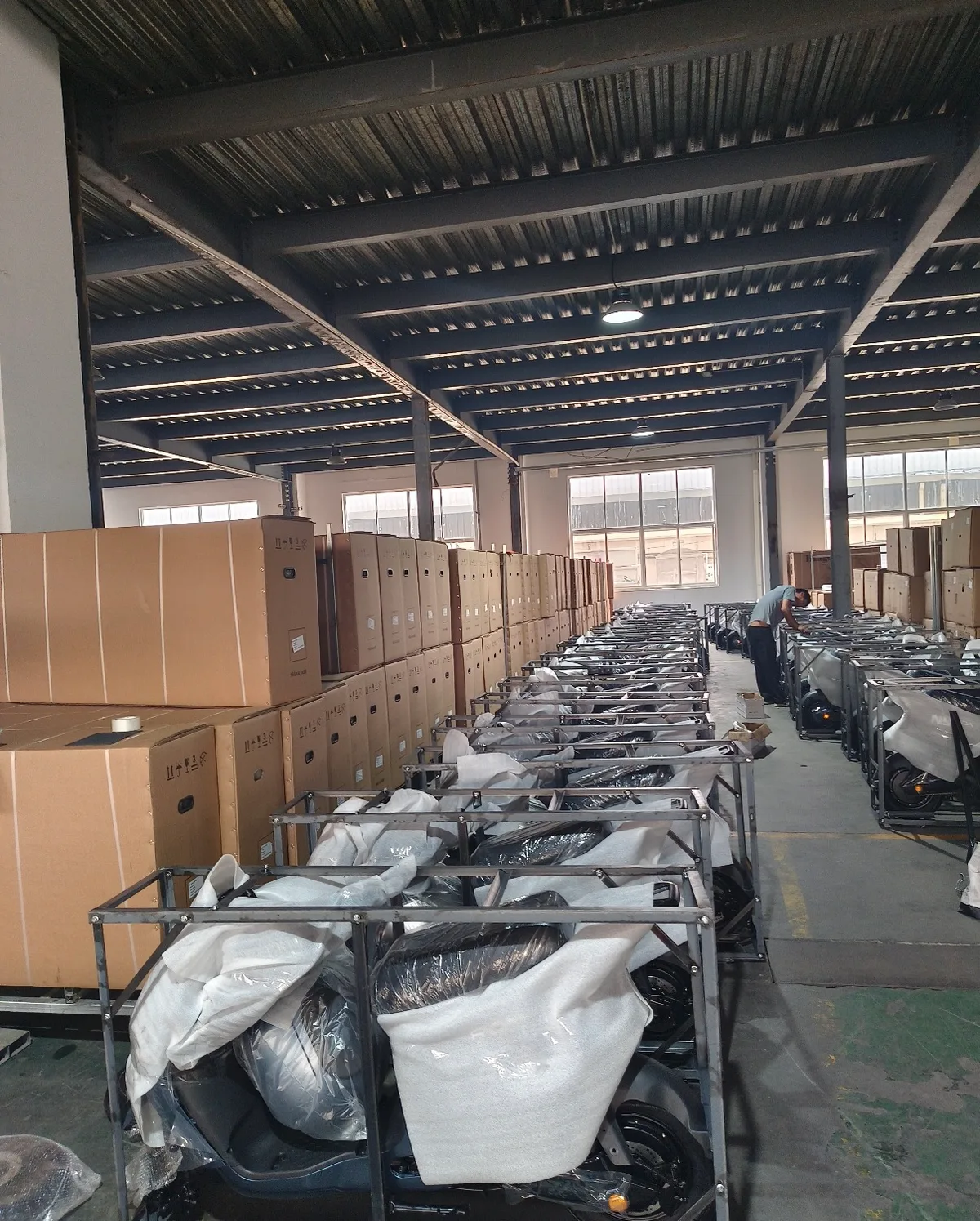
A packing arrangement can create work after the factory check
Consider an illustrative order in which handlebars are positioned for transport or pedals are packed separately. A factory report may describe the agreed dispatch configuration accurately. The dealer still needs the model’s instructions for the subsequent assembly and preparation, followed by the applicable checks on the finished bicycle.
This is a purchasing example, not a description of every BG EBIKE shipment. The point is to identify work that occurs after the earlier inspection. “Checked before packing” and “prepared for customer collection” can both be accurate statements about different stages.
A historical Powabyke dealer PDI document provides a concrete example: it describes components removed for transport and dealer assembly and inspection. Its model-specific settings and charging instructions should not be transferred to another bicycle.
Agree the remaining preparation before placing the order
Ask for the proposed shipping configuration and a clear description of what remains to be installed, positioned or adjusted at destination. A label such as CBU, SKD or CKD is a starting point; the actual component list and model instructions determine the workshop task. See our assembly-format guide for that separate purchasing decision.
Connect the remaining work to the documents, equipment and technical support needed by the receiving team. Identify the applicable assembly and service instructions, who will carry out the work and how unresolved questions will be answered. Ask for specific information where a document is missing rather than filling the gap with another model’s torque settings or charging procedure.
This also improves quote comparisons. If one offer includes destination preparation and another supplies boxed bicycles only, record that difference in scope. A lower vehicle price does not, by itself, establish a lower cost for a customer-ready unit.
Keep findings traceable until the bicycle is ready for handover
Use a unit or serial reference to connect the receiving observation, preparation record and any supplier correspondence. Record what was found, the action taken and the result of the relevant recheck. Avoid a general “PDI done” entry while a significant preparation issue remains open.
The technical work and release decision should follow the actual manufacturer’s instructions and the requirements applicable to that product and market. This article defines the purchasing and recordkeeping relationship; it does not supply a universal mechanical procedure or determine responsibility for a fault.
If a finding needs supplier review, provide the model and order reference, a specific description and useful photographs through the agreed support route. Our after-sales documentation guide explains how to organise that evidence. Retain the original observation as well as the resolution so a later reader can follow the sequence.
See how we pack and load containers in export packaging and shipping, and how inspection before loading works in quality control.
Frequently asked questions
Does a factory inspection replace the dealer’s pre-delivery check?
No. The factory check records the bike’s condition before packing and dispatch. Transport, unpacking, final assembly and adjustment happen later, so the dealer still needs a handover check of brakes, steering, tyres, lights and electrical functions before the customer rides away.
What should the factory record before dispatch?
The checks agreed for that order: configuration, functional tests, included accessories and packing. Ask for the record to reference each vehicle or batch, so that a finding at the dealer can be traced back to the right production lot and resolved quickly.
What work is usually left for the dealer after delivery?
Typically refitting parts removed for packing, such as handlebars, pedals, mirrors or the front wheel, then adjusting brakes and gears, setting tyre pressure and charging the battery. Agree the exact list before ordering so the dealer can plan workshop time for each delivery.
Discuss dispatch scope and dealer preparation with BG EBIKE
Select models from the electric bike range, then send your destination market, estimated quantity and proposed receiving or assembly arrangements. Ask which shipping configuration, model instructions and inspection records can be included in the quotation.
A useful request is: “Please identify the dispatch assembly state, the preparation remaining at destination and the model documents available for our workshop. We also need the proposed inspection scope and a process for reporting receiving discrepancies.” This supports a specific supplier response without assuming a standard global dealer-service package.