
The right e-bike battery storage charge level is the range specified for the battery you are stocking. A dealer should record that range, its source and the next check date for each battery version. A scheduled check does not automatically mean a scheduled recharge.
Short answer: Keep stocked lithium e-bike batteries partly charged, commonly around 40–60% unless the battery manufacturer specifies otherwise, indoors in a cool, dry store away from heat and direct sun. Avoid holding stock fully empty or fully charged for months, record a check date for each battery version and top it up to the storage range when needed. Do not store stock in an unheated warehouse below freezing or in a hot vehicle.
Unsold bikes, display models and demonstration bikes can spend different lengths of time between uses. This guide helps importers and dealers organise those records for lithium-ion e-bike batteries, from receipt to customer handover.
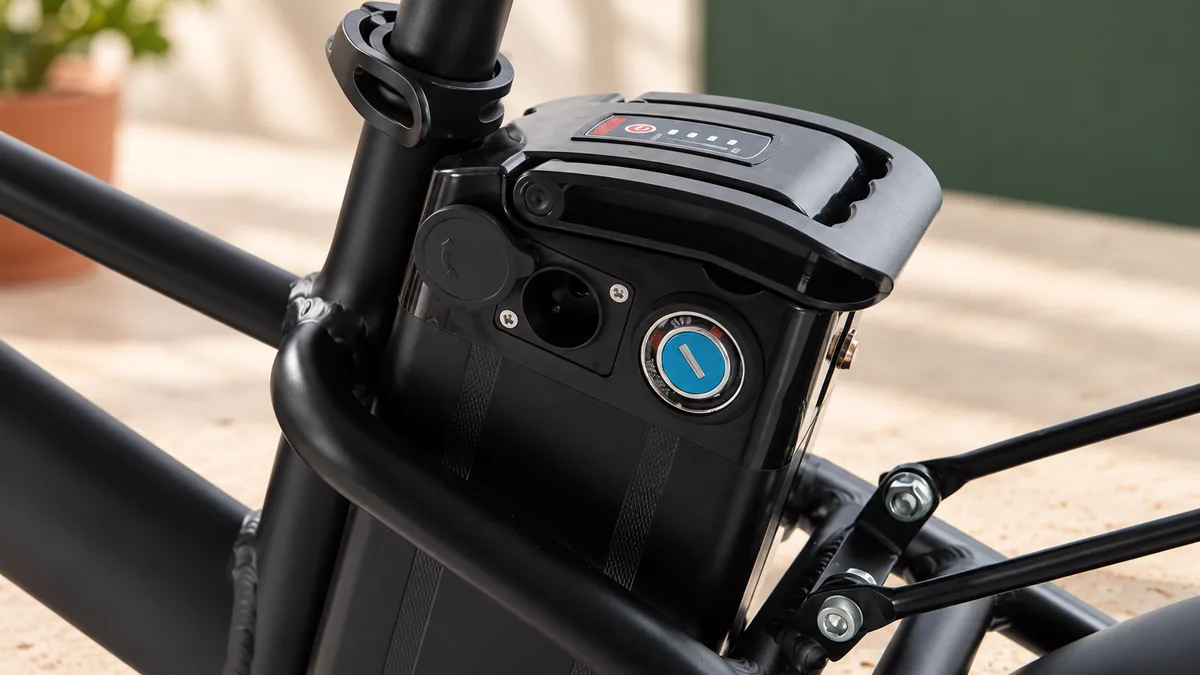
What charge level should an e-bike battery have in storage?
Start with the instructions for the exact battery model. For example, Bosch’s battery guidance identifies 30–60% as an ideal charge level and a dry environment at 0–20°C as ideal for storage. These are Bosch-specific recommendations, not a universal specification for every lithium-ion battery.
For your stock, keep the battery model and applicable manual together. If the supplier provides a separate storage instruction, retain its version or date as well. An instruction for a different battery should not silently become the rule for the whole showroom.
Record an indicator reading in the form the equipment actually provides. If it shows bars or lights, use the manufacturer’s explanation of that display rather than converting each segment into an assumed percentage. A charge reading is also a different piece of information from a capacity or condition assessment.
How often should you charge a battery in storage?
Use the manufacturer’s inspection and recharge instructions to set the interval and the action. Avoid a blanket rule such as “charge every bike on the first day of each month.” That rule overlooks differences in battery versions, starting charge and use between checks.
A useful stock routine separates three decisions:
- When to check: enter the next date from the applicable instruction or an agreed model-specific maintenance plan.
- What to record: note the displayed charge, any reported issue and whether the bike has been used since the previous check.
- What to do: follow the prescribed action for that reading and condition. If the instruction is missing or unclear, obtain it before improvising a charging or discharge procedure.
Give demonstration bikes a separate status in the stock record. After a test ride, update the entry rather than assuming the earlier storage reading still describes the battery.
Use a battery record that follows the vehicle
The following is a suggested record format, not a manufacturer maintenance schedule. Use one entry per battery, or a linked record that can still identify each unit when it moves between a stockroom, display area and customer order.
On a small screen, scroll the table sideways to see both columns.
| Record field | What the team should enter |
|---|---|
| Vehicle and battery identification | Stock reference, vehicle model, battery model and serial number where available. Retain the link if a removable battery is stored separately. |
| Instruction source | Applicable manual or written storage instruction, including its version or date. |
| Storage requirements | The documented charge range, environmental conditions and any removal instructions for this battery. |
| Latest check | Date, displayed charge in its actual format, condition observations and staff member responsible. |
| Action taken | No action required, approved charging completed, or referred for technical advice. Record the result rather than only ticking “checked.” |
| Next check and stock status | Next due date and whether the unit is stored, on demonstration duty, allocated to a customer or awaiting a support decision. |
Keep an unresolved issue visible when a bike is moved or allocated. A new shelf location or sales reservation should not erase the previous maintenance entry.
Separate storage from charging
A storage location is not automatically an appropriate charging location. Bosch advises supervised charging in a dry, ventilated environment, checking for damage first and disconnecting the charger afterwards. Follow the instructions for your actual battery and charger; this article is not a commercial battery-storage facility specification.
Identify the approved charger before any planned top-up. Appearance and connector fit alone do not establish a correct pairing. Our e-bike charger compatibility guide explains which information belongs in that pairing record.
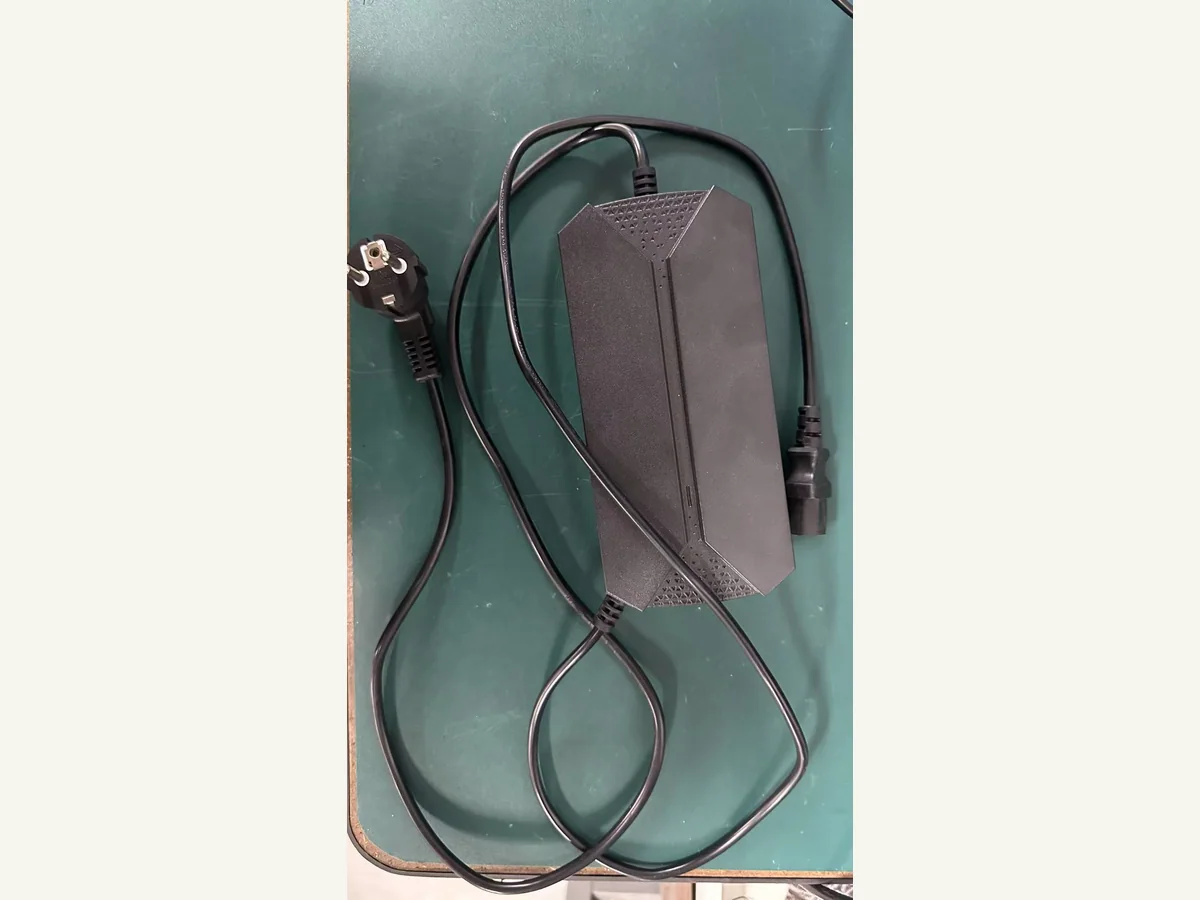
If a battery appears damaged or does not respond as expected, refer it through the manufacturer’s support process rather than treating it as an ordinary top-up. Do not improvise a recovery procedure to return it to saleable stock.
Carry the record into the next order
Before handing a stored bike to a customer, review outstanding issues and complete the model’s required pre-delivery checks. Pass on the applicable battery instructions. A storage log supports continuity; it does not replace the vehicle’s delivery inspection.
For the next bulk purchase, request the battery storage instructions alongside the proposed battery version and charger pairing. This gives your team information it can use when the shipment arrives, rather than leaving stock maintenance to an assumption.