
E-bike motor maintenance starts with external care: keep the housing clean, inspect visible cables and mounting areas, and follow the service instructions for the exact drive system. Opening the motor, adding internal grease or guessing a tightening torque is not routine owner maintenance. A useful check should tell you what needs cleaning, what needs monitoring and what requires professional attention.
Short answer: Routine e-bike motor care is external: wipe the housing with a damp cloth, check visible cables, connectors and mounting points, and never pressure-wash it. Owners should not open the motor or add grease inside it. A new grinding noise, visible damage, a loose fastener or repeated loss of assistance means stopping and booking a service.
This guide covers bicycle-style electric bikes. It is also a practical starting point for dealers preparing owner handover instructions. The manufacturer documents below support specific care principles; they do not identify the motor fitted to a BG EBIKE model.
Start with the motor identity, not just its wattage
Find the bicycle model, drive-unit label and corresponding owner’s manual before choosing a service procedure. Save a clear photograph of the label without removing covers. A power rating alone is not a service reference: two motors advertised with the same wattage need not use the same hardware or instructions.
A hub motor sits in a wheel; a mid-drive sits near the cranks. That changes where you look, but it does not establish a maintenance interval. Our hub motor versus mid-drive guide explains the layouts if you need help identifying yours.
A practical external inspection
Park the bike securely and switch the system off. Let it cool before cleaning; do not use your hand to test a hot motor. Keep fingers clear of the chain and sprockets. The SHIMANO EP8 / EP6 / EP5 user manual warns about hot drive units and moving drivetrain parts, and includes checks for damage, loose components and abnormal noise.
Use this as a visual check, not an instruction to pull connectors, remove covers or tighten bolts:
| Look at | What to record |
|---|---|
| Exposed housing | Dirt versus a new dent, crack or changed shape. Photograph suspected damage before cleaning obscures its location. |
| Visible cable route | Cuts, rubbing or a cable displaced from its usual route. Leave plugs connected during this visual check. |
| Visible mounting points | An obviously loose or missing fastener, or a change noticed after transport or wheel work. Do not apply a generic torque value. |
These checks have a concrete manufacturer basis: the Bafang H305 manual, model RM G0100.250.350.D, calls for regular checks of end-cap nuts, connections, housing shape and power-cord condition. It reserves maintenance for authorized personnel and prohibits disassembly. Its hardware instructions apply to that motor, not every hub or mid-drive.
Clean the outside without turning it into a repair job
With the bike switched off and cool, prepare the battery and display as the bicycle manual directs; removal arrangements differ. Work only on accessible exterior surfaces.
For the H305, Bafang specifies switching off before cleaning and wiping the motor housing with a damp, well-wrung cloth. It prohibits high-pressure washing because water entry can cause operating problems or corrosion. Use your own motor’s cleaning instructions where they differ.
Bosch’s e-bike care guidance likewise rejects pressure and steam cleaning. It recommends suitable bike-cleaning products that do not attack plastics or seals, and cleaning according to dirt and exposure. A muddy or salty ride deserves attention rather than waiting for a calendar reminder.
Cleaning is complete when the dirt has been removed, not when a cover has been opened to reach hidden components.
Does an e-bike motor need oil or grease?
Do not add oil or grease inside the motor as a general maintenance step. Follow an explicit procedure for the exact unit, with the work done by the specified service provider. The cited Bafang and SHIMANO manuals both prohibit owner disassembly; neither is permission to open another brand’s motor.
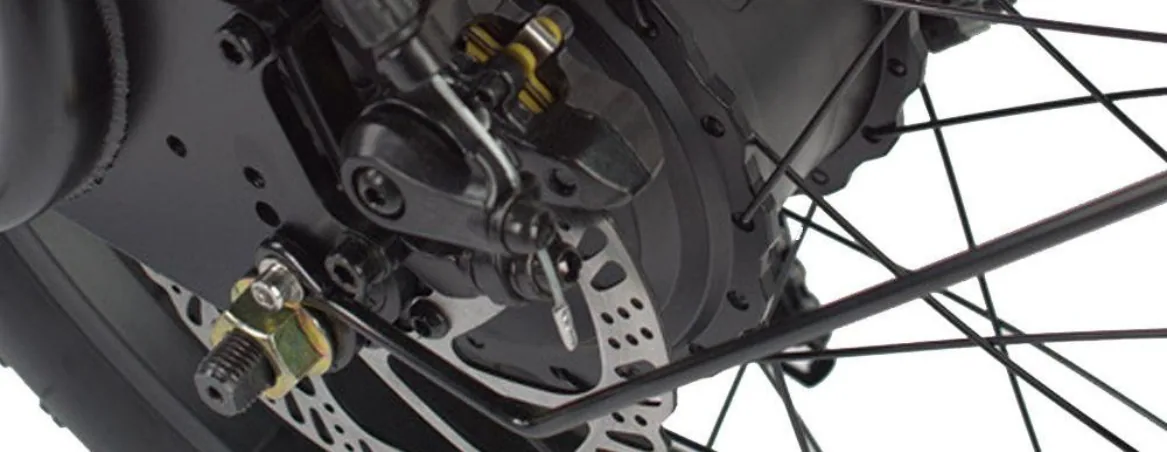
Chain lubrication is a separate job. On a chain-driven bicycle, follow its drivetrain care instructions without treating chain lubricant as a motor treatment. Bosch advises keeping lubricant off brake discs and wiping away excess. The V1 photograph above shows why care is needed around a rear hub: the disc brake is immediately beside it.
When routine care should become a service visit
If you notice a new grinding sound, visible damage or a loose fastener, stop riding and arrange an assessment before using the bike again. For repeated unexplained loss of assistance, stop safely, record any displayed message and follow the exact system’s troubleshooting instructions. If the cause remains unresolved, arrange service before riding again. Do not ride to reproduce a fault for a recording. SHIMANO’s pre-ride checklist directs users with abnormal noises, damage or loose parts to their dealer.
A symptom is not a diagnosis. For example, SHIMANO’s error and warning reference distinguishes speed-sensor, communication and drive-unit faults. A loss of assistance therefore should not automatically become an order for a replacement motor. Read the exact system’s instructions and preserve the displayed message.
Give the service provider a short, factual account:
- Bike model, motor reference and a photograph of the affected area.
- The exact warning text or code, if one appeared.
- When the change began and whether it followed transport, wheel service or an impact.
- What you noticed during ordinary use, without deliberately repeating an unsafe event.
“Cable jacket cut near the rear axle after wheel removal” is more useful than “motor broken.” It identifies an observation and its timing without claiming to know the internal cause.
A sample of the exact configuration is the quickest way to confirm these points, and model-specific changes are covered under customization.
Frequently asked questions
How often should an e-bike motor be serviced?
There is no universal interval. Follow the service schedule in the manual for your exact drive system, clean the outside whenever mud or road salt builds up, and inspect visible cables and mounts as the bike manual directs. Book a service when you notice new noise, damage or loss of assistance rather than waiting for a mileage figure.
Can I wash an e-bike motor with a hose?
Avoid it. Bosch and Bafang both advise against pressure or jet washing because water can be forced past seals. Switch the system off, let it cool, and wipe the housing with a damp, well-wrung cloth or a cleaning product that does not attack plastics and seals.
Does an e-bike motor need oil or grease?
Not as an owner job. Hub and mid-drive motors are sealed units, and the manuals cited here prohibit owner disassembly. Lubricate the chain as part of drivetrain care, keep lubricant off brake discs, and leave any internal greasing to the service provider specified for that motor.
How often should you maintain the motor?
Separate three decisions: cleaning when conditions require it, inspection as directed by the bike manual, and scheduled service for the specific drive system. There is no common mileage interval established by the documents cited here. A whole-bike service reminder also does not, by itself, mean that the motor needs opening.
Make a simple record with the date, odometer reading if available, observation and action taken. Keep the next manufacturer-specified service date or mileage alongside it. If no internal-service interval is listed, record that as unknown rather than translating it into “maintenance-free for life.”
For dealers and importers, include the correct manual and motor identification in each model’s handover pack. When sourcing electric bikes from BG EBIKE, request the maintenance documentation and replacement-part references for the proposed configuration. That makes owner guidance and after-sales planning specific to the bikes being supplied.