
If your e-bike keeps cutting out, first identify what stopped: the whole electrical system, or just the motor assistance. That distinction makes the next check more useful and helps you avoid buying a battery or motor before the fault has been identified.
Short answer: An e-bike can lose assistance because of its operating mode, low battery charge, a connection or sensor problem, or a protective shutdown. Start with 3 checks: note whether the display stayed on, record the selected mode and any warning, and look for visible damage with the bike switched off. Repeated unexplained cut-outs need assessment before further riding; the symptom alone does not identify a failed part.
What can interrupt an e-bike’s assistance?
The motor needs electrical power and the correct control signals. Assistance can stop because power is unavailable, because the controls are no longer requesting it, or because the system has detected a condition that requires protection. These are different paths to a similar symptom:
- No request for assistance: an OFF mode, the end of pedaling on a pedal-assist system, or the specified assistance-speed limit can end support normally.
- Power supply interruption: low battery voltage or a disrupted electrical connection can interrupt operation. The display’s behaviour helps describe the interruption, but does not identify the failed part.
- Control or signal problem: a brake signal, speed signal or communication fault can prevent drive even while the display remains on.
- Protective response: a system may restrict or stop output in response to temperature or another monitored fault. A hill alone does not prove this occurred; the relevant warning and manual matter.
The SHIMANO, TEKTRO and Bafang documents linked below support these operating and fault categories for their named systems. Use the categories to organize observations, not to assign one manufacturer’s error codes to another bicycle.
Did everything turn off, or did only assistance stop?
Stop safely before checking the screen or taking photographs. Describe what you actually noticed, using one of these two starting points:
- The display went dark or restarted. Record whether other electrical functions also stopped. This directs attention to the power supply and system connections, but a dark screen alone does not prove that the battery failed.
- The display stayed on, but the motor stopped helping. Record the assist setting, any warning and what you were doing immediately beforehand. A working screen does not establish that every part of the drive system is working correctly.
If you did not see the display at the time, write “not observed.” Do not ride again just to reproduce the fault or film it. An honest gap in the record is more useful than a guessed symptom.
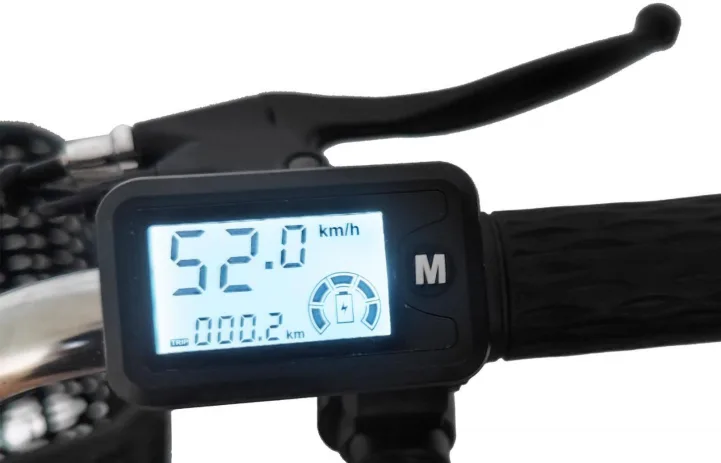
Could the motor be stopping normally?
Check the operating instructions before treating every pause in assistance as a breakdown. The SHIMANO E8000 user manual, troubleshooting section, identifies an OFF assist setting, not pedalling, and reaching the manufacturer’s assistance-speed setting as possible explanations for no assistance on that system.
For your own bike, check the selected mode and its documented operating conditions. Do not copy another model’s speed limit or change settings to bypass an assistance limit. A normal, repeatable end to assistance at the specified limit is different from an unexpected shutdown with a blank display.
Braking is another distinction. TEKTRO describes its e-bike brake sensor as a switch that stops motor power when the brake lever is pulled. On a bike fitted with that function, losing drive while braking is expected. Assistance that fails to return as the bike’s instructions describe needs a separate check.
With the system off, look for a lever that remains pulled or visible interference from an accessory. Do not disconnect or bypass a brake sensor to make the motor run. Our brake cut-off guide explains the distinction between the electrical signal and the brake itself.
Which checks can you make while the bike is parked?
- Preserve the warning. Once safely stopped, photograph the exact message or indicator pattern if it remains visible. Include the display model when known. Avoid clearing settings before recording what appeared.
- Review the battery indication. If the battery is simply low and there are no signs of damage or abnormal behaviour, follow its normal charging instructions with the specified charger. A repeated cut-out after normal charging still needs assessment.
- Switch off and inspect accessible areas. Look for a displaced battery housing, damaged cable covering or a cable trapped after folding or transport. Follow the bike manual for checking that a removable battery is secured. Do not force the mount, probe contacts, pull live connectors or open covers.
The purpose is to identify a setting, an observable condition or a useful service clue. It is not to diagnose internal battery cells or controller electronics. Leave damaged or insecure parts for assessment rather than trying to hold them in place for another ride.
What can the timing of the cut-out tell you?
Timing helps narrow the question for service. Start with an observation and keep the possible explanation separate:
- Assistance stops at the same indicated speed; the screen stays on: compare that speed with the documented assistance cutoff. This can be normal operation rather than loss of battery power.
- The display restarts after a bump or folding: record the sequence and inspect accessible cable coverings and battery retention with power off. A power-path issue needs assessment; the timing does not identify a particular connector.
- The display stays on after braking, but assistance does not return: check for visible interference with the lever and compare operation with the bike’s instructions. A brake input is one possibility on a system fitted with that function.
- A warning appears during a climb: preserve the exact warning. Battery-voltage, temperature and communication warnings call for different responses, even if they occurred on the same hill.
The Bafang DP E180.CAN / DP E181.CAN manual distinguishes these kinds of errors. Its codes and repair instructions apply to the identified system. Do not recreate a cut-out while riding to collect better evidence.
When should you stop checking and arrange service?
Stop using the bike when an unexplained fault persists or returns. Do not keep restarting it to finish a journey. The SHIMANO EP8 / EP6 / EP5 user manual directs users to stop using the bicycle and contact their place of purchase or distributor if an error persists; it also prohibits disassembly or modification.
If there is visible damage, abnormal heat, a burning smell or smoke, stop riding and charging. See the UK government’s battery warning-sign guidance. For smoke or fire, move away and contact emergency services. Routine troubleshooting is not appropriate in that situation.
For a non-emergency service request, send a concise record:
- Bike model and exact configuration; battery and display references if available.
- What stopped, what remained on, and the exact warning.
- When it began and any recent transport, service or component change.
- Checks already completed under the applicable instructions and their results.
For example: “Display remained on; assistance stopped after braking; warning photographed while parked; no connectors disconnected.” This illustrative report gives a technician a starting point without claiming that a brake sensor is defective. See our motor maintenance guide for routine care once an unresolved fault has been addressed.
To check these details before a bulk order, order a sample of the version you plan to sell; colours, accessories and, on most models, handlebars and seats can be chosen through customization.
Frequently asked questions
What information should I send if no error code appeared?
Send the observable sequence even when there is no code: whether the display stayed on, what happened immediately beforehand, and whether other electrical functions stopped. Add the bike, battery and display references and any recent component change. State “no code observed” rather than guessing one; a missing code does not make a repeated interruption normal.
Should I clear the display settings before contacting support?
Do not clear settings as a first response to an unexplained recurring fault. Keep photographs of the current mode, warning and component reference so the service provider can interpret the original condition. A reset may be part of the exact system’s documented procedure, but copying a button combination from another display can remove useful information without resolving the cause.
Should I order a bigger battery to prevent cut-outs?
No. More capacity is not a diagnosis or a repair for an unexplained interruption. First establish the cause and whether the present battery is functioning correctly. If a replacement is needed, use the supported configuration for the complete system. Our battery replacement guide separates capacity from compatibility so that an upgrade decision does not conceal an unresolved fault.
If the vehicle powers on but never drives at all, the cause is usually a drive-inhibit input rather than an intermittent cut-out; see electric scooter turns on but won’t move for the checking order.
Models to compare
For dealers preparing owner instructions, keep each model’s supplied battery, display and control documentation together. For an existing BG bike, use its model page as a starting point, then include the actual component references with the support request. The systems cited above are examples, not a statement of parts fitted to these models.
- 20 Inch Folding Electric Bike: listed LCD screen and 48 V 10–25 Ah lithium battery options. Record the selected battery version.
- 20 Inch Folding Fat Tire Electric Bike: listed power display, 5-level electric control and 48 V 10–20 Ah lithium battery options. Match the control instructions to the quoted version.
- 20 Inch Step-Through Electric Bike: listed LCD screen and 48 V 10–25 Ah lithium battery options. Confirm the display and battery references against the quoted configuration.
Browse the electric bike range when planning your model selection. Similar battery figures do not make parts interchangeable.
Planning a dealer order?
Send your model shortlist, destination market, quantity and owner-support requirements. BG EBIKE vehicles are manufactured and assembled in our own factory. MOQ is flexible by model, with mixed models allowed, and we reply within 24 hours on working days.