
Comparing a lead-acid vs lithium battery for an electric scooter is a choice between complete vehicle configurations, not just two battery labels. For dealers and importers buying seated two-wheelers, the useful question is which offered version fits the customer brief, purchase budget and aftersales arrangements.
Short answer: Lead-acid batteries cost less but are much heavier and usually wear out sooner; lithium batteries are lighter, last more charge cycles and are often removable for charging, at a higher price. For seated scooters, choose the complete version—battery, charger, weight and service support—that fits your customers’ budget and daily use.
Lead-acid can offer a lower initial battery cost; lithium-ion generally offers a weight advantage for comparable stored energy. Neither point establishes the price, range or service life of a particular scooter. Compare the actual battery, charger and vehicle specification in each quotation. This guide concerns seated electric scooters, not medical mobility scooters or a conversion of an existing vehicle.
Lead-acid and lithium: the practical trade-offs
Victron’s technical comparison discusses weight, initial cost and discharge behaviour across lead-acid and lithium batteries. Its examples concern other power applications, so their numerical results should not be used as scooter specifications. The broad trade-offs provide questions to investigate, rather than a guaranteed outcome for a BG EBIKE model.
| Decision | Lead-acid version | Lithium version |
|---|---|---|
| Initial cost | Often a lower initial battery cost; obtain the complete vehicle price | May carry a price premium; identify what equipment the premium includes |
| Weight | Typically heavier for comparable stored energy; record actual pack and vehicle weights | Typically lighter for comparable stored energy; do not assume the pack is removable |
| Energy in use | Discharge rate and operating conditions affect available capacity | Pack design, operating limits and conditions still affect usable energy |
| Charging | Needs charging equipment specified for that battery system | Needs a matched charger and the specified battery-management arrangement |
| Aftersales | Identify the exact battery set and approved replacement procedure | Identify the complete pack, interfaces and supported replacement reference |
A lower purchase price matters when it fits the buyer’s budget and support plan. A lighter battery may matter where handling or vehicle mass is important. Make those priorities explicit before asking which version is “better”; otherwise suppliers may be answering different purchasing questions.
A catalogue option is not yet an order specification
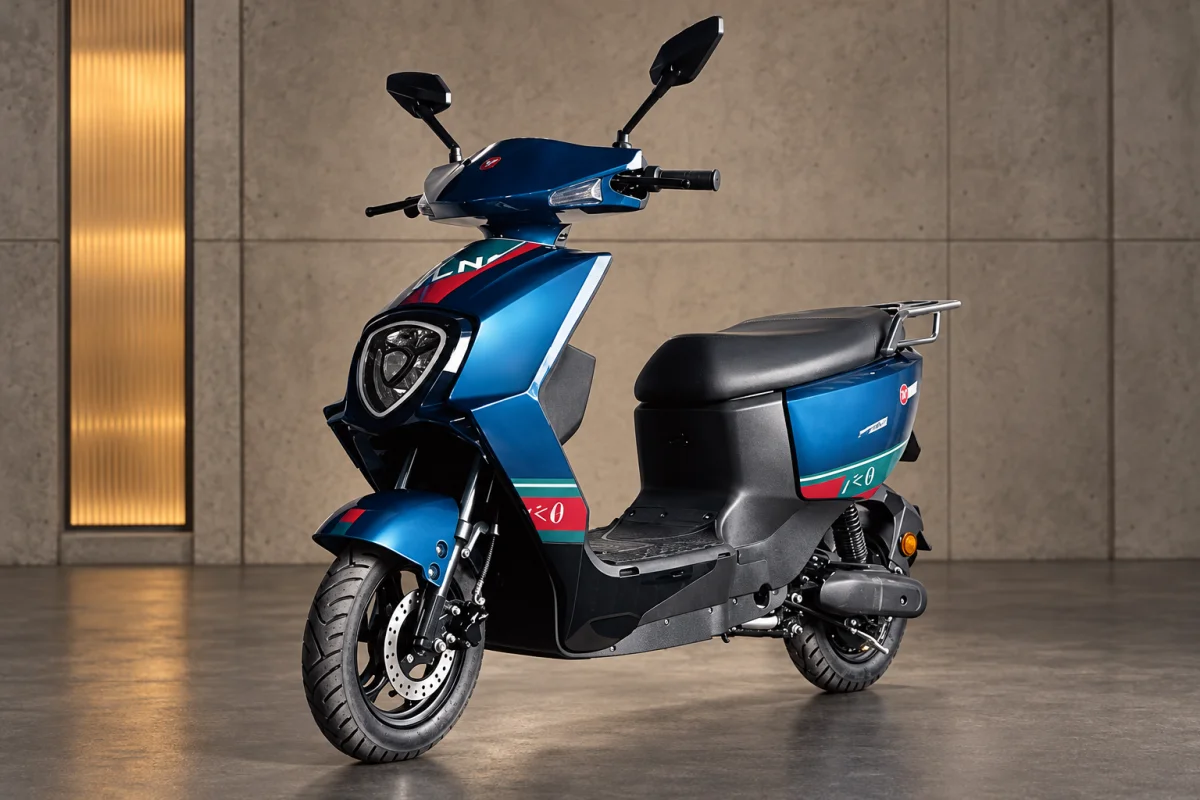
The supplied BG EBIKE catalogue includes both lead and lithium battery entries for the OG5 seated scooter. This gives buyers a reason to discuss the offered versions, but does not establish that every voltage, capacity or accessory combination is available together.
The OG5 photograph below identifies the vehicle category and appearance. Its enclosed body does not reveal which battery is installed. Use the version described in the quotation to identify the battery system, rather than labelling the photograph as a lead-acid or lithium vehicle.
Request a separate configuration line for each version you want compared. Keep the battery reference, chemistry, nominal voltage, capacity, stated energy and matching charger on that line. Where a catalogue says only “lithium”, ask for the specific chemistry and pack documentation; the broad label is not a complete specification.
Check weight and charging arrangements together
A weight difference is meaningful only when both figures describe the same scope. Ask whether the vehicle weight includes the battery and selected accessories. A bare-vehicle figure for one offer and a complete-vehicle figure for another cannot establish the battery-related difference.
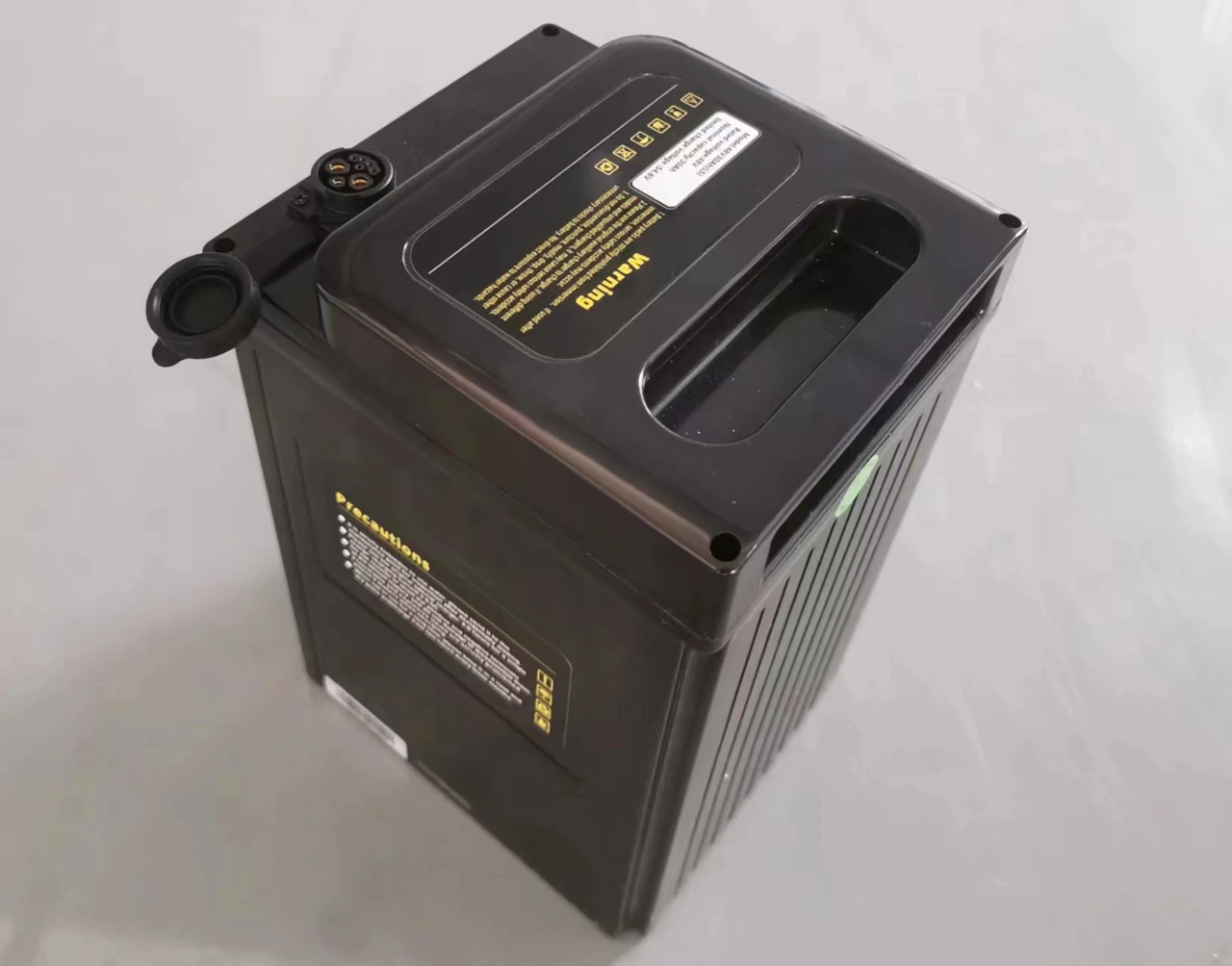
If customers need to carry a battery indoors, treat removability as a separate design requirement. Check the approved removal method, pack weight, handle, locking arrangement and charging instructions for that version. A lithium label alone does not promise a removable pack, and a carrying handle alone does not establish how a pack is installed in a particular scooter.
The LHG-ECO Lithium reference below shows a battery enclosure with a handle and connector. It is a different model-specific component, not an OG5 battery or a universal replacement. Its role here is to illustrate why an identifiable pack and interface matter when discussing supply.
Include the charger reference and destination plug in the quotation. Do not assume that the same nominal battery voltage makes chargers interchangeable. Any change of battery type requires the vehicle supplier’s approved configuration, including the charging and electrical system; this guide is not a retrofit procedure.
Compare service evidence, not a promised number of years
A useful battery-life statement identifies the test conditions, depth of discharge, temperature and remaining-capacity threshold. A cycle count without those conditions does not establish how many years a dealer’s customers will obtain in use.
Also separate maintenance terminology from the support obligation. Lead-acid includes sealed AGM and gel designs as well as flooded designs; it is inaccurate to say every lead-acid battery needs water top-ups. “Maintenance-free” does not mean that charging, storage and condition checks can be ignored. Follow the documentation for the supplied battery.
For commercial comparison, obtain replacement references, applicable warranty terms and the process for identifying a failed pack or set. Keep an estimate of future replacement costs separate from a guaranteed cost saving. A longer service-life claim should not become a sales promise until its evidence and conditions are clear.
Build a comparison that leads to a purchasing decision
Give the supplier one customer brief, then request these details for each offered version:
- Vehicle and battery: exact model/version, battery chemistry and reference, electrical ratings and supplied battery quantity.
- Handling and equipment: pack weight, complete vehicle weight, fixed or removable arrangement and included charger.
- Commercial scope: vehicle quantity, complete quoted price, included accessories and agreed supply terms.
- Support: operating instructions, replacement reference and applicable warranty conditions.
- Evidence: relevant model documents and any test conditions behind performance or service-life claims.
Then evaluate the offers against your priority. For an initial-cost-led purchase, compare complete quoted prices and the support arrangement. For a handling-led purchase, compare measured weights and the actual access design. For intensive use, examine documented operating conditions and support costs rather than selecting by chemistry alone.
Battery version and charger change the quote, so see what drives e-bike and scooter wholesale prices, and how lithium batteries are packed and documented in export packaging and shipping.
Frequently asked questions
Does lithium automatically give a scooter more range?
No. Battery energy, vehicle consumption and test conditions must be considered together. Comparing chemistry names alone cannot establish a range difference.
Can I order a lead-acid version now and switch it to lithium later?
Do not base the purchase on that assumption. Ask whether the supplier supports a specific alternative configuration for that vehicle. The original charger, wiring, controls and mounting arrangement must not be assumed suitable.
Should a dealer stock both versions?
Only when the offered versions address a real customer need and your team can support them. Separate version records help avoid mixing chargers, replacement references or customer-facing specifications.
Discuss the complete vehicle version with BG EBIKE
Send the seated scooter model, destination market, estimated quantity and whether you want to compare available lead-acid and lithium configurations. Describe the priority behind the request, such as initial purchase cost, handling requirements or aftersales support.
The OG5 seated electric scooter catalogue lists lead-acid and lithium battery types. Use it as a starting point for two separately specified vehicle offers, including the compatible voltage, battery capacity and charger. Browse other seated scooter models if the layout does not fit your range.
The same lead-acid or lithium decision applies to 72 V electric motorcycles; see what importers check before ordering Chinese electric motorcycles.
Request a model-specific configuration discussion. This inquiry concerns batteries supplied with the relevant vehicle, not generic standalone battery retail.
More guides for importers and dealers
- Electric Scooter Turns On but Won’t Move? A Dealer’s Fault-Finding Checklist
- Chinese E-Bikes: An Importer’s Guide to Buying from a Factory
- Container Condensation in Electric Scooter Shipments: Why Dry-Looking Cartons Can Arrive Wet
- Electric Scooter Ground Clearance: Why a Speed Bump Can Still Catch the Underside