
An electric bike weight limit is meaningful only when you know what the figure includes. A maximum rider weight, a total payload limit, a maximum gross vehicle weight and a rear rack rating describe different constraints. Importers and dealers should retain the supplier’s definition beside each figure and check the complete configuration against every applicable limit.
Short answer: A weight limit means little until you know what it covers. Maximum rider weight, total payload, maximum gross vehicle weight and rear-rack capacity are different limits, and every one applies. For example, a bike with a 120 kg payload and a 25 kg rack rating cannot carry a 100 kg rider plus 30 kg of luggage on the rack.
A rear rack allowance is not extra capacity to add to the bicycle’s overall limit. Nor does a rear cushion establish permission to carry a passenger.
Apply every limit to the proposed load
Start with the intended rider and cargo, then check the vehicle-wide limit and each carrying assembly’s limit. The worked example below shows how the smaller allowance can control the decision even when capacity remains elsewhere. Z3 and V1 catalogue bare weights help describe the vehicles; they cannot fill a missing payload field.
Identify what each weight figure covers
Manufacturers do not always use weight-related labels in exactly the same way. Before comparing two offers, ask what is counted, which version the figure applies to and whether there are separate limits for the rider, rack or other accessories.
| Specification term | How to interpret it in a purchase record |
|---|---|
| Maximum rider weight | The limit applying to the rider. Retain the manufacturer’s instructions about clothing and carried equipment; do not replace this figure with total payload. |
| Payload capacity | The permitted load carried by the bicycle under the manufacturer’s definition. Establish whether it includes rider, accessories, cargo and any permitted passenger. |
| Maximum gross vehicle or system weight | A combined-weight limit that includes the bicycle itself as defined by the manufacturer. Record how batteries, accessories, riders and cargo are counted. |
| Rear rack or carrier limit | A local limit for a specified rack and installation. It applies alongside the bicycle’s other restrictions, not as an addition to its total capacity. |
| Passenger allowance | A model-specific permitted use with any required equipment and limits. It cannot be inferred from a long saddle or a rack load rating. |
| Bicycle or shipping weight | The weight of the bike or its packed shipment. Neither figure is a load-carrying rating; identify whether battery, accessories or packaging are included. |
For example, Ride1Up’s official weight-capacity guidance separates total payload from rack and passenger-kit capacities. This is a useful distinction to preserve in your records; its model ratings are not ratings for BG EBIKE products.
Do not compare payload with system weight as if they were the same
A supplier may quote a combined limit that includes the bicycle, while another quotes only the carried load. The larger printed number does not necessarily describe a bike that can carry more.
Tern’s explanation of maximum gross vehicle weight includes the bicycle and batteries alongside accessories, riders and cargo. Use the definition supplied for the actual model you are buying, rather than transferring that terminology or a competitor’s rating without checking its scope.
Keep units consistent as well. If you display both kilograms and pounds, convert from the same source figure and label the conversion. Do not round a converted limit upward in a way that implies additional capacity.
A worked example: overall capacity and rack capacity both apply
Hypothetical example only—not a BG EBIKE specification. Suppose a manufacturer defines a system-weight limit of 150 kg including the bicycle, battery, accessories, rider and cargo. The bike with battery weighs 30 kg, fitted accessories weigh 5 kg, and the rider with riding equipment weighs 85 kg. The remaining allowance under that system limit is 150 − 30 − 5 − 85 = 30 kg.
Now suppose the approved rear rack is limited to 20 kg and the manufacturer counts all cargo and containers placed on it within that limit. The 30 kg system allowance does not permit 30 kg on that rack. The rack limit still applies, along with the manufacturer’s loading instructions and any separate rider or component restrictions.
The unused 10 kg is not automatically available at another location. You would still need an approved carrying arrangement and must meet its limits. These calculations help interpret documented ratings; they do not establish a rating where the manufacturer has not supplied one.
Separate visible seating from approved passenger use
The Z3 photograph below shows a main saddle and a separate rear cushion. It identifies the visible layout, not a verified passenger allowance or a weight limit.
The Z3 catalogue entry lists 35 kg as bare weight, and V1 lists 48 kg. Those figures describe vehicle weight under the catalogue’s wording; neither is a payload or rear-seat capacity. Keep the weight basis and the selected battery specification beside the value instead of moving it into a “maximum load” field.
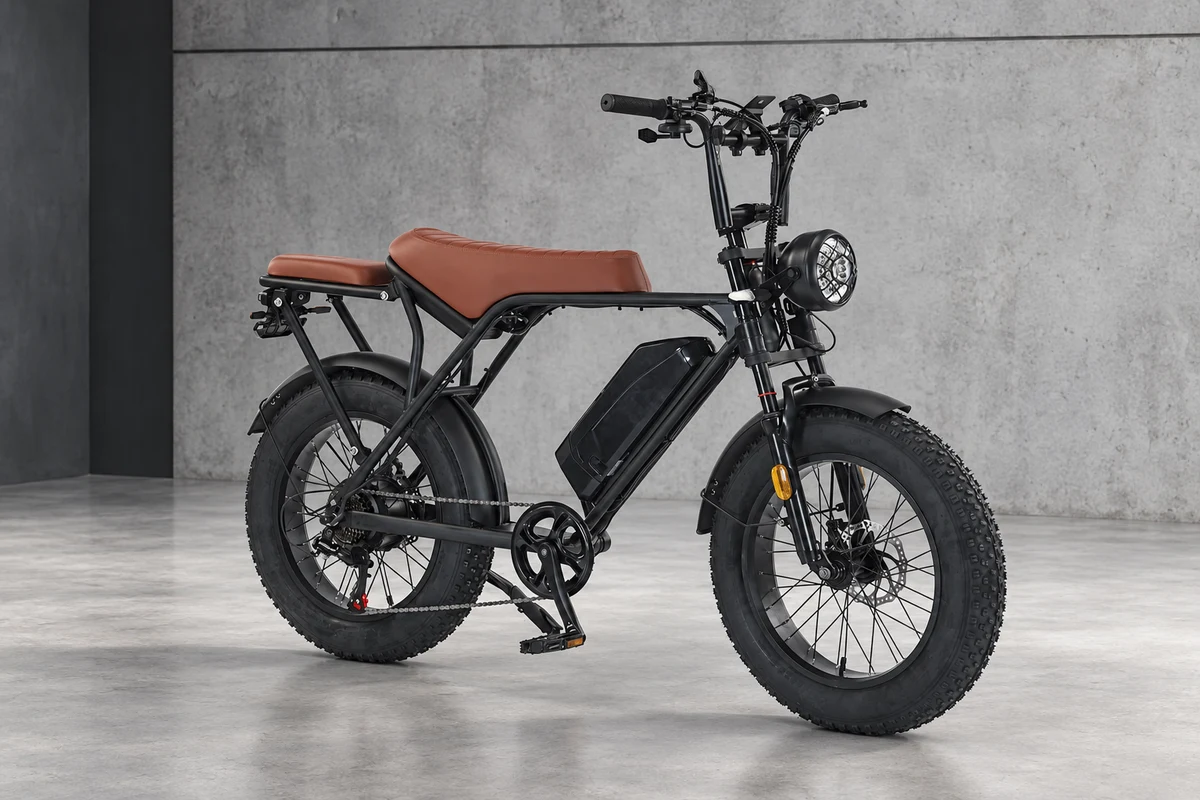
For a passenger-carrying requirement, request the manufacturer’s permitted use for the exact model/version, passenger limits and required equipment. Also check the destination market’s applicable requirements before presenting that use to customers. A catalogue description or a seat photograph alone does not settle those questions. For how a dealer should decide when a visible seat counts as a passenger position, see what counts as an electric bike with a passenger seat.
Do not turn a rack’s cargo rating into a passenger rating. The manufacturer’s instructions must identify whether the configuration is intended for passengers and what equipment and conditions apply. Avoid descriptions such as “suitable for two adults” until you have support for that particular claim.
Identify the actual rear carrying assembly
The U8 detail below shows a rear mounting plate and tail light. It is a different model from the Z3 pictured above, and the photograph does not state the capacity of an installed carrier or other accessory.
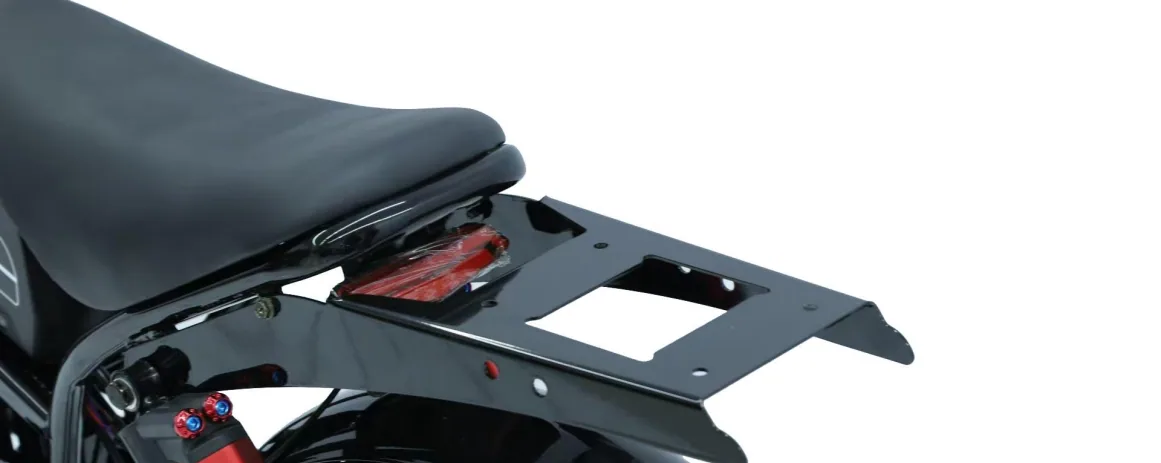
Ask which assembly a quoted limit belongs to: the frame mounting area, a supplied rack, a rack-and-box combination or another accessory. Keep its part reference and approved installation with the rating. A compatible-looking aftermarket rack does not automatically retain or increase the original configuration’s capacity.
Where several limits apply, evaluate each one according to its scope. Do not add component ratings together or choose the largest number. The complete loading arrangement must satisfy the vehicle, rider, carrier and accessory restrictions that apply to it.
Turn an ambiguous quotation into a usable specification
If an offer says only “max load”, ask for a definition before comparing it with another model. A useful clarification reads: “Please identify everything included in this figure, the applicable vehicle version, and any separate rider, rear-carrier and passenger limits.”
Retain the dated model specification or manual supporting the answer. If a supplier cites a test report, check that the model and configuration covered match the offer; a general factory certificate or a photograph of a loaded bike does not supply the missing model rating.
For the customer-facing specification, publish the supported fields with clear labels. Leave an unresolved figure out rather than presenting an estimate as a manufacturer’s limit. If the battery, rack or other equipment changes, revisit the record before reusing it for the revised configuration.
To check these details before a bulk order, order a sample of the version you plan to sell; colours, accessories and, on most models, handlebars and seats can be chosen through customization.
Frequently asked questions
Does a more powerful motor mean a higher weight limit?
No. Motor power is not a load rating for the complete bicycle or its carrier. Use the model’s documented limits instead of calculating a capacity from wattage.
Can a short test ride prove an undocumented capacity?
No. A demonstration cannot establish the manufacturer’s permitted load or long-term structural capability. Do not use a successful ride as a substitute for a documented rating.
What if two supplier documents give different limits?
First check the units, model version and what each field includes. If the same defined limit still conflicts, ask for a corrected, authoritative specification before making a customer claim. Do not select the higher value because it is more attractive.
Discuss the load requirement with BG EBIKE
Send the model you are considering, destination market and estimated quantity. Describe the intended rider and cargo requirements separately, and state whether a passenger-carrying use is part of the project. Identify any rear box, carrier or other accessory you expect to order.
Review the Z3 separate-seat layout and V1 continuous-seat layout. Their catalogue bare weights and photographs do not establish payload or passenger ratings; state the intended rider, cargo and seating requirement with your shortlist.
Request model-specific load and configuration information. Providing the intended loading arrangement helps focus the discussion on the relevant specification instead of a single unexplained “maximum weight” figure.