
Electric bike range figures can support a purchasing decision only when they describe an identified configuration and a defined set of conditions. Before comparing two distances, establish the battery version, operating mode, speed, load, route and test endpoint. A longer catalogue figure alone does not prove that one model will travel farther in your customers’ use.
Short answer: Compare range only after matching the battery version, operating mode, load, route and test endpoint. Nominal battery energy is voltage multiplied by amp-hours: 48 V × 15 Ah equals 720 Wh, but that calculation alone cannot establish distance. A dealer needs measured energy consumption and usable battery energy under defined conditions before estimating kilometres. BG EBIKE lists different battery options by model; specify the exact option on the sample and bulk-order quotation.
Compare range only after selecting the battery version
For the V1 example below, the catalogue gives a 48V 10–25Ah battery range and a 60 km distance reference. That information identifies questions for the quotation, but does not rank the available battery versions by verified distance. Select the proposed battery first, then compare distance figures obtained under equivalent conditions. Until those conditions are available, compare the documented configuration rather than ranking models by the largest distance claim.
Identify what kind of range figure you have
A catalogue figure is the distance stated in product literature. It may summarise a particular configuration or operating condition, but the number by itself does not tell you which one. Request the underlying definition before comparing models.
An estimate is a prediction based on assumptions or a model. Keep those assumptions with the result. It is not a completed ride test, even when the calculation gives a precise number.
A measured result records what happened during a specific test. It needs the configuration, conditions, measurement method and endpoint to be interpretable. One measured ride is evidence for that ride; it does not guarantee the same distance for every customer.
Link the distance to a quoted vehicle version
The V1 catalogue specification lists a 48V 10–25Ah battery range and a 60 km distance reference, without identifying which capacity or test conditions produced that distance. Keep the 60 km figure as a catalogue reference while selecting the quoted battery version; it cannot represent a verified result for every option.
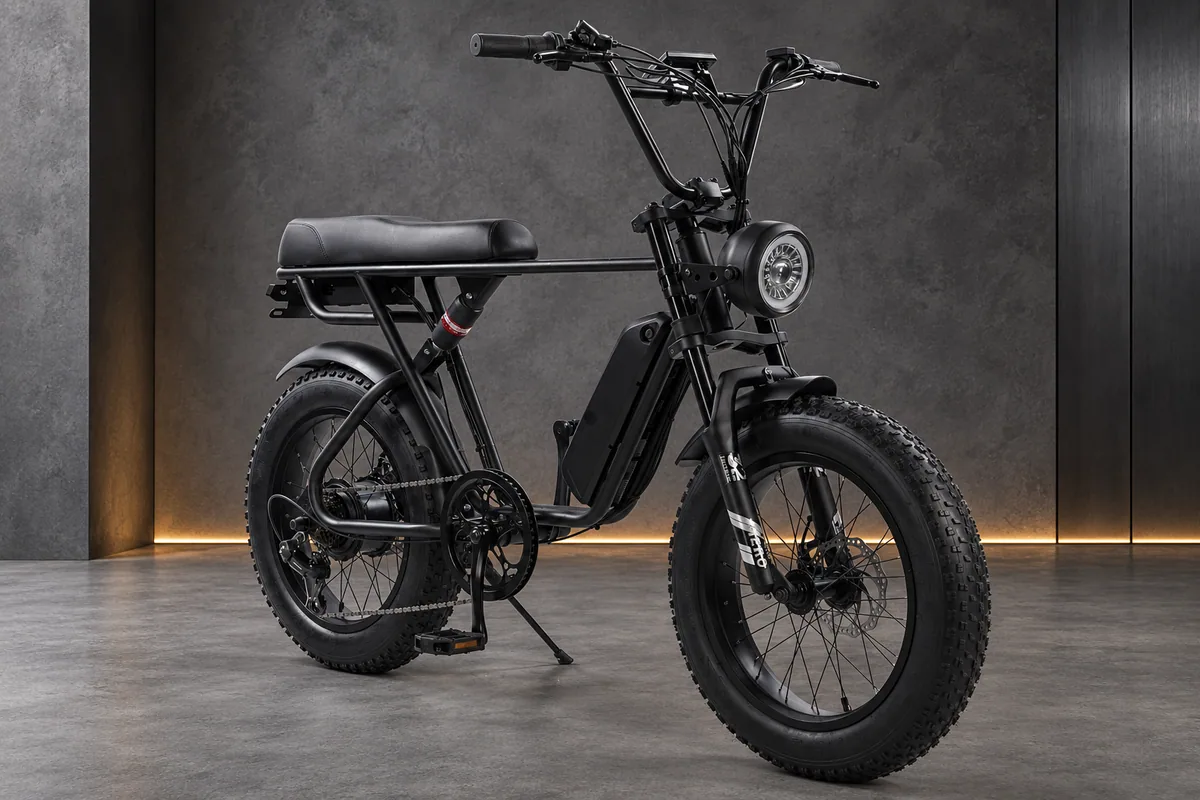
If a catalogue lists several battery capacities or a capacity range, ask which battery was used for the stated distance and which battery the quotation includes. Do not automatically pair the largest capacity listed with the longest distance or assume every listed combination is offered.
Record the relevant operating mode as well. Pedal assistance and motor-only operation describe different rider contributions where those modes are supported. Even numbered assistance levels may have different meanings across systems. Retain the model’s mode description rather than treating “level 2” as a standard setting shared by all bikes.
A larger stated battery capacity is not enough to quantify a range advantage when the vehicles, operating conditions or test methods differ. Keep battery energy and measured distance as separate fields in the comparison.
Compare the conditions behind the distance
Manufacturers can make range information more useful by stating how it was obtained. For example, Panasonic’s official range-test explanation lists route and speed conditions, temperature, load, battery condition, tyre pressure and an indoor measurement method. This illustrates the value of defined conditions; it does not make that method applicable to every BG EBIKE model.
For your shortlist, ask for the following information alongside each range figure. Record missing information as unknown, not as an assumed favourable or unfavourable condition.
| Comparison field | What to request or record |
|---|---|
| Vehicle and battery | Model/version, fitted equipment, battery reference and stated capacity; battery condition where known. |
| Result type | Catalogue statement, calculated estimate, road measurement or laboratory result, with date and source. |
| Operating mode | Assistance or drive mode, rider pedalling contribution where applicable, and any mode changes during the test. |
| Speed and stops | Speed profile or recorded speed information, stop frequency and relevant changes during the run. |
| Load | Rider, cargo and fitted accessories; keep the measurement scope explicit. |
| Route and environment | Distance measurement method, terrain, elevation information, road surface, temperature and wind conditions where relevant. |
| Vehicle setup | Tyre specification and pressure, relevant maintenance/setup information and equipment operating during the run. |
| Start and endpoint | Starting charge indication and preparation; ending charge indication and the reason the test stopped. |
| Result and repetitions | Recorded distance, interruptions or deviations, and separate results for repeated runs rather than only the best figure. |
Use this as a record template, not a claim that a single universal test procedure applies to all vehicle categories. Follow the manufacturer’s operating limits and approved test instructions; do not force a battery beyond its normal operating endpoint to obtain a larger distance.
Decide whether two results answer the same question
Illustrative comparison—not BG EBIKE test data: one offer reports 60 km in a low-assistance test, while another reports 45 km in motor-only operation. Without matched operating conditions, it is not valid to conclude that the first vehicle has a one-third range advantage. The figures describe different tests.
Start by grouping results that use comparable configurations and methods. Where a material difference remains, identify it beside the figures instead of combining them into a ranking. If the purchasing requirement is a particular route or daily duty, request evidence relevant to that requirement.
Do not apply a blanket percentage reduction to every supplier figure to create a supposedly realistic range. Unless that adjustment has an appropriate evidence base, it replaces one uncertain number with another. A clearly described limitation is more useful than false precision.
Treat the display as part of a record, not the whole record
The V1 display below shows an ODO field and other readings in a catalogue photograph. Those visible readings do not establish distance travelled on one charge, remaining range or the conditions of a test.
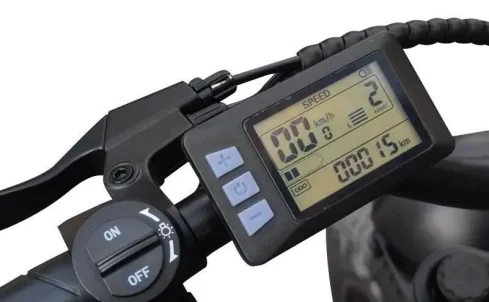
In a sample evaluation, identify whether the recorded field is an odometer, a trip counter or an estimate of remaining distance. If you use an odometer difference, retain both readings and make sure the interval corresponds to the documented run. Record charging or other interruptions rather than presenting the difference alone as a full-charge range result.
A battery-level icon also needs context. Keep its starting and ending indications with the record, but do not convert a small change in displayed bars into a precise prediction of total distance. State how the measurement was made and what it can demonstrate.
Make sample evaluation useful to the buying decision
Describe the intended use before requesting a sample: typical route, expected load, operating mode and charging opportunities. Ask the supplier which configuration and evaluation method address that use. This helps avoid testing one battery version and then ordering another.
Keep repeated runs and any departures from the plan visible. If the route, rider, weather or mode changes, retain that information rather than treating the results as identical conditions. A demonstration or informal ride can inform selection, but should not be presented as a standardised test that it was not.
For customer-facing material, use wording supported by the evidence: for example, a supplier-stated distance with its conditions, or a measured result from a described sample run. Avoid converting either into a guaranteed distance for all users.
Questions dealers should resolve
Does “up to” make a range figure directly comparable?
No. It still needs a defined configuration and conditions. Compare the basis of the figure, not just the largest number in the headline.
Can battery capacity alone tell us the distance?
No. Capacity describes stored energy, while range depends on how that energy is used in the particular vehicle and operating conditions. A capacity comparison cannot replace a range record.
What if the supplier has no detailed range-test record?
Keep the catalogue figure labelled as such. Ask for the available conditions and discuss a suitable sample evaluation. Do not call it false without evidence, but do not treat it as a verified result for your intended use either.
When you compare battery versions for an order, check the main wholesale price drivers and allow for dangerous-goods booking of lithium containers, covered in export packaging and shipping.
Frequently asked questions
How many miles can an electric bike go on one charge?
There is no single mileage that applies to every configuration. Compare the distance recorded for the exact battery, vehicle and test conditions. For an illustrative calculation, 600 Wh of usable energy divided by 15 Wh per kilometre gives 40 km, approximately 25 miles. Those inputs are a worked example, not a BG EBIKE test result or a guarantee.
What should a dealer record during a range test?
Record the model, battery version, starting charge, stopping criterion, load, route, speed and operating mode. Also record weather and any interruptions so that another test can be interpreted alongside it. Use the same procedure for the sample and subsequent comparisons; a distance without those conditions is not a reproducible basis for a customer-facing range claim.
Does a larger Ah figure always mean longer range?
No. Ah must be read with voltage, and battery energy must then be considered with the complete vehicle and operating conditions. A 36 V 15 Ah pack has 540 Wh nominal energy, while a 48 V 13 Ah pack has 624 Wh. Neither number alone proves which complete bicycle will travel farther under a customer’s particular load and route.
Should every battery option carry the same advertised range?
No. Keep the range reference attached to the battery version and conditions that produced it. If a model offers several capacities, the dealer’s product sheet should identify the version being sold rather than copying one distance across all options. Align the approved sample, quotation and catalogue description before a mixed-model bulk order is released for production.
Discuss the required range with BG EBIKE
Send the model or shortlist, destination market, estimated quantity and intended use. Describe the route, load, desired operating mode and charging opportunities, and identify the battery version you want quoted.
Review the V1 battery and range entries together with the Ah and Wh comparison guide. For a planned sample, use the sample evaluation checklist to record the configuration and conditions behind your observations.
Request configuration and range-reference information. Ask for the conditions behind any stated distance so that the discussion can connect your purchasing requirement to the relevant vehicle version.