
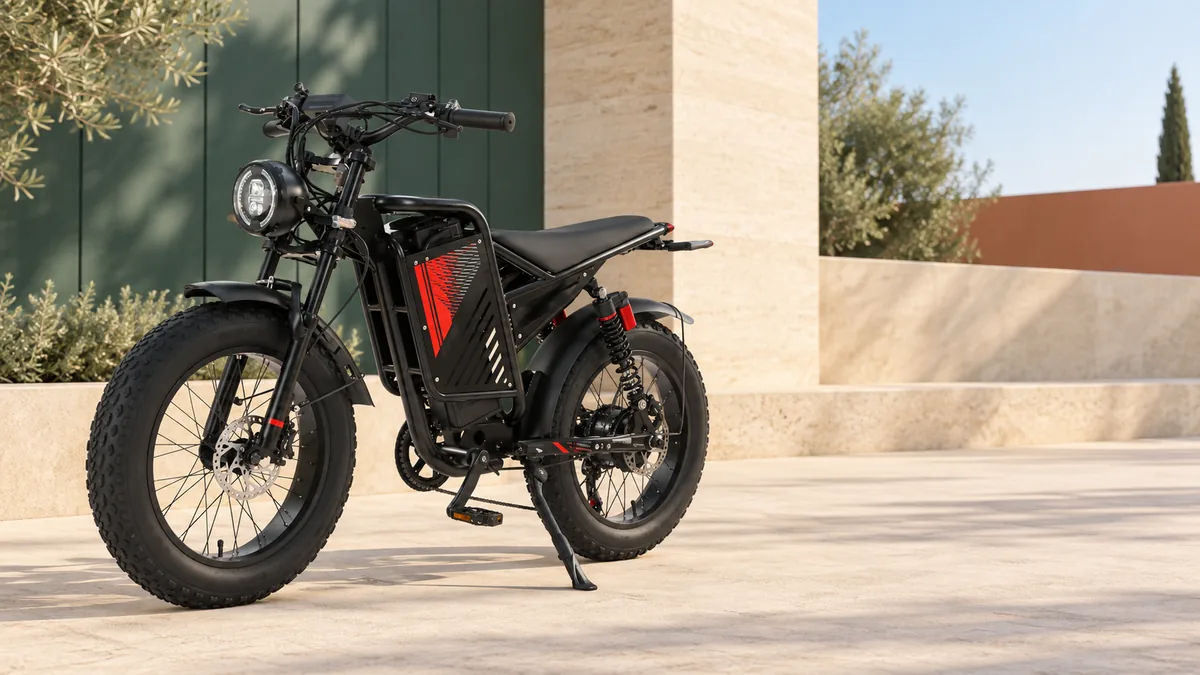
Choose battery placement around access and the complete build
An integrated housing suits a brief that prioritises a clean frame profile, provided removal and service access work on the selected build. An external frame-mounted pack makes its housing and mounting rail more accessible for inspection. A rear-rack arrangement shifts the battery into the carrying area, so rack use and accessory clearance belong in the same decision. Compare these practical differences before choosing by appearance alone.
Short answer: There are 3 main battery positions: integrated in the down tube, external on the frame, and on the rear rack. Integrated packs look cleaner, external frame packs are easier to inspect and remove, and rack batteries sit higher and use carrying space. Choose by access, servicing and the complete build, not appearance alone.
The three main battery positions
Electric bike battery placement is a packaging decision with commercial consequences. It affects the visible design, the space available for bottle mounts or cargo hardware, the way a rider lifts the bike, and how a dealer removes a pack for service. The comparison below is a starting point for a sourcing brief, not a substitute for evaluating a production sample.
| Placement | Typical advantage | Typical trade-off | Best questions for a supplier |
|---|---|---|---|
| Integrated down tube | Clean appearance; mass can sit near the frame center | More dependence on frame tooling, cover fit and internal clearance | How is the pack removed? What seals, fasteners and replacement covers are supplied? |
| External frame mount | Pack, rail and connector are visible and easier to inspect | Battery shape is more prominent; rail and cable routing need protection | What rail standard is used? Can the battery clear the frame during removal? |
| Rear rack | Keeps the main frame open and can suit step-through geometry | Places mass high and behind the rider; rack stiffness matters | What is the rack load rating with the battery installed? How is connector movement controlled? |
Inside the down tube. Clean profile with tighter tooling and service tolerances.
Mounted on a visible rail. Easier to inspect, remove and plan for replacement.
Above the rear wheel. Keeps the main frame open while moving mass rearward.
Compare each battery layout on the complete bicycle. Record removal clearance, mounting access and replacement part references, then test the selected frame size with its intended battery and load. Position alone is not evidence that one model handles better than another.
Integrated down-tube batteries
An integrated battery sits partly or fully inside a shaped down tube. Buyers often prefer the finished look, especially for urban and trekking models. The frame opening, internal support, wiring path and battery cover must work as one system. Small variations in molding, welding or cover alignment can become rattles, water paths or difficult removal.
Ask to see the battery removed from every frame size. Confirm whether it exits downward, sideways or upward, then check clearance around the crank, front wheel and stand. A removal method that works on a large frame may become awkward on a small step-through frame.
External frame-mounted batteries
An external pack usually attaches to a rail fixed to the down tube or seat tube. The visible installation lets receiving teams inspect the case, lock, rail and connector without opening the frame. This can simplify dealer training and spare-battery replacement.
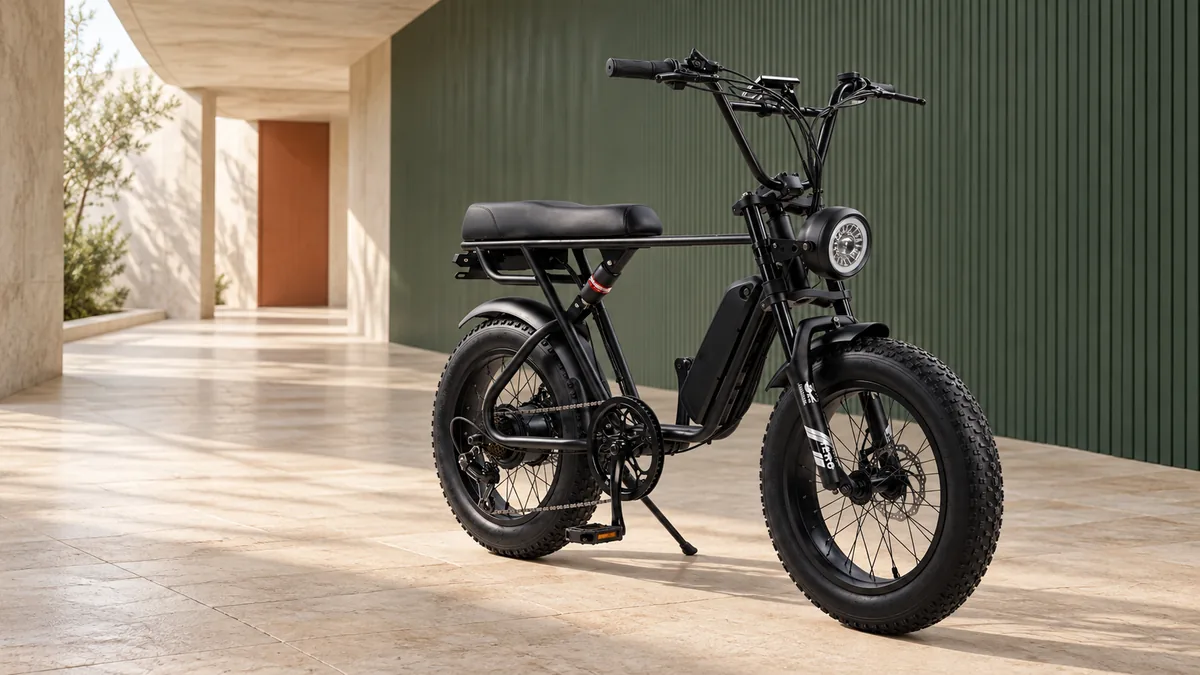
Visibility does not remove the need for engineering checks. The mounting bosses must carry repeated loads, the rail needs enough engagement, and cables should not rub on the battery or prevent full locking. For shared fleets, also examine how easily the lock area can be reached and whether the pack can be removed without special tools.
Rear-rack batteries
A rear-rack pack leaves more room in the main triangle, which can help low-step frames and utility configurations. It also combines the battery system with the rack structure. That makes rack stiffness, fastener retention and load instructions part of the battery-placement review.
For a rear-rack battery, check the rack rating, battery mounting and accessory clearance on the selected model. Evaluate pushing, parking and low-speed turns with the intended load. Do not assume that a rack-mounted battery leaves capacity or clearance for panniers or a child seat.
How placement changes handling and frame design
Battery position does not determine ride quality by itself. Wheelbase, head angle, tire size, rider position, motor location and cargo all contribute. Still, the battery is one of the heaviest individual components, so its location influences the design from the first frame sketch.
Lower and central
For a centrally mounted pack, compare starts, tight turns, pushing and lifting on the selected sample. Record the battery mass and test load so that comparisons use the same conditions.
High or rearward
Rearward placement can be practical for step-through frames, but buyers should test starts, tight turns, curb lifting and kickstand stability with the intended battery and cargo installed.
Frame stiffness also matters. Cutting a large opening into a down tube changes the structural problem, while adding battery bosses to a slim tube concentrates loads around the mounting area. Ask the supplier how the frame and battery mount were validated and which frame sizes share the same solution.
Removal, charging and service access
A product can look clean in a catalog and still frustrate a dealer. Review the full service sequence: unlock, support the pack, disconnect it, lift it clear, inspect the contacts and reinstall it until the latch is fully engaged. Repeat the sequence with fenders, bags and common accessories installed.
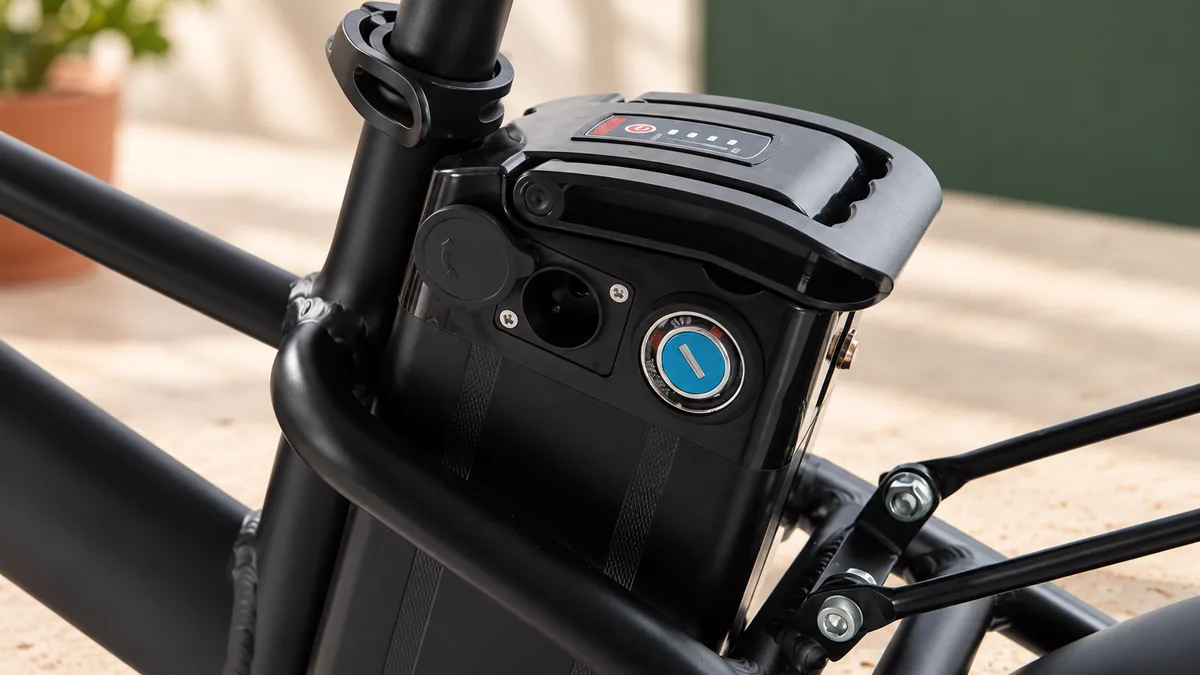
- Removal clearance: Measure the space needed to slide or rotate the pack out of its rail.
- Key management: Confirm key-code records, replacement-key process and whether one key operates other locks.
- Charge access: Check port location both on and off the bike, including connector strain and cap retention.
- Contact protection: Inspect how exposed contacts are protected when the battery is removed.
- Replacement path: Record battery, rail, lock, cover, connector and charger part numbers before placing an order.
A removable battery is only service-friendly when a technician can reach the lock, support the pack, clear the frame and obtain matching replacement parts. Validate that sequence on every relevant frame size and accessory configuration, then keep the approved battery-system bill of materials with the order.
Battery dimensions and removal clearance
A capacity label does not describe the space a battery needs. Record the pack dimensions, removal direction, lock access and clearance with the intended saddle position and accessories. A larger-capacity option must still fit the approved mounting and electrical system; a similar-looking housing does not establish interchangeability.
For energy comparisons, use our battery capacity guide. For test conditions behind distance figures, use the range comparison checklist. Keep those figures separate from the physical access checks in this guide.
Record the system for the selected order
Battery position alone does not establish vehicle classification or shipping eligibility. Keep the selected vehicle and battery references with the order, and have the responsible compliance and logistics parties review the destination, shipment and supporting documents. This layout checklist does not replace that review.
Battery-placement checklist for importers
- Define the use case. Record rider range, cargo, terrain, parking and charging conditions.
- Choose the market specification. Set destination, vehicle class, power, assist behavior and labeling requirements.
- Review every frame size. Check battery clearance, mounts, wiring and accessory conflicts on samples.
- Test with realistic mass. Ride, push, lift and park the bike with the intended battery and cargo.
- Inspect the interface. Look at the rail, lock, latch, connector, charge port, seals and fasteners.
- Document the battery system. Freeze approved pack, BMS, cells, charger, rail, lock and connector references through change control.
- Plan service stock. Agree on replacement batteries and small parts for the sales and warranty period.
- Confirm transport evidence. Ask the responsible logistics party which test summaries and dangerous-goods documents are required.
When requesting a quotation, send the supplier a structured brief rather than asking for “the longest range.” Include target market, bicycle category, frame style, expected battery position, energy target, removable or fixed preference, charging workflow, annual quantity estimate and required project milestones.
Prepare a better RFQ
Check battery access on your shortlisted model.
Share your destination market, use case, frame style and service requirements. BG EBIKE can use that brief to discuss relevant electric-bike configurations and the questions that still need confirmation.
Start a Project InquiryBrowse the electric-bike range or review our manufacturing overview.
The battery is one of the largest items in a quotation — see how wholesale prices are built — and lithium-battery containers ship as dangerous goods, as explained in export packaging and shipping.
Frequently asked questions
What is the best place for a battery on an electric bike?
There is no single best position for every order. Compare frame design, service access, intended use and replacement requirements. Compare complete samples with the intended battery, accessories and payload rather than selecting a position from appearance alone.
Is an integrated e-bike battery better than an external battery?
It is better for some briefs. Integration can produce a cleaner frame and central packaging. An external pack can be easier to inspect, remove and replace. Buyers should compare sealing, clearance, tooling dependence and spare-part availability.
Does battery placement affect electric-bike range?
Battery position is not enough to predict range. Record the selected pack capacity and use comparable documented test conditions; separately check whether the pack fits and can be removed from the chosen frame.
What should a distributor check on a removable battery?
Check removal direction, hand support, key access, latch engagement, charge-port access, rail fit, connector protection and clearance on every frame size. Also record part numbers and confirm a replacement supply plan.
Decision rule
Start with the rider and service workflow. If balanced handling and a clean silhouette lead the brief, evaluate an integrated or centrally positioned pack. If quick inspection and straightforward replacement matter more, an external frame system may be easier to manage. If the main triangle must remain open, test a rear-rack layout with the full intended cargo load.
The final decision should be made on a production-representative sample, backed by an approved bill of materials and destination-specific compliance review. That approach turns battery placement from a styling choice into a manageable sourcing specification.